Every major foreign desk in Jerusalem just printed the exact same obituary.
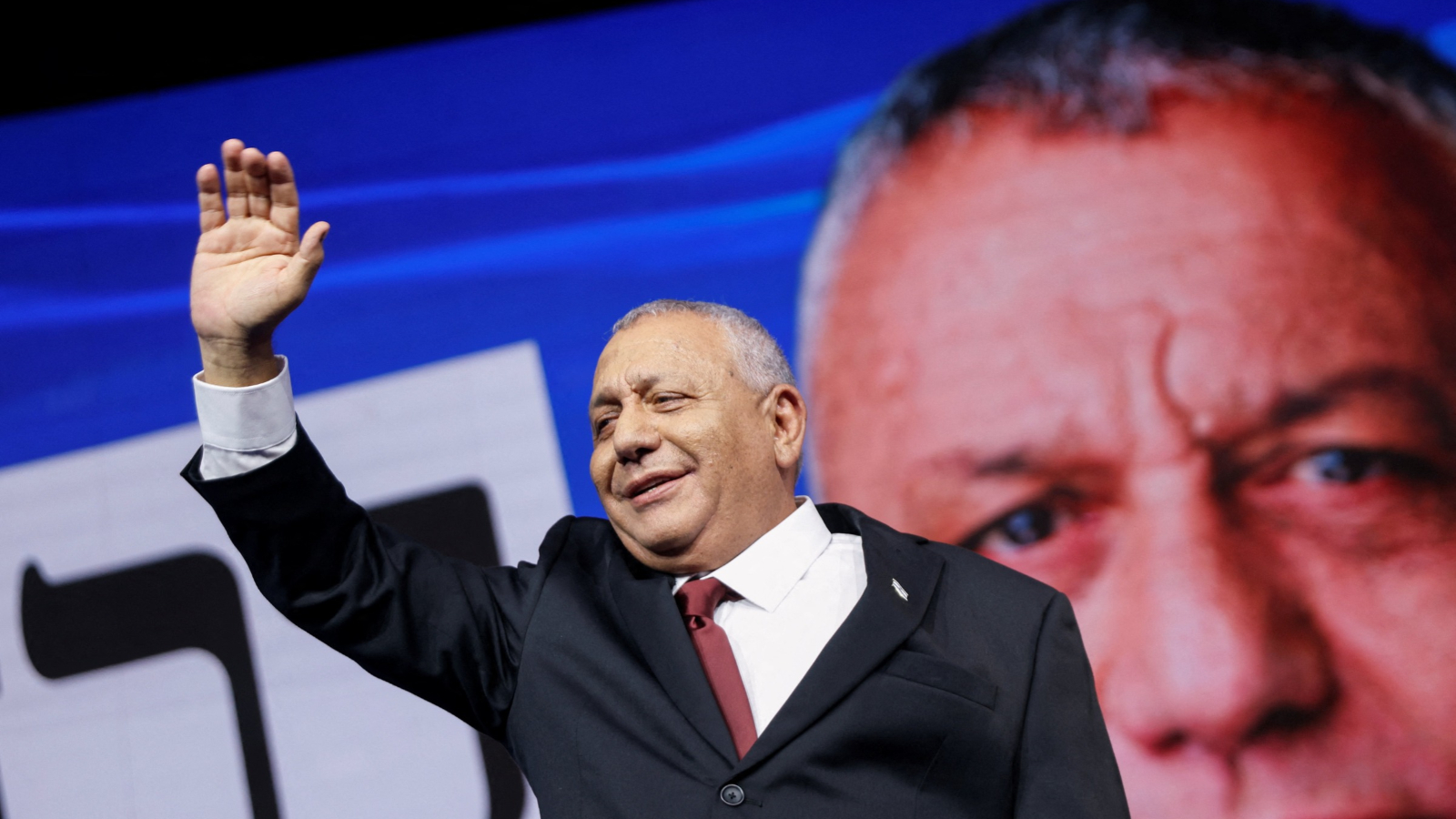
They see former IDF Chief of Staff Gadi Eisenkot holding the presidential mandate to form Israel’s next government, and they immediately declare the Benjamin Netanyahu era dead and buried. They frame this moment as a clean break. A return to sober, centrist statesmanship. A neat parliamentary execution.
They are wrong. Completely, dangerously wrong.
Mainstream political analysts suffer from a chronic addiction to linear narratives. They look at a 120-seat Knesset, count up the anti-Netanyahu votes on a napkin, and assume the math solves itself. If you have spent any real time watching coalition negotiations inside the Knesset cafeteria at three in the morning, you know that arithmetic is the least important variable in Israeli politics. Ideology is negotiable. Personal vendettas are eternal. And structural traps are fatal.
Gadi Eisenkot is not walking into the Prime Minister’s Office. He is walking into a parliamentary buzzsaw designed specifically to shred center-left coalitions before they pass their first budget.
The Myth of the Unified Anti-Netanyahu Bloc
Western commentators treat the Israeli opposition like a disciplined European parliamentary party. They assume that because opposition leaders share a visceral loathing for Netanyahu, they share a governing philosophy.
They do not.
The anti-Netanyahu camp is not a coalition; it is an allergic reaction. Once the allergen is removed from the Prime Minister’s chair, the immune response collapses. Look at the actual components required to get Eisenkot to the magic number of 61 seats in the Knesset. To build a functional majority without Likud, Eisenkot must simultaneously satisfy secular liberals in Tel Aviv, hawkish right-wing defectors who still believe in settlements, left-wing social democrats, and the Joint List or Ra’am representing Arab citizens of Israel.
Think about what happens the moment that cabinet sits down to vote on a single substantive policy.
- Military conscription: If Eisenkot pushes a universal draft law to appease secular voters, he fractures any potential back-channel deals with ultra-Orthodox parties.
- Palestinian statehood and security: If he freezes settlement expansion to satisfy Washington and the Israeli left, his right-wing partners bolt within forty-eight hours.
- Economic policy: Neoliberal market reformers in the center cannot agree with state-interventionist social democrats on basic tax brackets, let alone wartime deficit spending.
We already ran this exact experiment. The Bennett-Lapid "change government" of 2021 proved that a coalition united solely by hatred of one man has a shelf life measured in months, not years. It collapsed under the weight of its own contradictions, handing Netanyahu the exact ammunition he needed to roar back into power with his most radical coalition ever.
Eisenkot is a decorated general. He understands military logistics, chain of command, and operational discipline. None of those skills translate to herding six incompatible party leaders who view every cabinet vote as an existential threat to their base. In the IDF, when the Chief of Staff gives an order, division commanders salute and execute. In the Knesset, when the Prime Minister gives an order, three junior ministers leak it to Channel 12 and threaten to collapse the government unless they get another deputy ministry for their brother-in-law.
Why Likud’s Opposition Playbook Is Lethal
Political reporters love analyzing how Netanyahu governs. They rarely pay attention to how he opposes.
Benjamin Netanyahu is a mediocre administrator, a hesitant military decision-maker, and a master of political survival. When he sits in the opposition benches, he is unburdened by responsibility. He does not have to manage inflation. He does not have to negotiate hostage deals or manage northern border deterrence. He gets to stand at the Knesset podium every Monday and Wednesday and weaponize every compromise Eisenkot is forced to make.
Imagine a scenario where Eisenkot successfully cobbles together a razor-thin 61-seat majority relying on external support from Arab parties. Within six seconds of the swearing-in ceremony, Likud’s media machine will brand the administration a "terror-dependent government." Every security incident in the West Bank, every rocket fired from the north, every dip in the shekel will be pinned directly on Eisenkot’s reliance on non-Zionist votes.
Netanyahu will not fight Eisenkot on policy. He will fight him on legitimacy.
And here is the brutal truth most pundits refuse to admit: that messaging works on the Israeli public. Decades of trauma, failed peace processes, and regional instability have pushed the Israeli electorate decisively to the right on security. Eisenkot’s impeccable military credentials give him temporary armor, sure. You cannot easily call a former Chief of Staff weak on defense.
So Likud will not attack his military record. They will attack the people sitting next to him at the cabinet table. They will pick off the weakest link in Eisenkot’s coalition—likely a nervous right-wing MK terrified of losing their seat in the next primary—and offer them a ministry in a future Likud government if they just vote against one budget bill.
The Structural Trap of the Mandate Clock
Let us look at the actual mechanics of Basic Law: The Government, because clearly nobody writing breathless headlines bothered to read the statutory text.
When the President hands the mandate to a Knesset member, the clock starts ticking. The candidate gets exactly 28 days to form a government. Under extraordinary circumstances, the President can grant a single extension of up to 14 days. That is 42 days maximum.
During those 42 days, Eisenkot is not just negotiating with potential allies. He is fighting a two-front war against time and sabotage.
- The Speaker’s Gavel: Until a new government is sworn in, legislative control of the Knesset committees remains fiercely contested. Outgoing coalition loyalists use procedural filibusters to delay key committee formations, starving the incoming coalition of the institutional tools needed to pass preliminary laws.
- The Coalition Agreements: Every single party joining Eisenkot will demand written, legally binding coalition agreements before the swearing-in vote. These documents are hundreds of pages long. They dictate budget allocations down to the last shekel, committee chairmanships, ministerial portfolios, and veto rights over judicial appointments. Drafting them takes weeks. One leaked clause triggers outrage from another partner, resetting the negotiation to zero.
- The Constructive Vote of No Confidence: Even if Eisenkot crosses the finish line and gets sworn in, Israel’s parliamentary system makes governing on a narrow majority nearly impossible. Passing the state budget is the ultimate guillotine. Under Israeli law, if a government fails to pass a budget by a strict statutory deadline, the Knesset dissolves automatically and the country goes back to elections.
Eisenkot does not have a blank check. He has a ticking time bomb.
What Readers Are Actually Asking (And Why the Questions Are Flawed)
When news breaks of a mandate shift in Jerusalem, search engines light up with predictable, surface-level queries. Let us dismantle the flawed premises behind the most common questions circulating right now.
Will Gadi Eisenkot bring immediate peace to the region?
No. Stop projecting Western wishful thinking onto Israeli generals. Gadi Eisenkot is a pragmatist, not a pacifist. During his tenure as Chief of Staff, he authored the IDF Strategy document and oversaw intense, unapologetic military operations against Iranian entrenchment in Syria and Hamas tunnel networks in Gaza. He favors diplomatic coordination with Washington and regional Sunni states because he views it as a strategic force multiplier for Israel’s security, not out of ideological altruism. Anyone expecting Eisenkot to suddenly dismantle security checkpoints or sign sweeping territorial concessions without ironclad security guarantees is hallucinating.
Does this mean Netanyahu is finally going to prison?
This question completely misunderstands how the Israeli judicial system operates. Netanyahu’s ongoing corruption trials—Cases 1000, 2000, and 4000—proceed independently of who holds the prime ministerial mandate. The Jerusalem District Court does not speed up witness cross-examinations because Gadi Eisenkot walks into the Knesset. Furthermore, losing the premiership actually frees Netanyahu’s schedule to focus entirely on his legal defense and political campaigning, while stripping him of the ministerial conflicts of interest that previously hampered his public messaging.
Will the United States instantly reset relations with Jerusalem?
Washington will breathe a massive sigh of relief, roll out the red carpet at the White House, and restore normal diplomatic decorum. That is where the honeymoon ends. Structural friction between the US and Israel is not a personality clash between American presidents and Benjamin Netanyahu; it is a divergence of national interests. Washington wants regional de-escalation, a revitalized Palestinian Authority, and containment without a broader regional war. Even a centrist Israeli government led by Eisenkot faces domestic political red lines that prevent it from giving the White House what it wants on Palestinian governance. The tone will improve. The underlying gridlock will remain.
The General’s Blind Spot
I have watched dozens of high-ranking IDF officers transition into Israeli politics—Yitzhak Rabin, Ehud Barak, Ariel Sharon, Benny Gantz, Moshe Ya'alon. Almost all of them share the exact same fatal flaw during their first major political test.
They confuse strategy with politics.
In military planning, you identify an objective, assess enemy capabilities, allocate resources, and execute a campaign. Logic dictates the outcome. In politics, logic is irrelevant. Politics is emotional, tribal, and fundamentally irrational.
Eisenkot’s greatest strength—his calm, understated, matter-of-fact demeanor—is also his greatest vulnerability. He hates political theater. He refuses to scream into microphones, trade cheap insults on social media, or pander to populist outrage. Voters love that quality in a general. They quickly grow impatient with it in a politician when the country is polarized and anxious.
Look at what happened to Benny Gantz. For years, Gantz led every single public opinion poll by wide margins. He was the ultimate consensus candidate—tall, dignified, steady, a former Chief of Staff who promised unity. Yet every time he entered the ring with Netanyahu, he got outmaneuvered, out-messaged, and out-lasted. Gantz treated politics like a gentleman’s agreement. Netanyahu treated it like a knife fight in a phone booth.
Eisenkot is sharper than Gantz and far less naive. He watched Gantz get burned in 2020 when Netanyahu tore up their rotation agreement by refusing to pass a state budget. Eisenkot will not fall for that specific trick.
The danger for Eisenkot is not that he will trust Netanyahu. The danger is that he will trust his own coalition partners to act in the national interest rather than their narrow sectarian self-interest. They will not. Every party leader sitting across from Eisenkot at the negotiating table is already calculating when to pull the plug to maximize their seat count in the next election.
What Actually Happens Over the Next Six Months
Forget the romantic narratives about a new dawn in Israeli democracy. Look at the cold mechanics of power.
If Eisenkot manages to assemble a government, it will be a caretaker administration masquerading as a permanent solution. Its sole realistic mandate will be stabilization: passing a wartime economic recovery budget, repairing fractured alliances with Western capitals, establishing a state commission of inquiry into past security failures, and lowering the domestic temperature.
It will not solve the ultra-Orthodox draft crisis permanently. It will not resolve the status of the West Bank. It will not rewrite Israel’s constitutional framework.
And the moment those stabilization tasks are complete—or the moment a single ideological wedge issue hits the Knesset floor—the coalition will fracture. Netanyahu will be waiting right there, microphone in hand, ready to tell voters that only he can provide strong, unified leadership.
Of course, there is a counter-argument to my pessimism. If Eisenkot uses the next four weeks to break the traditional bloc structure entirely—by peeling off moderate elements within Likud itself rather than relying on fragile fringe parties—he could redraw the political map for a decade. That is the only move that changes the game. Anything short of shattering Likud from the inside leaves Eisenkot holding a temporary lease on a house that Netanyahu still owns.
Stop watching the press conferences outside the President’s Residence. Watch the backroom meetings in the Knesset corridors. If Eisenkot fails to break Likud’s internal discipline before his 28-day clock runs out, he is not forming a government. He is just warming the seat for Netanyahu’s next comeback.