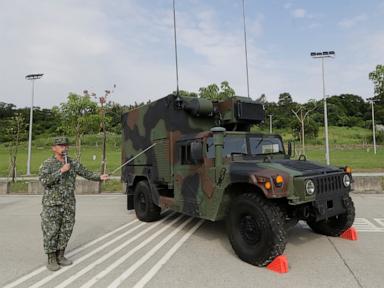
Everyone in the defense commentary ecosystem is hyperventilating over a fourteen billion dollar inventory backlog sitting on Pentagon loading docks while Taipei insists cooperation remains status quo. Analysts on cable news shout about betrayal, deterrence failures, and bureaucratic paralysis in Washington. They want you to believe that a delayed hardware shipment signals a crack in the alliance, a geopolitical vacuum waiting to be exploited.
They are missing the entire point because they still view modern security through the lens of twentieth-century attrition warfare.
I spent a decade tracking defense procurement pipelines and watching contractors pad margins while procurement officers rubber-stamped obsolete armor divisions. I have seen military bureaucracies blow billions on heavy platforms that become expensive scrap metal the moment asymmetric logistics enter the equation. When a massive procurement package hits a wall, the standard knee-jerk reaction is panic. The real story is much darker, much more rational, and completely contrary to the panic narrative dominating the headlines.
The fourteen billion dollar holdup is not an administrative glitch or a signal of abandonment. It is a violent, forced correction away from hardware that would not survive the first forty-eight hours of a modern kinetic conflict.
The Myth Of The Inventory Shelf Life
The lazy consensus in every major security policy brief argues that deterrence equals tonnage. The more hulls, tracks, and tubes you cram onto an island, the safer that island becomes. This is a comforting delusion for defense contractors whose quarterly earnings reports depend on volume sales of heavy metal.
Look at what is actually happening beneath the surface of modern missile defense and distributed command architectures. Traditional heavy weapon systems require massive maintenance footprints, vulnerable fixed supply lines, and months of specialized depot-level training. Shipping fourteen billion dollars worth of conventional gear that relies on static logistics hubs into a contested theater is not reinforcement. It is creating a target-rich environment for precision-guided saturation strikes.
When weapons systems stall in the pipeline, it usually means someone in the defense apparatus finally looked at the electronic warfare environment and realized the gear being shipped is optimized for the wrong war.
We are fighting over a backlog number while ignoring the fundamental shift in how denial strategies operate. The real deterrent is not a battalion of heavy armor that requires a sprawling maintenance depot. It is distributed, mobile, low-signature lethality that can survive within a denied spectrum.
The Logistics Reality Check Nobody Wants To Print
Let us talk about the brutal mechanics of maritime resupply under modern anti-access conditions. If a major conflict breaks out in the strait, every large container ship, every heavy transport, and every predictable supply chain becomes a sitting duck.
A multi-billion dollar package composed of legacy hardware platforms operates on the assumption of uncontested command of the sea and air. That assumption expired years ago. Piling more heavy systems onto an island that lacks the strategic depth to absorb deep-strike saturation is a tactical dead end.
The pause in this fourteen billion dollar tranche forces a hard look at what actually matters. Instead of buying expensive platforms that require massive logistical umbrellas, defense planners should be doubling down on attritable systems, redundant communications grids, coastal defense cruise missiles, and electronic warfare assets that fit inside a standard shipping container or on the back of a civilian flatbed truck.
By freezing the bulky inventory, the procurement system is accidentally stumbling into a better strategy: buying time to reallocate funds toward things that can hide, move, and shoot back without needing a three-acre repair facility.
Why The Status Quo Narrative Is A Trap
The media loves a simple script. Washington equals hesitant; Taipei equals anxious; Beijing equals emboldened. It makes for clean headlines and easy television segments.
The reality is a messy, grinding negotiation over survivability. Taiwan does not need more prestige platforms designed for a desert campaign or a blue-water projection force. It needs a porcupine strategy built on hyper-distributed lethality. If the equipment sitting in that fourteen billion dollar backlog is predominantly heavy armor, large-signature artillery, or complex air defense batteries that take years to master and days to spot from orbit, leaving it on the dock is the smartest strategic mistake the Pentagon has made in decades.
Of course, the downside of this chaotic pipeline stutter is severe. It creates political theater. It gives critics ammunition to claim the security umbrella is fraying. It forces leaders in Taipei to spend political capital managing domestic perception while trying to re-engineer procurement orders on the fly. Transparency suffers, trust gets strained, and defense contractors throw tantrums in boardrooms across Northern Virginia.
Transparency is often the enemy of effective deterrence anyway. If an adversary knows every single item scheduled for delivery down to the crate number, the deployment advantage vanishes before the ink dries.
Stop Measuring Deterrence In Billions
If you want to understand where security policy is actually heading, stop looking at the total dollar value of approved foreign military sales. Dollars spent do not equal capability delivered, and capability delivered does not equal survivability under fire.
We need to stop treating defense procurement like an Amazon Prime delivery tracking service where a delayed package represents a customer service failure. In high-stakes geopolitics, a delayed shipment often means someone finally checked the telemetry data and realized the product was obsolete before it left the warehouse.
The next time you read a breathless report about multi-billion dollar bottlenecks in the defense industrial base, ask yourself a different question. Are we mourning the delay of a shield, or are we just angry that we can no longer buy obsolete armor in bulk?
Build for the war you will actually fight, not the ledger sheet you wish you had.