The desk in Mumbai is mahogany, cool to the touch at seven in the morning. Outside, the monsoon haze clings to the high-rises of Bandra Kurla Complex, blurring the horizon where software towers meet salt air. Across the table sits Rajesh, whose family has manufactured precision automotive fasteners in Gujarat for three decades. His factory runs on the hum of German-made lathe machines and the steady pulse of a thousand local families whose children go to school on the wages those fasteners provide.
Rajesh is looking at a spreadsheet on an iPad, but he isn’t reading the numbers. He is looking at a single name flickering across a headline from Washington: Trump.
He doesn't care about the political theatre. He cares about the machinery.
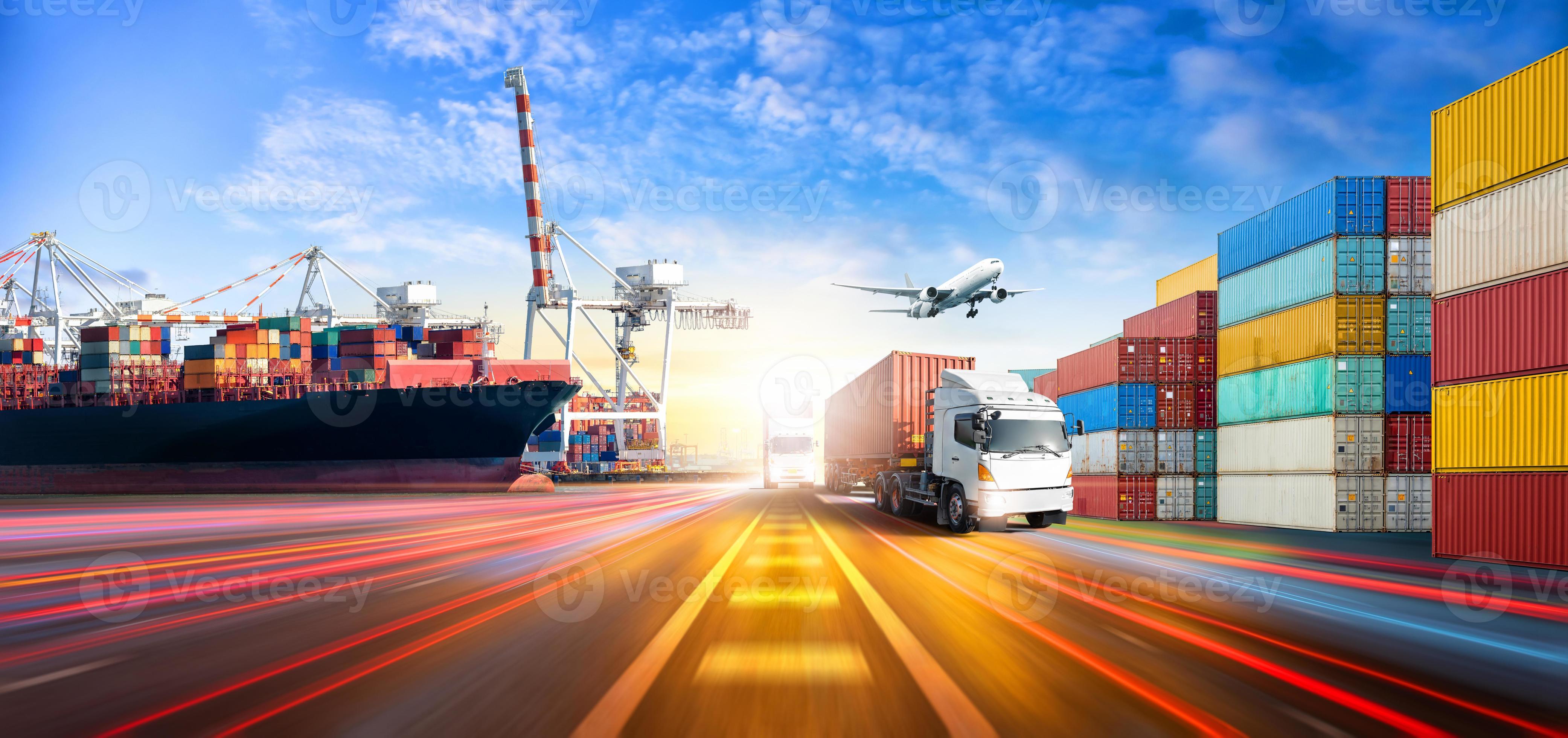
When a man thousands of miles away talks about sweeping tariffs, about erecting walls made of customs duties and percentages, he isn't speaking in abstract economic theory to people like Rajesh. He is talking about the cost of steel. He is talking about whether the container ship leaving Mundra Port next Tuesday will dock in New Jersey with a price tag that prices his products out of the market.
Jamie Dimon, sitting in his corner office at JPMorgan Chase, looked at this exact friction point recently and offered a wish wrapped in a warning. He called it hope that the United States would avoid punishing India. It was a pragmatic plea from a man who understands that global commerce is not a chess board where pieces can be swept aside without shaking the entire table. But hope is a fragile currency when you have fifty million dollars worth of supply chains anchored in the Arabian Sea.
Consider what happens next when a tariff is signed into law with the stroke of a heavy pen.
To the casual observer, a tariff looks like a tax collected at a port. It appears clean. It looks like a scoreboard where one country wins points and another loses them. But money does not move like a sports score. Money moves like water finding every microscopic crack in a foundation.
Suppose we trace a single shipment of steel-forged industrial valves from a foundry outside Vadodara to a distributor in Ohio.
Before the shift in political winds, the math was brutal but honest. Raw materials, labor, ocean freight, customs clearance, distribution. Every link in that chain took a fraction of a cent until the valve reached the factory floor in the American Midwest, where it was bolted onto a municipal water treatment line. The municipality didn't care where the steel was born; they cared that it didn't leak and that it didn't bankrupt the local taxpayers.
Now, layer on a twenty percent tariff.
Suddenly, the Ohio distributor faces a choice. Absorb the cost and watch profit margins evaporate into a mist of red ink, or pass the price increase down the line. They pass it down. The municipal water district sees its project bids spike. The local taxpayers—the very people whose manufacturing jobs were theoretically being protected by the tariff wall—find their sewer bills inching upward.
And back in Gujarat, Rajesh’s phone rings. His American buyer isn't shouting. That would be easier to handle. Instead, the buyer is quiet, apologetic, and entirely firm. They have found a supplier in a different hemisphere who isn't subject to the new duties, or they are halting orders until the dust settles.
The lathe machines in Vadodara slow down.
This is the invisible architecture of globalization. For decades, the narrative was painted in stark black and white. One side believed that open borders and frictionless trade would lift every boat, ignoring the communities left behind in post-industrial American towns where the factories rusted into monuments of a forgotten era. The other side believes that drawing lines in the dirt and building walls of tariffs will somehow turn back the clock to 1950, when entire supply chains lived inside a single state line.
Both views miss the complicated, messy truth.
The global economy is no longer a collection of isolated islands trading surplus goods. It is a single, hyper-connected nervous system. When you pinch a nerve in Mumbai, the hand twitches in Chicago.
Jamie Dimon knows this. As the leader of America's largest bank, he sits at the central switchboard of international finance. He watches capital flow across borders in microseconds, financing everything from semiconductor foundries in Bangalore to oil exploration in Texas. When he speaks about India, he is not doing so out of sudden sentimentality. He is looking at the ledger of the future.
India is not a peripheral market anymore. It is a demographic giant, a surging engine of engineering talent, digital infrastructure, and manufacturing ambition. To treat it as an adversary to be disciplined through economic penalties is to misunderstand the very nature of twenty-first-century leverage.
Yet, the political incentives pulling in the opposite direction are powerful.
Populism thrives on the simple narrative of us versus them. It is satisfying to point to a trade deficit and treat it as a ledger of theft. It provides a villain and a hero in a single soundbite. But governance requires living in the grey space where competing realities collide.
Look at the defense and strategic alignment between Washington and New Delhi. For years, both capitals have whispered about the same strategic horizon—a free, open Indo-Pacific, a counterbalance to rising authoritarian power in Asia, a shared commitment to maritime security and technological resilience. You cannot treat a nation as your vital strategic partner in the morning and your economic punching bag in the evening without inviting a profound fracture.
Trust is like fine crystal. It takes decades to blow, and seconds to shatter.
If American trade policy swings like a pendulum, punishing allies and competitors alike under the banner of protectionism, nations adapt. They build alternative financial rails. They trade in local currencies. They form alliances that bypass the dollar-dominated architecture altogether. They look for stability, and if stability cannot be found in Washington, they will look for it elsewhere.
This is what makes the CEO’s warning so poignant. It wasn't a defense of India out of charity. It was a desperate defense of coherence.
Back in the factory in Gujarat, the afternoon shift is changing. Workers in blue overalls wash grease from their hands at communal basins, wiping their brows against the humid heat. They talk about cricket, about rising school fees, about the price of lentils in the local market. They do not talk about geopolitical strategy, trade deficits, or multilateral banking systems.
They simply want tomorrow to look a little bit like yesterday, only slightly better. They want their work to be valued. They want the containers to keep moving.
When leaders in Washington draft new tariff schedules, they are not moving pieces on a board. They are adjusting the gravity in rooms like this one, thousands of miles away.
The world is too small now for economic isolationism to be anything other than a slow, self-inflicted wound. Every wall built to keep the world out eventually becomes a cage keeping ambition in.
The sun drops lower over the Arabian Sea, turning the horizon into a sheet of hammered copper. Out on the water, a massive container ship glides toward the shipping lanes, its decks stacked high with steel boxes, carrying the quiet, urgent commerce of a hundred different dreams across an ocean that is both a bridge and a barrier.