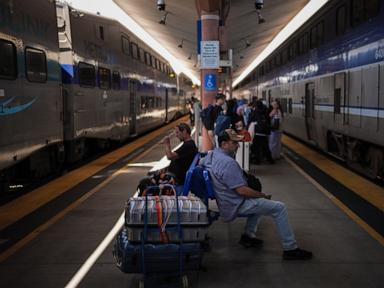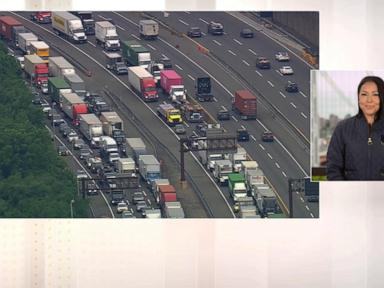
The immediate shutdown of Runway 4/22 at New York LaGuardia Airport (LGA) due to a sub-surface structural collapse—commonly classified as a sinkhole—exposes a critical vulnerability in urban aviation infrastructure. When an airfield operating near peak theoretical capacity loses 50% of its runway assets, the resulting system failure is not linear; it is exponential.
By deconstructing the mechanics of this failure, we can understand the compounding operational bottlenecks, the civil engineering realities of reclaimed land, and the economic math of systemic airspace delays.
The Systemic Constraint: Dual-Runway Asymmetry
Most major international hubs, such as John F. Kennedy International (JFK) or Newark Liberty International (EWR), possess redundant runway configurations that allow air traffic controllers to mitigate localized closures. LaGuardia operates on a highly constrained, intersecting dual-runway model consisting solely of Runway 4/22 and Runway 13/31.
The closure of Runway 4/22 forces the entire airport into a single-runway operation, routing all arrivals and departures through Runway 13/31. This creates an immediate operational bottleneck defined by three structural factors:
- The Loss of Intersecting Efficiency: Under normal conditions, intersecting runways cannot be used simultaneously without strict separation matrices. However, they allow tactical flexibility based on shifting wind vectors. Forcing all traffic onto a single strip eliminates wind-optimization options entirely.
- The Wake Turbulence Bottleneck: With only one runway available, the time interval between successive aircraft increases. FAA-mandated separation minima for wake turbulence mean that a heavy or large aircraft departing or landing requires a fixed multi-minute buffer before a subsequent aircraft can utilize the same pavement.
- The Gate-to-Taxiway Backflow: Airfields are closed-loop systems. When departures are delayed on a single runway, aircraft cannot vacate gates. Arriving flights that manage to land on Runway 13/31 are trapped on taxiways because there are no open gates to receive them, paralyzing ground operations.
The Civil Engineering Variable: Reclaimed Land Dynamics
The occurrence of ground instability at LaGuardia is a direct consequence of its geomorphological foundation. Built largely in the 1930s on land reclaimed from Flushing Bay, the airfield's substructure rests on a combination of municipal waste, soil fill, and marine clay.
To evaluate why a sinkhole forms in such an environment, consider the subterranean cost function of coastal infrastructure:
Sub-surface Erosion Mechanics
Unlike classic karst sinkholes formed by the dissolution of carbonate bedrock (such as limestone), urban airfield sinkholes on reclaimed land are almost always driven by mechanical erosion. This process occurs via a distinct three-stage chain of causality:
- Subsoil Saturation: Water from heavy precipitation or tidal fluctuation infiltrates the upper pavement layers.
- Fines Migration: As water drains through broken joints or storm drainage pipes, it carries fine soil particles (fines) with it, leaving behind larger aggregate voids.
- Cyclic Loading Failure: The pavement above these growing subsurface voids is subjected to repetitive, high-impact cyclic loads from commercial aircraft weighing up to 150,000 pounds. Eventually, the shear strength of the asphalt or concrete exceeds its structural limit, resulting in a sudden surface collapse.
The proximity of the failure to the edge of Runway 4/22 and the taxiway suggests an interface failure—the point where the rigid, highly engineered runway pavement meets the more flexible, less reinforced taxiway shoulder or drainage right-of-way.
The Compounding Math of Weather and Delay Propagation
The immediate aftermath of the runway closure saw average arrival delays escalate from 35 minutes to more than 95 minutes within a four-hour window. The introduction of convective weather (thunderstorms) into a single-runway operation creates a compounding delay function.
In a normal dual-runway environment, the arrival rate might drop from 44 aircraft per hour to 32 during a storm—a manageable deficit. In a single-runway environment, the baseline capacity drops to roughly 24 aircraft per hour under ideal meteorological conditions. When thunderstorms are introduced, the Instrument Flight Rules (IFR) separation requirements must be extended further.
[Single Runway Capacity: ~24 flights/hr]
                - minus -
[Convective Weather Spacing Penalties]
                - equals -
[Effective Capacity: <15 flights/hr]
Because LaGuardia regularly handles over 1,000 daily operations, an effective capacity of fewer than 15 arrivals per hour means demand drastically outstrips supply. Air Traffic Control must implement a Ground Delay Program (GDP), holding aircraft at their origin cities across the United States. The financial penalty of a GDP is borne directly by the airlines via excess fuel burn, displaced crews, and broken passenger connections across their entire domestic networks.
The Tactical Playbook for Airfield Resilience
The mitigation of this infrastructure vulnerability requires a shift from reactive remediation to predictive asset management. Relying on visual inspections during daily morning airside sweeps is an outdated defense mechanism; by the time a sinkhole is visible to an inspector's eye, the underlying structural failure is already complete.
A modern, high-authority airfield maintenance strategy must deploy two specific predictive frameworks:
- Continuous Interferometric Synthetic Aperture Radar (InSAR): Utilizing satellite-based radar to monitor millimeter-scale shifts in runway surface elevation over time. This data isolates localized subsidence zones before they manifest as surface voids.
- Sub-surface Ground Penetrating Radar (GPR) Integration: Mandating quarterly GPR scans of runway-taxiway interfaces to map subsurface density variations and catch soil washing away around drainage infrastructure.
The immediate engineering fix requires deep excavation, mud-jacking (injecting polyurethane foam or grout into the subsurface voids to stabilize the soil matrix), and rapid-setting concrete overlay. However, until the underlying drainage hydrology of the reclaimed Flushing Bay soils is systematically reinforced, the dual-runway model of LaGuardia remains a single point of failure for East Coast aviation logistics.