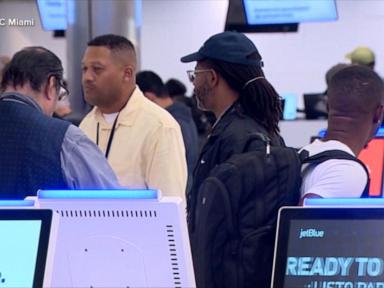
At 4:15 in the morning at Hartsfield-Jackson Atlanta International Airport, the fluorescent lights hum with an indifferent, mechanical buzz.
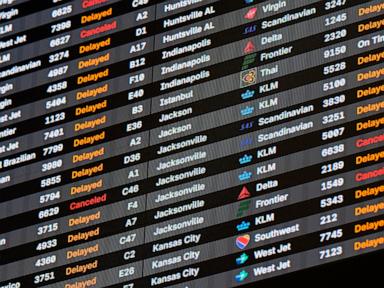
To understand what happened to American air travel this November, picture a hypothetical traveler named Elena. She is thirty-four, gripping a lukewarm paper cup of coffee near Gate B14, watching the departure board flicker. Beside her sits a canvas duffel bag stuffed with three sweaters, a jar of homemade cranberry relish wrapped in bubble wrap, and a boarding pass that cost 31 percent more than the exact same seat did twelve months ago. She is trying to get home to Chicago. Across the concourse, hundreds of other passengers stare at the same glowing amber letters, waiting for a single word to flip from On Time to Delayed.
Wait.
Watch the gate agent's face.
When a flight is delayed by a thunderstorm, travelers know whom to blame. You can look out the terminal window, see the lightning fork across the tarmac, and accept the ancient, humbling truth that nature occasionally vetoes human ambition. You sigh, find an outlet by a Cinnabon, and text your family that you will miss the appetizers.
What happened in the weeks leading up to Thanksgiving 2026 felt entirely different. There were no thunderheads over Atlanta or Las Vegas when planes suddenly sat frozen on the asphalt during a nationwide ground stop—the longest such halt in twenty-five years. The skies were clear. The engines were fueled. Yet the entire nervous system of modern aviation simply blinked, went dark, and left millions of travelers staring at screens that refused to talk to one another.
The Architecture of an Invisible Collapse
Most of us still imagine commercial aviation as a triumph of heavy metal and aerodynamics. We picture turbine blades, pressurized aluminum tubes, and pilots pulling back on yokes to lift three hundred tons of steel into the clouds. That physical hardware is extraordinarily reliable. What has grown brittle is the invisible software web holding those machines apart in the sky.
Consider a simple analogy. Imagine a city of ten million people where every single traffic light, street sign, and GPS map is controlled by one aging switchboard in a basement, connected to thousands of brand-new, hyper-complex smart cars. If a single wire frays in that basement, the cars do not break down. Their engines still purr. Their tires still grip the road. Yet nobody can move an inch without risking a collision, so every intersection freezes simultaneously.
That is the quiet reality of the American airspace system right now. Over the nine-day Thanksgiving stretch between November 23 and December 1, the Federal Aviation Administration projected 417,775 flights operating across the country—a sixteen-year high, peaking at more than 52,000 flights in a single Tuesday. We are pushing record-breaking volume through digital infrastructure that, in many control centers, still relies on decades-old architecture patched together with modern routing code.
When a router installation misfired earlier this month, triggering that nationwide ground stop, followed days later by separate carrier-level tech outages, the shockwave didn't stay contained to one terminal. Air travel operates like a synchronized relay race where the baton is a gate slot and a crew's legal duty clock. Drop the baton in Houston at noon, and a family in Seattle finds their evening flight canceled six hours later—even if the weather in the Pacific Northwest is pristine.
Paying First-Class Prices for Greyhound Anxiety
The emotional toll of this fragility hits harder when you look at the receipt.
According to data from the travel-booking platform Hopper, domestic roundtrip airfares for Thanksgiving surged roughly one-third higher than last year's averages, climbing to their highest holiday levels in a decade. Higher jet fuel expenses tied to global instability pushed base fares up, while record demand absorbed nearly every available seat.
I remember standing in a customer service line at Newark two Novembers ago, listening to a father try to explain to his seven-year-old son why they were sleeping on carpeted airport benches instead of visiting his grandparents. The fluorescent glare made everyone look pale and exhausted. The air smelled like stale pretzels and floor wax. Back then, the culprit was an ice storm. People shared phone chargers, traded snacks, and bonded over a shared adversary.
This season, the mood in the terminals has carried a sharper, colder edge. When you pay a premium price for a ticket, you subconsciously buy a promise of competence. Instead, travelers arrived at airports already braced for failure.
Take the real-world sentiment echoed across concourses from Newark to Los Angeles this November. Regular flyers have started treating a three-hour early arrival not as cautious padding, but as a bare-minimum survival tactic. Frequent travelers who once romanticized flight now talk about commercial aviation the way commuters talk about a crowded municipal bus line during rush hour. Bob van der Linden, acting chair of the aeronautics department at the National Air and Space Museum, captured this shift with blunt clarity: air travel has become an indispensable utility, taken entirely for granted until the moment it stalls.
The romance is gone. What remains is a high-altitude commute where a single line of corrupted code can strand ten thousand people before breakfast.
Why Nobody Just Drives Anymore
If flying has become so expensive and unpredictable, why did more than four hundred thousand flights still take off during Thanksgiving week?
The answer lies in how deeply aviation has reshaped American geography. Over the past forty years, families scattered across time zones for jobs, universities, and affordable housing. A forty-five-minute flight between regional hubs replaced what used to be a grueling nine-hour drive. For a short hop—say, Washington to North Carolina, or Southern California to Arizona—many families actually did abandon the airport this year, choosing the predictable boredom of interstate traffic over the roulette wheel of airline IT systems.
Yet for anyone crossing two or more time zones, driving isn't a realistic alternative. You cannot drive from Boston to Denver and back over a four-day weekend without spending three of those days staring at painted white lines through a windshield. We are tethered to the sky by the very convenience that flight created.
And here is the paradox that keeps airline executives awake at night: the system's greatest vulnerability is its own efficiency. To keep fares competitive during normal weeks, carriers eliminated slack. Planes spend less time sitting idle at gates. Crews are scheduled with tight turnarounds. Backup aircraft are scarce. In engineering, removing slack maximizes profit during smooth conditions, yet it destroys resilience the second an unexpected shock hits.
Think of a tightly wound guitar string versus a loose piece of rope. The taut string produces a clear, sharp note—until you turn the tuning peg a fraction too far, and it snaps violently.
How to Bulletproof Your Next Holiday Trip
Knowing that the infrastructure is strained doesn't mean you have to surrender your holiday to panic. It does mean you need to stop flying the way people flew in 2015. If you are stepping into an airport during peak travel windows—whether for the December holidays or any major seasonal surge—you can stack the odds back in your favor through deliberate, defensive planning.
First, fly at dawn, never at dusk. Delays in commercial aviation compound like high-interest debt. The 6:00 AM departure sits on the tarmac overnight; its crew is rested, its gate is empty, and the airspace network has had six quiet hours to clear residual glitches. By 5:00 PM, every minor router hiccup, crew timeout, and coastal rain squall from earlier in the day has stacked up into a nationwide bottleneck.
Second, ruthlessly eliminate connections. Every layover multiplies your exposure to cascading system failures. Paying an extra hundred dollars for a nonstop flight isn't a luxury anymore; it is an insurance policy against sleeping in a terminal hub when a regional carrier's scheduling server crashes.
Third, never check a bag during peak tech instability. When airline reservation and baggage-routing databases lose sync, airplanes eventually start flying again long before luggage systems recover. A carry-on roller bag keeps your clothes, medications, and gifts physically tethered to you, allowing you to pivot to a different airline or even a rental car if your original flight collapses.
Fourth, keep an exit strategy loaded before you leave your driveway. Download your carrier's app, turn on push notifications, and know the exact flight numbers of the next two departures on competing airlines before you even reach security. When a ground stop hits, the two hundred people on your plane will rush the single gate agent simultaneously. The travelers who rebook within ninety seconds are the ones already dialing the airline's international support line while walking briskly toward an empty gate.
Finally, understand your leverage. Federal rules require airlines to issue prompt cash refunds—not merely expiring travel vouchers—if your flight is canceled or significantly delayed and you choose not to travel. Knowing that rule strips away the helpless feeling of being trapped in a bad itinerary.
The Quiet Bargain at Thirty Thousand Feet
Let us return to Elena at Gate B14 in Atlanta.
At 5:40 AM, the amber letters on the departure board finally flickered, paused, and turned green. Boarding began. As she walked down the jet bridge, feeling the sudden rush of cold morning air through the rubber bellows connecting the terminal to the fuselage, the tension in her shoulders dropped by an inch.
She stowed her duffel bag, buckled her seatbelt, and watched the ground crew pull the chocks away from the nose wheel. Outside her oval window, dozens of tail fins gleamed under the sodium lights, each representing hundreds of people trying to bridge the distance between where they live and whom they love.
We live in an era where we have mastered the physics of lifting human beings seven miles above the earth at five hundred miles an hour, yet we are still learning how to keep the digital threads below us from tangling. Until the billion-dollar upgrades to our aging airspace networks are fully built and tested, every holiday journey carries that quiet bargain.
The engines spooled up with a low, familiar roar that vibrated through the floorboards. The plane rolled forward, turned onto the runway, and accelerated until the concrete blurred into gray ribbon. Then the nose lifted, the wheels left the ground, and for three hours above the clouds, none of the broken screens on earth mattered at all.