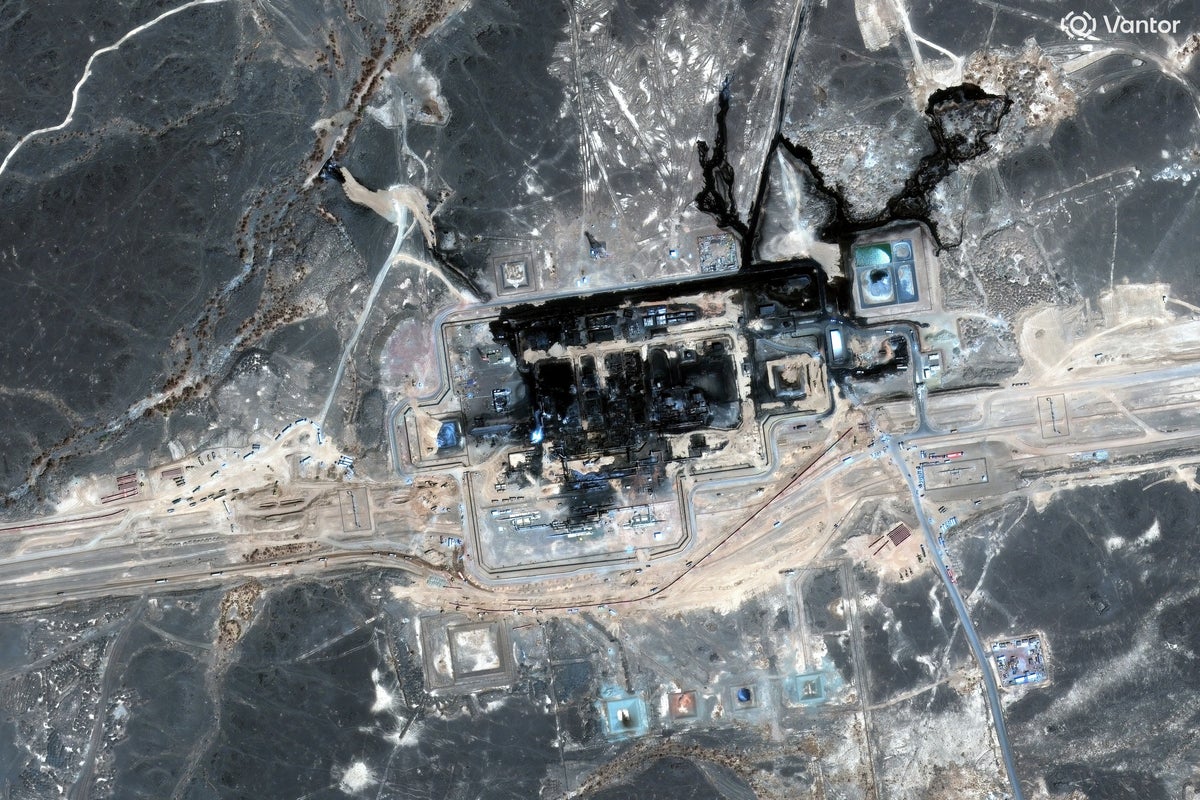
Oil prices jumped by nearly three percent following fresh militant strikes targeting Saudi Arabian energy infrastructure, triggering a familiar wave of market panic. Traders reacted instantly to the threat against the world's most critical crude arteries. Yet, beneath the immediate price spike lies a much more uncomfortable reality that routine market reporting consistently misses. The vulnerability of global crude supplies extends far beyond a single geopolitical headline. When drones or missiles strike processing facilities in the Persian Gulf, the disruption exposes a systemic fragility that decades of technological advancement have failed to fix.
Energy markets operate on a knife-edge of perception and physical throughput. Every time production facilities in the Middle East face hostile action, futures contracts surge because modern energy logistics leave virtually zero margin for error. Global spare production capacity remains concentrated in very few hands, primarily within Saudi Arabia. When those specific assets take a hit, the psychological shock ripples across shipping lanes, insurance premiums, and refining margins within minutes.
Understanding this dynamic requires looking past the daily ticker tape and examining how global supply chains actually function.
The Illusion of Redundancy in Crude Logistics
For decades, energy conglomerates and state-backed producers promised a more resilient market. They pointed to diversified supply sources, the rise of North American shale, and expanding strategic petroleum reserves as permanent buffers against regional conflict. That narrative crumbles the moment critical infrastructure experiences physical damage.
Shale production in the Permian Basin or offshore fields in the North Sea cannot simply ramp up overnight to offset millions of barrels of lost Saudi output. Pumping oil from shale formations involves complex supply chains, sand logistics, crew availability, and pipeline takeaway capacity that take months to accelerate. When primary processing hubs face sudden shutdowns, secondary basins cannot fill the immediate void. The global market relies on heavy sour crude grades that only certain refineries can process, meaning light sweet alternatives cannot serve as direct drop-in replacements.
Physical bottlenecks dictate market reality. A processing plant attacked by drones does not just lose output; it loses specialized stabilization units, sulfur-removal columns, and compression stations that require precise engineering components to repair. These replacement parts are rarely sitting on a shelf waiting for an emergency. They are custom-built heavy machinery requiring months of fabrication time.
The Financial Architecture of Geopolitical Risk
Financial institutions and commodity traders price these kinetic attacks not just on the immediate barrels lost, but on the probability of escalation. Insurance syndicates in London recalibrate marine hull and cargo rates almost instantaneously when hostilities flare near major shipping choke points like the Strait of Hormuz or the Bab-el-Mandeb strait.
Higher insurance premiums translate directly into higher delivered costs for refiners in Asia, Europe, and the Americas. Even if the physical oil keeps flowing through bypassed routes, the friction cost of moving that energy increases dramatically. Tanker owners demand risk premiums to send multi-million-dollar vessels into contested waters. Charter rates spike. Storage tanks at key transit hubs fill up as buyers hedge against further disruptions.
This creates a self-reinforcing cycle of inflation. Higher crude prices bleed directly into petrochemical feedstocks, diesel costs for freight transport, and jet fuel pricing for commercial aviation. Central banks attempting to cool broader economic inflation find their monetary policy tools entirely ineffective against supply-side shocks driven by geopolitical violence. Raising interest rates does not repair a damaged fractionation tower in Abqaiq or deter non-state actors operating asymmetrical drone warfare.
Strategic Vulnerabilities in State-Owned Energy Monopolies
Concentration risk remains the single greatest unmanaged threat in global energy security. When a nation relies heavily on massive, centralized processing facilities like those operated by Saudi Aramco, efficiency gains come at the direct expense of operational resilience. Mega-facilities process millions of barrels per day through interconnected piping networks. While this centralization lowers operating costs per barrel, it also creates catastrophic single points of failure.
A decentralized energy grid absorbs shocks much better than a monolithic one. However, the geology of conventional oil extraction in the Middle East dictates massive, centralized operations. Wells must be gathered, stabilized, and treated at scale before export.
Security forces in the region have invested heavily in anti-drone technology, Patriot missile batteries, and electronic jamming systems. Despite these multi-billion-dollar defense umbrellas, low-cost aerial drones and cruise missiles maintain an asymmetric advantage. Attackers need only occasional success to rattle global markets, while defenders must achieve a near-perfect interception rate 365 days a year.
Beyond the Headline Spike
As markets digest the immediate aftermath of these strikes, the long-term capital allocation trends tell a revealing story. Major international oil companies continue to face immense shareholder pressure to prioritize capital returns, dividends, and decarbonization pathways over aggressive upstream exploration and redundancy building. State actors, meanwhile, focus heavily on downstream petrochemical integration to secure future revenue streams as global transport electrifies, leaving physical crude infrastructure exposed to evolving security threats.
The three percent price jump following the latest strikes is merely a symptom of a deeper structural imbalance. Global energy security rests on a fragile architecture of centralized production and hyper-efficient logistics chains that struggle to withstand modern asymmetric warfare. Until capital markets and producers price true infrastructural resilience into their long-term models, every geopolitical flare-up in the Persian Gulf will continue to hold the global economy hostage to the next incoming projectile.