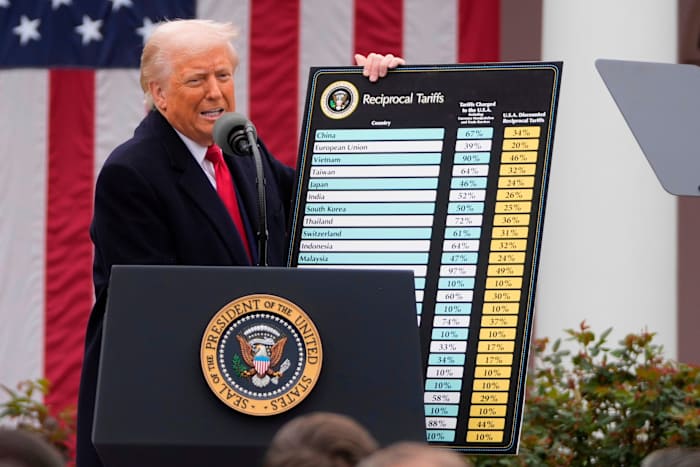
Trading partners are fuming over Washington’s recent push to couple steep tariff hikes with foreign forced labor allegations. The outrage is loud, coordinated, and utterly predictable. Diplomatic cables are humming, ministers are giving fiery press conferences, and mainstream analysts are lining up to denounce trade protectionism masquerading as moral crusade.
They are looking at the entire equation upside down.
The conventional narrative framing this debate assumes trade policy exists in a vacuum of noble free-market ideals, where tariffs are merely blunt instruments of economic punishment. Outraged foreign officials claim that targeting forced labor in supply chains is just a thin veil for raw domestic protectionism.
They are half right, but for all the wrong reasons.
What the outrage machine misses is that supply chain opacity has functioned as a hidden, massive subsidy for decades. When trading partners complain about unilateral trade actions, they aren't defending fair competition. They are defending a system where compliance costs are systematically exported to nations willing to enforce baseline human rights standards.
The Lazy Consensus on Trade and Enforcement
For twenty years, the standard playbook for international trade was simple: outsource production to the lowest-cost node, ignore the institutional machinery that keeps those costs low, and call the result economic efficiency.
When western regulators began tightening enforcement—using mechanisms like the Uyghur Forced Labor Prevention Act (UFLPA) and expanded customs withhold release orders—corporate supply chain leads panicked. The complaint now making the rounds in international forums is that these trade restrictions act as arbitrary barriers to trade, penalizing legitimate exporters because of isolated compliance failures.
I have sat in boardroom strategy sessions where executives openly treated labor compliance as a PR problem rather than an operational reality. They budgeted millions for glossy sustainability reports while allocating pocket change to actual tier-three supplier audits. They assumed the regulatory pressure was a passing political fad.
It wasn't.
The argument that targeted import bans create undue hardship for global supply chains fundamentally misunderstands how modern supply chains operate. If a country’s export sector relies on murky, un-auditable sub-tier suppliers to remain cost-competitive, that isn't a comparative advantage. It is a regulatory liability waiting to explode.
The Economic Mirage of "Cheap" Imports
Let’s dismantle the idea that domestic tariffs tied to human rights enforcement are merely destructive to global welfare.
Standard trade theory argues that removing barriers maximizes global output. But standard trade theory rests on the assumption that capital and labor operate within systems of enforceable law and transparent contracting. When state-sponsored forced labor or unmonitored coercion enters the supply pipeline, market pricing breaks down.
- Artificially Low Input Costs: Compulsory or coerced labor depresses wages across entire regional sectors, creating an un-matchable price floor.
- Asymmetric Compliance Burdens: Manufacturers operating in high-enforcement jurisdictions pay for compliance, fair wages, and auditing. Exporters operating in opaque jurisdictions avoid these overhead costs entirely.
- Systemic Risk Mispricing: Companies buying cheap inputs without verifying labor sources are simply taking on hidden political and legal risk. When customs authorities seize a shipment, that isn't a market failure—it is the risk finally being priced in.
To pretend that penalizing these practices is an arbitrary tariff hike ignores basic market mechanics. It isn't protectionism to demand that imported goods meet the same baseline legal standards required of domestic producers. It is the elimination of an illicit subsidy.
The Compliance Blindspot
The loudest complaints about recent enforcement actions center on procedural complexity. Foreign trade ministries argue that proving the absence of forced labor in deep supply chains is an impossible burden, designed specifically to block imports.
This objection reveals a structural failure in how global sourcing was built.
For decades, enterprise supply chains were designed for speed and cost minimization, explicitly ignoring deep trace-ability. Companies tracked tier-one suppliers religiously because that was where invoices were paid. Tier-two, tier-three, and raw material inputs were left completely unmonitored.
Imagine a financial institution claiming it couldn't comply with anti-money laundering regulations because tracking where funds originated was "too complex." They would be stripped of their license within a week. Yet, in global physical trade, that exact excuse has been treated as a valid economic defense for years.
The reality is uncomfortable: if your supply chain is too complex to audit, your supply chain is broken.
The Downside of the Hardline Approach
There is a real risk to taking an aggressive enforcement stance through trade policy, and it is counterproductive to pretend otherwise.
When enforcement mechanisms rely heavily on broad rebuttable presumptions, small and medium-sized enterprises (SMEs) get crushed first. Multinational conglomerates can afford to deploy advanced trace-ability tech, hire specialized legal teams, and shift sourcing networks to alternative regions over a weekend. Smaller operators cannot.
Furthermore, weaponizing trade enforcement runs the risk of fragmenting the global trading system entirely. When trade policy feels unpredictable or politically weaponized, target nations don't simply comply; they build alternative trade corridors that bypass regulated markets altogether. The result isn't better labor conditions globally; it's a split global economy where high-standard markets trade with each other, and low-standard markets trade in a shadow ecosystem.
That risk is real. But using that risk as an excuse to maintain an un-auditable status quo is intellectual dishonesty.
The Real Shift Foreign Partners Must Accept
Foreign trade partners complaining about shifting import rules are fighting yesterday's war. The era of frictionless, zero-questions-asked global trade is over, and it isn't coming back regardless of which political party sits in Washington.
The path forward isn't to file grievances at the WTO or issue statements decrying protectionism. The path forward is total structural transparency.
Nations that want uninterrupted access to major consumer markets need to understand that trace-ability is now a core requirement of international commerce. The real winners of the next decade won't be the countries with the lowest base labor costs. They will be the countries that build verifiable, transparent, and legally defensible supply chain infrastructure that can survive an audit.
Stop complaining about the tariffs. Fix the supply chain.


