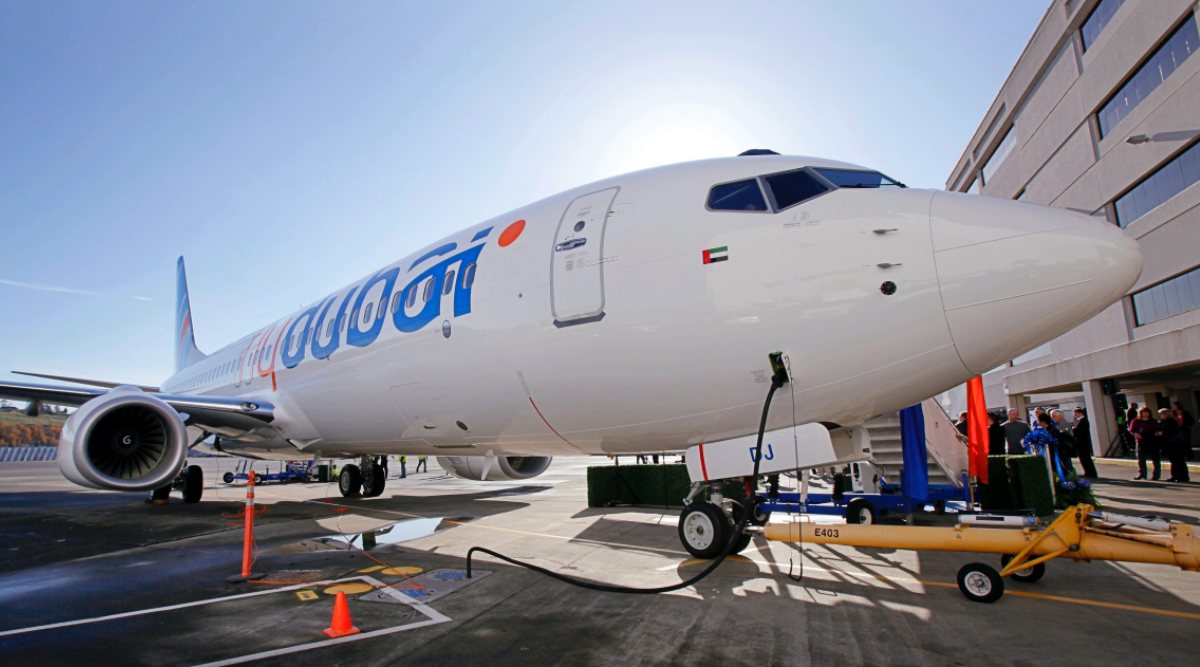
FlyDubai did not open the world to Israeli travelers. It just rerouted them through a toll booth run by a government that views geopolitical neutrality as a liquidity strategy.
For years, the aviation press has peddled a lazy, feel-good narrative. Every time an Airbus or Boeing bearing the FlyDubai livery touches down at Ben Gurion Airport, media outlets rush to publish breathless homages about diplomatic bridges, cultural exchange, and low-cost convenience. The mainstream consensus paints this carrier as the ultimate equalizer, a magical transit valve connecting Tel Aviv to Bangkok, Colombo, and beyond via Dubai International Airport.
It is a comforting illusion. And it is entirely wrong.
When you scratch beneath the glossy marketing veneer of the Abraham Accords commercial boom, a starkly different reality emerges. FlyDubai is not a charitable connector bridging ancient divides. It is an aggressive state-backed instrument of aviation hegemony designed to capture high-yielding captive traffic, siphon profits away from domestic carriers, and anchor regional mobility to a foreign infrastructure hub.
To understand why this is a trap rather than a triumph, you have to look past the discount ticket prices and examine the mechanics of sovereign aviation security, structural dependency, and the brutal economics of Gulf hub-and-spoke empires.
The Myth of Neutral Airspace and Open Skies
The foundational premise of the pro-FlyDubai narrative rests on the idea of normalization. The argument goes that commercial flights normalize relations, foster economic interdependence, and make the world smaller for everyday passengers.
This sounds wonderful at an international relations symposium. In the harsh reality of global aviation, it is dangerously naive.
Aviation is never neutral. It is an extension of national security and economic sovereignty. When an Israeli traveler books a connection through Dubai instead of flying point-to-point or utilizing domestic capacity, they are not participating in a borderless utopia. They are outsourcing their global mobility to a foreign government.
Dubai’s aviation strategy, spearheaded by Emirates and executed with surgical precision by its low-cost sibling FlyDubai, is built on a simple doctrine: crush regional competition by absorbing feeder traffic into a massive, heavily subsidized desert super-hub. FlyDubai’s entry into the Tel Aviv market was never about altruism or passenger welfare. It was a calculated land grab. By offering frequent, heavily marketed connections eastward, they captured a lucrative demographic of travelers who were previously bottlenecked or forced into inefficient western European connections.
However, convenience is the anesthesiology of strategic dependency.
When a nation's primary transit pipelines to Asia and Africa run through a single foreign hub controlled by a government with shifting geopolitical alignments, that nation has traded old restrictions for a modern, sophisticated leash. If regional tensions flare—and
Why FlyDubai Is A Dangerous Crutch For Israeli Travelers
travel
Every aviation pundit with a keyboard loves to gush over FlyDubai. They frame the carrier's Tel Aviv to Dubai route as a diplomatic masterpiece, a golden bridge linking two formerly distant economies, and an absolute blessing for Israeli wanderlust.
It is lazy journalism. It is corporate PR dressed up as analysis.
I have watched corporate travel budgets bleed out and leisure passengers get stranded because everyone drank the FlyDubai Kool-Aid. When you treat a single regional transit monopoly as your primary umbilical cord to the rest of the planet, you are not engaging in smart travel strategy. You are playing Russian roulette with your itinerary.
Let us dismantle the myth.
The Illusion of Structural Permanence
The conventional wisdom says FlyDubai solved the East-West connectivity problem for Israeli passport holders. Overnight, corridors to Asia, Africa, and Australasia opened up without requiring a grueling backtrack through traditional European hubs like Frankfurt, Zurich, or London Heathrow.
This narrative ignores baseline economic and operational reality. FlyDubai is a low-cost affiliate of Emirates, operating narrowbody Boeing 737 aircraft on medium-haul routes, feeding into a massive widebody network at Dubai International Airport. Sounds efficient on paper. In practice, it creates a brittle dependency.
When airspace permissions shift, when regional tensions spike, or when slot congestion at DXB hits a wall, that narrowbody pipeline becomes an immediate bottleneck. I have spoken with corporate logistics directors who watched their executive travel plans collapse because a single operational hiccup at a Gulf hub stranded passengers with zero re-accommodation options on competing legacy carriers. There are no broad interline alliance safety nets here. You are locked into a proprietary ecosystem where your ticket holds zero leverage if things go sideways.
Let us look at the mechanics of narrowbody trunk flying. Pushing high-density Boeing 737s on four-to-six-hour legs strains turnaround times, limits cargo revenue, and creates passenger fatigue that cascades into the wider connection window. If your initial inbound leg from Ben Gurion is delayed by sixty minutes due to airspace routing adjustments, your connection margin at DXB vanishes. And unlike a major European hub with multiple daily rotations to major Asian financial capitals, a missed connection on a regional low-cost feeder means sitting in a terminal for twenty-four hours waiting for the next available seat allocation.
The Captive Audience Tax
Let us talk about pricing, because the romanticized version of FlyDubai leaves out the balance sheet entirely.
When choice is artificially constrained by geopolitics and localized airspace restrictions, airlines do not compete on price; they extract rent. Passengers look at the flight time—roughly four hours to Dubai—and assume they are getting a bargain compared to legacy European carriers.
They miss the ancillary trap. Bag taxes, seat selection fees, meal add-ons, and code-share pricing gymnastics inflate the total ticket cost until it matches or exceeds traditional full-service offerings. More importantly, when demand surges because alternative routing options dwindle, FlyDubai’s dynamic pricing engine treats captive Israeli travelers like a blank check.
Imagine a scenario where a regional carrier realizes its customer base has virtually no alternative path to Bangkok, Manila, or Mumbai without flying an absurdly circuitous route or facing severe diplomatic hurdles. Pricing algorithms do not feel empathy. They maximize yield. You are paying a geopolitical premium masked as a discount fare.
Industry insiders know that true low-cost carriers thrive on intense point-to-point market competition. FlyDubai operates in a quasi-monopolistic vacuum on specific regional corridors. Without genuine multi-carrier competition driving down base yields, the consumer absorbs every single unit of inefficiency. You are funding their margin expansion while thanking them for the privilege of a boarding pass.
The Geopolitical Fragility Factor
Air travel is inherently political, but relying on a Persian Gulf hub while navigating Middle Eastern turbulence is an advanced-level risk management failure.
The mainstream consensus assumes that aviation agreements signed during a political thaw are bulletproof. History suggests otherwise. Diplomatic winds shift faster than a Boeing 737 can taxi. When a regional dispute flares up, the first thing to evaporate is predictable airspace access.
If you route your entire long-haul travel life through a single regional choke point, your personal mobility is inextricably tied to foreign policy decisions made in capitals you cannot influence. True travel resilience requires diversification. It means maintaining access to multiple independent corridors—such as North American vectors via European flag carriers or southern routes through Mediterranean partners.
Putting your eggs in the FlyDubai basket is comfortable until the basket becomes a target. I have seen companies lose entire sales pipelines because their executive teams were stranded in transit hubs during sudden regional flare-ups. Redundant routing is not paranoia; it is basic operational hygiene. If your travel architecture has a single point of failure, it is not a system—it is a single point of collapse.
Dismantling the Hub-and-Spoke Fallacy
Why do travelers default to the Dubai detour? Convenience bias. The human brain craves the path of least resistance. Booking a single ticket from Ben Gurion to DXB, followed by an Emirates connection, feels clean.
It is intellectually lazy.
Smart travelers reject the binary choice between a tedious European layover and a vulnerable Gulf choke point. They look at multi-ticket arbitrage, independent regional positioning flights, and alternative western vectors that bypass volatile airspace entirely.
If you are flying to Asia, stop treating Dubai as the default compass point. Look at Hellenic, Cypriot, or even eastern Mediterranean staging posts that offer lower correlation to Gulf-specific disruptions. If you are flying west, stop backtracking east just to catch a connecting flight that makes a horseshoe out of your journey.
Let us address the physics of flight routing. Flying east from Tel Aviv to Dubai only to board another flight heading southeast or east makes geographical sense if your destination is the Indian subcontinent or Southeast Asia, but doing it for global travel as a blanket rule is inefficient routing. It adds unnecessary block hours, burns excess fuel, and exposes passengers to cumulative fatigue.
Reclaiming Your Itinerary
Stop swallowing public relations talking points about regional integration. Treat airlines for what they are: profit-maximizing entities operating in hyper-volatile environments.
Next time you book a ticket, run a stress test on your itinerary. Ask yourself what happens if the connection breaks, if airspace closes, or if prices spike by four hundred percent overnight. If your entire backup plan relies on a single airline's willingness and capacity to rebook you through a congested desert mega-hub, you do not have a travel plan. You have a prayer.
Cut the cord. Diversify your vectors. Stop paying the captive audience tax. Take control of your routing before the next operational bottleneck makes the decision for you.