Two United States Navy aviators punched out of their aircraft milliseconds before catastrophe struck the flight deck off the coast of Virginia, leaving four sailors injured and reigniting hard questions about the inherent dangers of naval aviation.
The incident, involving a routine training or operational flight ending in a sudden emergency during recovery aboard a nuclear-powered aircraft carrier, underscores the razor-thin margin for error that defines carrier aviation. When an aircraft traps on a rolling flight deck, physics leaves zero room for hesitation. The ejection seat remains the ultimate safety valve, a violent mechanical intervention designed to pull aircrews away from multi-million-dollar wreckage when arresting gear or control surfaces fail. Yet, the ejection itself is only part of the equation. Four flight deck crew members sustained injuries during the mishap, highlighting a grim operational reality: when things go wrong on the modern carrier flight deck, the danger spreads instantly to the men and women servicing the aircraft.
The Brutal Physics of the Trap
Landing an aircraft on a carrier is often described as a controlled crash. A multi-ton jet approaches the stern at high speed, its tailhook hunting for one of four cross-deck pendants stretched across the angled flight deck.
Pilots do not flare. They fly the aircraft straight into the deck to ensure the hook catches the wire, slamming the landing gear down with tremendous force. The arresting gear then absorbs the kinetic energy, halting the jet within a few hundred feet. This process places extreme stress on airframes, mechanical linkages, and human spines. When a landing profile degrades at the final fraction of a mile, the pilot must make an instantaneous decision between wrestling a failing machine onto the deck or initiating an ejection.
Modern ejection seats, such as the zero-zero variants utilized by the Navy, are marvels of pyrotechnics and aerospace engineering. They can save a pilot even when the aircraft is stationary on the ground or at zero altitude and zero airspeed. However, firing a rocket-propelled seat inside the envelope of a carrier landing introduces immense variables. Jet blast, proximity to the island structure, the angle of the ship's roll, and the presence of surrounding flight deck personnel create a high-risk environment.
The Silent Risk on the Flight Deck
While public attention inevitably focuses on the surviving aviators who successfully parachuted or were recovered from the water, the injuries sustained by four sailors on the flight deck point to a wider hazard.
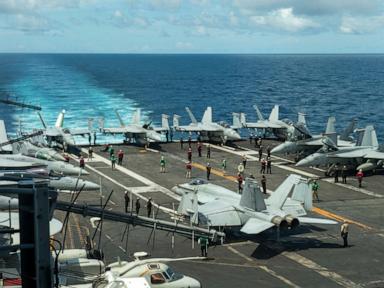
The flight deck of a Nimitz or Ford-class carrier is one of the most dangerous workplaces on earth. Dubrated as the "roof," this workspace combines deafening jet noise, toxic exhaust, rotating turbine blades, and heavy ordnance moving at high tempos. Flight deck crews wear color-coded jerseys—yellow for shooters and directors, green for arresting gear crews and maintenance, purple for fuelers, red for crash and salvage—creating a hyper-synchronized choreography of movement.
When an emergency occurs during recovery, that choreography must adapt in seconds. Debris, shrapnel, unburned fuel, or the sheer concussive force of an ejection rocket motor can cause severe collateral harm to nearby personnel. Sailors are trained to react instantly to contingencies, but the margin between safety and tragedy is measured in single-digit feet. The injuries sustained in this incident demonstrate that the danger extends far beyond the cockpit whenever a carrier evolution goes sideways.
Training and Mishap Investigation
Following any Class A mishap—defined by the Navy as resulting in property damage exceeding statutory thresholds or loss of life or permanent total disability—a rigorous safety investigation begins.
Naval Air Systems Command and specialized safety boards examine telemetry data, maintenance logs, pilot physiological reports, and video footage from the carrier's numerous optical landing systems. Investigators look for patterns. Is there a common denominator in recent landing mishaps? Are maintenance backlogs, operational fatigue, or supply chain pressures affecting fleet readiness?
The Navy operates under a continuous safety culture that treats every mishap as a preventable failure of the system, not merely human error. Pilots undergo rigorous simulator training specifically designed to handle wave-offs, bolters, and emergency bolters. Yet, training cannot entirely eliminate mechanical anomalies, sudden wind shears over the carrier wake, or sudden hydraulic and electrical failures.
As the investigation into the Virginia-off incident continues, the focus will shift from the dramatic visuals of the ejection to the granular forensic details of the aircraft's final moments. The answers will determine whether procedural adjustments are required across the Atlantic Fleet or if this remains an isolated reminder of the unforgiving nature of maritime aviation.
The carrier remains the cornerstone of American power projection, a mobile sovereign airfield capable of delivering striking force anywhere on the globe. But that capability demands a daily toll in risk, paid by aviators and deck crews who live on the edge of disaster every time a jet approaches the wires.