The wind over Illinois on a crisp October afternoon carries a specific kind of quiet. It is the type of silence found only thousands of feet above the cornfields, where the air grows thin and the temperature drops well below freezing. In this silent expanse, a silver, metallic balloon about the size of a large trash bag floated effortlessly. It weighed less than an ounce. It carried a tiny solar-powered transmitter no larger than a credit card, blinking out a faint radio signal every few minutes.
This was the Northern Illinois Bottlecap Balloon Brigade’s "K9YO" pico balloon. It cost roughly twelve dollars.
To the handful of retirees and teenagers who built it, the silver bubble was a vessel of pure curiosity. It was a high-tech message in a bottle, riding the jet stream across oceans and continents, charting the invisible rivers of our atmosphere. They tracked its progress on a pixelated map in a suburban basement, cheering every time it survived another storm.
To a world-weary nation suddenly gripped by airspace paranoia, however, it was something else entirely. It was an unidentified anomalous phenomenon. A threat. An intruder.
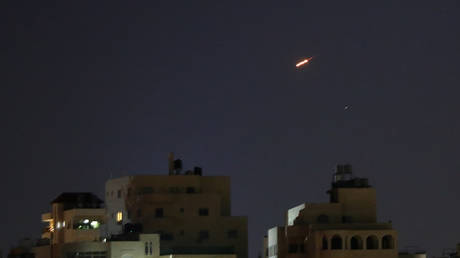
A few days later, a supersonic military jet roared into the same airspace. A pilot, strapped into millions of dollars of life-support equipment, locked his targeting systems onto the silver speck. With the press of a button, a heat-seeking Sidewinder missile detached from the wing.
Boom.
The missile cost four hundred and thirty-nine thousand dollars. The balloon was gone in a flash of vaporized foil.
The Cold Anatomy of a Panic
Fear warps perspective. When a massive, authenticated foreign surveillance balloon drifted across the American heartland earlier that month, it shattered a collective illusion of geographic invulnerability. The public watched, transfixed, as a giant white orb sailed over nuclear missile silos before being dramatically splashed into the Atlantic.
The reaction from the Pentagon was swift, algorithmic, and entirely human. They adjusted the radar.
For decades, military radar systems deliberately ignored the sky's background noise. They filtered out birds, weather formations, and small, slow-moving objects. If you don't filter those out, your screens become an unreadable blizzard of white noise. But under intense political and public pressure to ensure nothing else slipped through, operators opened the filters. They lowered the velocity and size thresholds.
Suddenly, the sky was crowded.
Imagine tuning a radio that has been locked onto a single, clear station for years. You turn the dial just a fraction, and a chaotic wall of static and forgotten broadcasts floods the speakers. That is what happened to the North American Aerospace Defense Command. The sky had always been filled with drifting objects. We just chose not to see them.
Once the filters were lowered, the military found itself looking at a completely different atmosphere. It was a crowded, messy ecosystem filled with scientific instruments, weather monitors, and the innocent experiments of hobbyists. But through the lens of heightened anxiety, every blip was a potential crisis.
When the Sledgehammer Meets the Fly
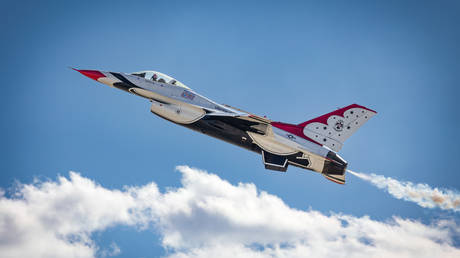
Consider the sheer mechanics of the encounter. An F-16 Fighting Falcon is an apex predator of the skies. It is a machine designed to intercept supersonic fighters and dodge anti-aircraft batteries. Its engine screams with the power of thousands of horses.
The pico balloon, by contrast, moved at the speed of the breeze. It possessed no engine, no steering mechanism, and no malicious intent. It was simply there.
To engage this tiny target, the military deployed an AIM-9X Sidewinder. It is a masterpiece of engineering. The missile uses infrared tracking to lock onto the thermal signature of an enemy aircraft, guiding itself with terrifying agility toward the hottest part of the target.
But a pico balloon has no engine. It emits no heat.
Reports from former Pentagon officials later suggested that the first missile fired at one of these small objects over Lake Huron missed its target completely. It simply lost track of the tiny, cold object and plunged harmlessly—and expensively—into the water below. A second missile had to be fired to finish the job.
The financial calculus of this engagement reads like a satire. The United States military spent nearly a million dollars in ordnance alone to destroy an object that could have been purchased with the pocket change found between couch cushions.
This is the hidden cost of reactionary policy. When a system is optimized purely for elimination, it loses the ability to discern. A sledgehammer will certainly kill a fly on a glass window, but the window rarely survives the process.
The Invisible Stakes of Curiosity
The real tragedy of the Great Balloon Hunt is not the wasted taxpayer money, though that number is staggering enough to make any citizen wince. The true loss is measured in the chilling effect it had on a fragile, beautiful subculture of exploration.
Pico ballooning is one of the last frontiers of amateur science that feels truly democratic. You do not need a multi-million-dollar grant from NASA to participate. You need a few dollars, some basic soldering skills, a tank of helium, and an insatiable desire to know what lies beyond the horizon.
These balloons are launched by middle school science clubs, by grandfather-grandson duos, and by eccentric engineers who love the challenge of building electronics that can survive the brutal environment of the stratosphere. The data these balloons send back is public. It helps amateur meteorologists understand weather patterns. It teaches children that the sky is not a ceiling, but a highway.
When the Pentagon began scrambling jets to shoot down unidentified objects, the hobbyist community went dark.
The Northern Illinois Bottlecap Balloon Brigade did not angrily condemn the military. They did not demand a refund for their twelve-dollar balloon. Instead, they quietly looked at their tracking logs, noticed their balloon had gone missing over Alaska at the exact moment the military reported an intercept, and politely declared their craft "missing in action."
There is a profound sadness in that quiet resignation. A group of citizens, engaging in a peaceful, educational pursuit, suddenly found themselves in the crosshairs of the most powerful military force on Earth. They realized that their curiosity had become a geopolitical liability.
The Landscape of Total Security
We live in an era obsessed with the concept of absolute safety. We want our borders impenetrable, our data unhackable, and our skies completely sterile. It is a comforting dream, but it is fundamentally a fantasy.
To achieve total security, you must eliminate nuance. You must treat every unknown variable as a hostile threat. If a blip on a radar screen cannot immediately identify itself, prove its loyalty, and state its business, it must be erased.
But the sky is not a military base. It belongs to everyone.
When we decide that the only acceptable number of unidentified objects in our airspace is zero, we commit ourselves to a permanent state of war against the mundane. We force our pilots to play a high-stakes, hyper-expensive game of whack-a-mole against weather instruments, stray party balloons, and the innocent dreams of school children.
The ex-Pentagon officials who came forward to highlight this absurdity did not do so to mock the military. They did so as a warning. They understood that an institution incapable of laughing at its own overreactions is an institution bound to repeat them. They saw the danger of a defense apparatus so twitchy, so hypersensitive, that it could be provoked into action by a piece of foil drifting in the wind.
The next time you look up into a clear blue sky, remember the K9YO. It is still out there in spirit, along with hundreds of others like it, riding the invisible currents of the globe. They are tiny, fragile testaments to human curiosity, floating in an ocean of air that we have tried, and failed, to completely conquer.
The sky is vast enough to hold both our fears and our wonders. We must decide which one we want to shoot down first.