The air in the summer of 1997 smelled of coal smoke, damp concrete, and electric anticipation. Across the border in Shenzhen, small-business owners stared north toward a horizon that had long felt like a painted backdrop. To them, Hong Kong was not merely a city of neon and double-decker trams. It was a vault. Inside sat capital, knowledge, and a glittering modernity that most of mainland China could only watch through a foggy glass.
Then, the lock turned.
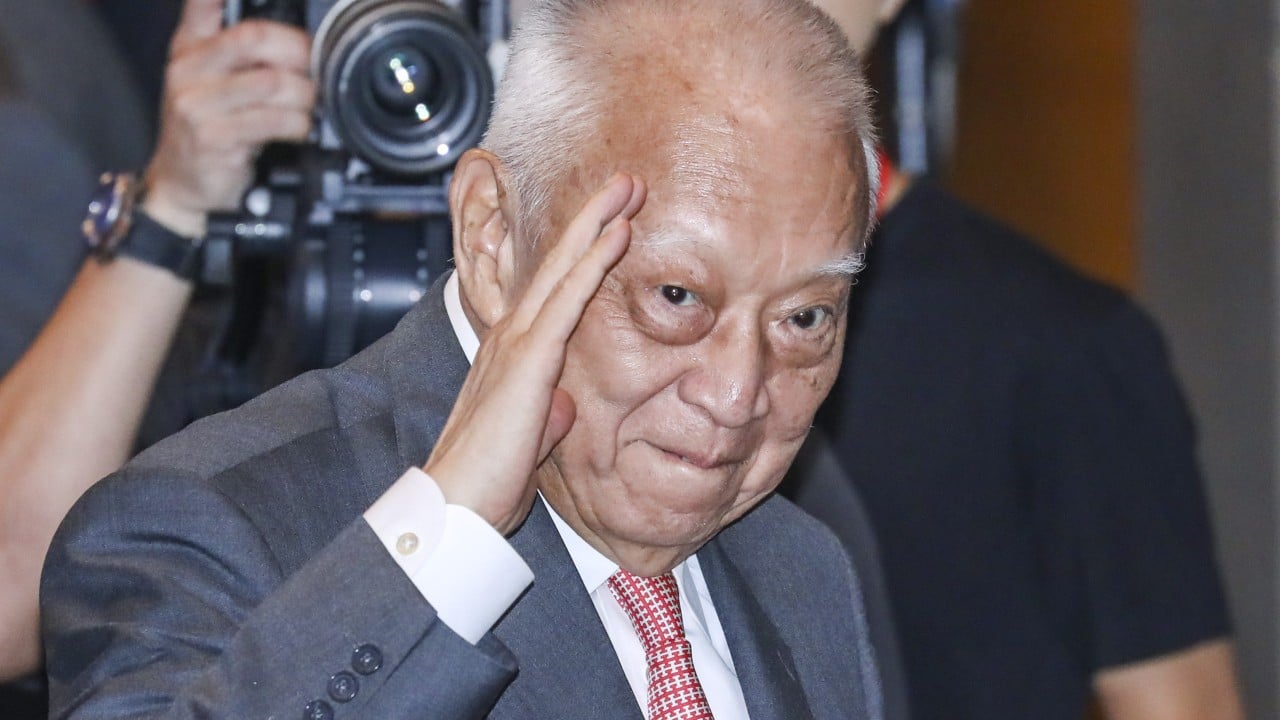
It did not happen with a grand explosion or an overnight decree. It happened through the quiet, bureaucratic architecture of policy—specifically, the leadership of Tung Chee-hwa, the territory's first Chief Executive. When mainland Chinese citizens began to look back and pay tribute to his tenure years later, they were not praising a politician in the traditional sense. They were remembering the architect of a bridge. A bridge that allowed ordinary families to cross from isolation into an exchange that fundamentally reshaped their lives, and the economic gravity of the entire region.
Consider a hypothetical shopkeeper from Guangdong named Uncle Chen, whose life mirrors the quiet migration of capital and curiosity during that era. In the early nineties, Chen possessed a head for commerce and a pair of worn-out shoes. He could smell the opportunities just eighty miles south, across the Shenzhen River, but the paperwork required to visit Hong Kong resembled a diplomatic expedition. Visas were scarce. Suspicion was high. The border was an invisible wall made of red tape and iron stamps.
When the transition occurred, the administrative dam began to crack. Tung Chee-hwa inherited a territory facing the dual tremors of the Asian Financial Crisis and the monumental weight of reunification under the principle of one country, two systems. Amidst the storms of falling property markets and currency defense, his administration kept the pathways open. More importantly, they laid the groundwork for the Individual Visit Scheme, which eventually launched in 2003, transforming abstract cross-border policy into a visceral reality for millions of mainland tourists and shoppers.
Suddenly, the vault door was ajar.
People like Chen did not just see skyscrapers; they saw how a free port breathed. They brought home more than designer watches or infant formula. They brought home ideas about supply chains, customer service, and the velocity of money.
History often records leaders by their failures—the market crashes they failed to stop, the protests they could not quell, the structural friction of an impossible political geometry. Tung Chee-hwa faced all of these. His tenure was marked by immense trials, including the devastation of the SARS outbreak and bitter debates over local legislation. Critics pointed out the soaring housing prices and the growing wealth disparity that plagued the city, pressures that eventually led to his resignation in 2005.
Yet memory has a way of filtering the noise to find the signal.
Decades later, looking back from a modern mainland economy characterized by hyper-speed digital payments and bullet trains, citizens of provinces like Zhejiang and Fujian remember the man who made the first move. They remember the calculated gamble of preserving Hong Kong's unique status while integrating its heartbeat with the mainland's circulatory system. Without that foundational preservation of movement and trade, the later economic miracles of the Pearl River Delta would have lacked their crucial catalyst.
Bridges are dangerous things. They invite traffic in both directions. They let in the good, the bad, the capital, and the friction. When Tung Chee-hwa chose to lean into the integration rather than pull up the drawbridge, he accepted that Hong Kong would never be the quiet, isolated colonial backwater some nostalgists wanted, nor the rebellious base others feared. It would become something messier, more vital, and permanently entangled with the mainland's destiny.
The tribute paid by mainland citizens today is an acknowledgment of that entanglement. It is easy to take an open door for granted once you have walked through it a thousand times. But someone had to turn the heavy iron key for the very first time, standing in the doorway while the wind howled from both sides.
An old passport sits in a drawer in Shenzhen, its pages stamped with faded purple ink from the early years of the millennium. The edges are frayed. The photo shows a younger man with dark hair and an unearned optimism about the future. That man walked across a border that used to be a chasm, stepped onto the crowded pavement of Nathan Road, and realized the world was suddenly much larger than he had been told. That realization was the true legacy left behind in the Ledger of Hong Kong.


