The suit was hanging on the closet door, pressed and waiting. It was charcoal grey, the one he wore to his granddaughter’s graduation, the one that still held the faint, stubborn scent of cedar and old spice.
When someone you love dies, your world shrinks to a checklist of small, agonizing decisions. You choose the tie. You pick the hymns. You decide whether the viewing should be open or closed casket, anchoring your grief to the tangible comfort of a final look, a final touch on a cold hand, a final goodbye. You trust the people in quiet suits who speak in hushed tones to guard that finality. You hand over the body of your father, your wife, your child, believing that the unspoken covenant between the living and the dead will be honored.
Then the phone rings.
A voice on the other end, trembling or clinical, strips away the one thing you had left to give. They tell you there has been a mistake. An administrative oversight. A scheduling error.
They tell you that the body in the charcoal suit is gone. It is already ash.
The Irreversible Line
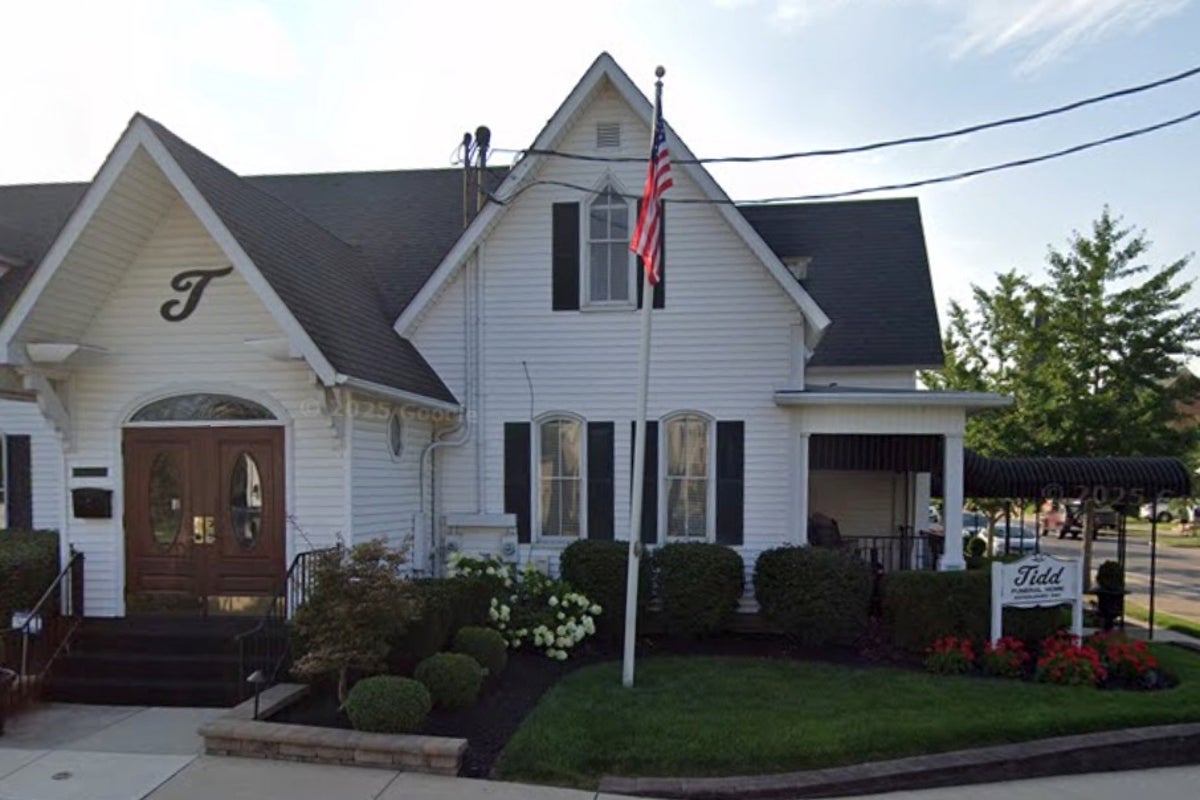
Grief is not a collective experience; it is fiercely, violently specific. When a family in Texas recently filed a lawsuit against a local funeral home, the headlines captured the cold mechanics of the error: "Accidental Cremation." But those two words fail to capture the psychological devastation of what actually occurs when a mortuary blunders past the point of no return.
Cremation is absolute. It is a chemical and thermal reduction that takes mere hours but lasts forever. In the legal realm, we often talk about damages in terms of property, contracts, or physical injury. But how do you measure the theft of a ritual?
Consider the mechanics of a standard funeral home operation. It is a business built entirely on tracking. Like a hospital or a high-end logistics firm, every step requires verification. Wristbands, toe tags, logbooks, and digital registries exist to ensure that the person who enters the facility is the person who leaves it in the manner their family prescribed.
To bypass these safeguards requires a systemic failure of empathy. It means someone looked at a nameplate and chose not to read it. Someone looked at a form and chose not to check it. In the industry, they call it a "mix-up." To the family waiting to see their father's face one last time, it feels like a second killing.
The horror is rooted in the lack of consent. For many, burial is not just a preference; it is a theological mandate, a deeply held cultural tradition, or a comforting psychological boundary. Some faiths believe the physical integrity of the body is tied to the resurrection. To incinerate that body against the explicit wishes of the deceased is to violate their autonomy after they no longer have a voice to protest. It is an eviction from their own final resting place.
The Architecture of a Mistake
To understand how this happens, we have to look behind the heavy velvet curtains of the funeral industry. It is an industry hidden in plain sight, operating on the periphery of our daily lives because we are too terrified to look at it directly.
We treat funeral directors as shamans of comfort, but they run businesses. They face labor shortages, burnout, and the numbing effect of repetition. When you handle death every day, the extraordinary becomes ordinary. The sacred becomes a line item.
Imagine a crowded prep room on a Tuesday afternoon. Three bodies arrive simultaneously from different hospitals. The paperwork is stacked on a clipboard near the door. A phone is ringing. A grieving widow is weeping in the selection room down the hall. In that high-pressure environment, the body ceases to be a person with a story, a family, and a favorite pair of shoes. It becomes a task. A unit of inventory.
If a technician skips just one step—if they fail to match the ID tag on the ankle to the authorization form on the clipboard—the machinery of cremation begins.
The retort, the specialized furnace used for cremations, heats to between 1,400 and 1,800 degrees Fahrenheit. The process takes roughly two hours. During that time, organic matter is consumed by flame, leaving only bone fragments. These fragments are then cooled and processed into a fine, uniform powder.
Once that process is complete, the mistake is absolute. You cannot un-create ash. You cannot separate the remains if two bodies were placed together. You cannot look into an urn and find the cowlick in your brother's hair or the shape of your mother's hands. The physical reality of that person has been erased from the earth, replaced by a gray dust that weighs no more than a few pounds.
The family is left with an empty suit and a profound, dizzying vertigo. They are forced to mourn a ghost whose final moments were defined by a stranger's carelessness.
The Weight of the Lawsuit
When families sue a funeral home for wrongful cremation, they are rarely seeking a financial windfall. Money is a clumsy, useless tool in the face of desecration. They sue because accountability is the only weapon left to them.
The law struggles with these cases. Traditionally, the legal system understands tangible loss. If a surgeon removes the wrong leg, the damage is measurable. If a contractor destroys a house, the cost to rebuild is quantifiable. But what is the market value of a missed goodbye? What is the price of an open-casket viewing that never happened?
Courts often categorize these lawsuits under the intentional or negligent infliction of emotional distress. Lawyers must argue the depth of a family's psychological trauma. They must prove that the nightmares, the insomnia, the sudden panic attacks, and the enduring sense of betrayal are real, measurable injuries.
The defense often relies on the language of bureaucracy. They offer apologies wrapped in insurance terms. They offer to waive the funeral costs, as if a free urn could make up for a stolen legacy. They point to their historical record of compliance, suggesting that this was an anomaly, an act of God, or the fault of a single rogue employee.
But the responsibility cannot be outsourced. When a family signs a contract with a funeral director, they are not just buying a casket or renting a room. They are purchasing custody. They are paying for a sacred guardianship.
The Echoes in the Living Room
The true damage of a wrongful cremation does not happen in the courtroom or the mortuary. It happens in the quiet spaces of the home weeks after the news has broken.
It happens when the family tries to gather for the memorial service. The focal point of the ritual is gone. Instead of a casket surrounded by flowers, there is a photograph or an empty space. The grief becomes abstract, untethered from the physical world. Without a body to bury, the mind struggles to accept the reality of the death. The mourning process stalls, trapped in a loop of disbelief and anger.
Every milestone that follows is tainted by the error. When the family visits the cemetery, they are not visiting a grave; they are visiting a concept. If they chose to accept the ashes, a terrible doubt always lingers in the back of their minds: Is this really him?
That doubt is a poison. It erodes the memory of the person who died. Instead of remembering their laughter, their wisdom, or their quiet moments of kindness, the family is haunted by the image of the furnace. They are consumed by the thought of the mistake itself, replaying the sequence of events that led to the unauthorized destruction.
The funeral industry must confront this reality. As corporate consolidation rises and independent, family-owned funeral homes are bought out by larger conglomerates, the risk of depersonalization increases. When efficiency becomes the primary metric of success, the dead become a queue, and the living become clients to be processed.
We must demand more than just logistical accuracy from those who care for our dead. We must demand a return to the understanding that every body brought through those doors represents the summit of a human life. Each one is a repository of love, grief, and history.
The suit still hangs on the door. It will eventually be packed away into a box, donated, or given to a relative. But it will never be worn by the man it was meant for, and the family will never see him rest within it. They are left with a void that cannot be filled, staring at a handful of dust that arrived too soon, by the wrong means, and under the shadow of a mistake that can never be undone.