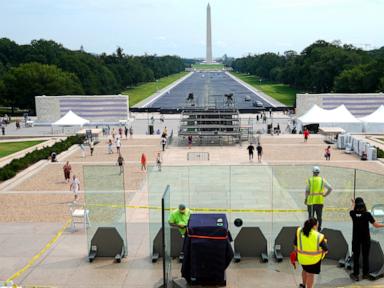
Thousands of activists are packing buses and heading toward the National Mall, and honestly, the timing couldn't be more intense. If you've been paying attention to the political climate leading up to the midterms, you know that the friction over ballot access has reached a boiling point. Civil rights leaders aren't just holding another symbolic gathering; they're sounding alarm bells because the legal foundation protecting equal access has taken massive hits.
When you look past the standard political theater, the core issue driving people to Washington D.C. comes down to a simple question: Who actually gets a say in how the country runs? With federal courts dismantling key provisions of the Voting Rights Act and states aggressively redrawing maps, marginalized communities are realizing that access to the ballot box is shrinking in real-time.
The Legal Landscape Driving the Urgency
You can't understand why activists are mobilizing in D.C. without looking at the courtroom battles piling up. Major civil rights organizations—including the NAACP, the Lawyers' Committee for Civil Rights Under Law, and Black Voters Matter—aren't just marching; they're actively fighting executive orders and legislative changes in federal court. These groups recently intensified lawsuits targeting restrictions on mail-in ballots and administrative changes to voter registration forms.
The frustration is palpable because these rules directly affect everyday voters trying to make their voices heard. When administrative hurdles stack up, voter turnout in historically targeted communities takes the hit. Activists argue that these shifts are designed to dilute political power, making mass mobilization one of the few loud tools left to push back.
Why This Midterm Cycle Feels Different
Marches in the capital have a long history, but this mobilization carries a distinct weight. Organizers like the National Action Network and the Drum Major Institute point out that this is the first major electoral cycle following severe judicial rollbacks. Speakers slated for the National Mall—ranging from seasoned lawmakers to grassroots organizers—are connecting the dots between national policies, local redistricting battles, and the broader fight for racial justice.
If you live in a state where congressional maps were recently redrawn to eliminate majority-minority districts, the stakes aren't abstract. Entire populations are watching their legislative representation get carved up by politicians. That's why thousands are willing to spend hours on buses traveling from the Deep South straight to the steps of the Lincoln Memorial.
What You Can Do Right Now
Sitting on the sidelines isn't cutting it for millions of Americans who view ballot access as a fundamental baseline for democracy. If you want to move beyond just watching the news cycle unfold, you need to take practical steps locally.
- Check your registration status immediately through official voter portals like Vote411 to make sure administrative purges haven't dropped your name.
- Look up your local election board to track upcoming changes to polling locations or mail-in procedures in your specific jurisdiction.
- Support nonpartisan legal defense funds and voter protection coalitions that are fighting active voter suppression cases in the courts.
Democracy doesn't run on autopilot. Pay attention to your local ballot rules, keep pressure on elected officials, and make sure your voice stays counted before the midterms arrive.