The Myth of the Peaceful Perimeter
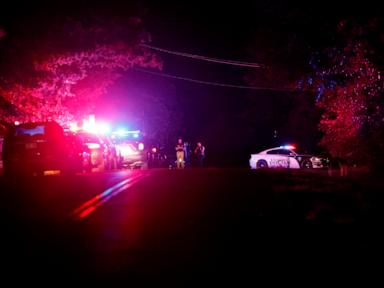
Mainstream media loves a predictable script. A shooting happens at a lakeside party near Oklahoma City, and the coverage immediately pivots to "tragedy in a quiet community." They focus on the body count—13 hospitalized—and the shock of violence piercing a supposedly serene environment. This narrative is lazy. It’s a comfort blanket for people who want to believe that violence is a city-specific contagion.
The truth is harsher. The "rural peace" trope is a marketing gimmick for real estate agents. When you look at the raw mechanics of these incidents, the location isn't a shock; it's a structural weakness. These outdoor, semi-secluded gatherings are security black holes. They offer the illusion of safety while providing zero of the infrastructure required to manage a large, volatile crowd.
The Security Vacuum in Unstructured Spaces
Most people look at a lakeside party and see a fun weekend. I look at it and see a logistical nightmare that was begging for a collapse. I have spent years analyzing risk in high-density environments, and the "casual" nature of these events is exactly what makes them lethal.
In a controlled urban venue, you have defined ingress and egress. You have professional security tiers. You have immediate proximity to Level 1 trauma centers. Move that same crowd to a lake or a rural field, and you lose every single one of those safeguards. You aren't "getting away from it all"; you are removing the floor of modern safety.
- No Access Control: If there is no fence, there is no security. You cannot "vet" a crowd that can walk in from 360 degrees.
- The Bystander Density Problem: In tight, enclosed spaces, people are often more aware of their surroundings. In wide-open "party" spaces, the sprawl creates a false sense of distance that leads to delayed reactions when the first shots fire.
- Response Lag: Oklahoma City is a sprawling metro. When you push these events to the fringes, you are betting your life on the response time of sheriff's deputies who might be twenty miles away patrolling a different county line.
Stop Blaming the Setting and Start Blaming the Logistics
The "People Also Ask" sections of the internet will inevitably fill up with questions like "Is it safe to go to Oklahoma lakes?" or "How can we stop violence at parties?" These are the wrong questions. The premise is flawed because it treats violence as a weather event—something that just happens to you.
The reality is that these incidents are a failure of event management. We have reached a point where any gathering over 50 people requires a tactical mindset. If you are organizing a party and you haven't accounted for a weapon-free zone, a medical extraction plan, and a communication blackout strategy, you are not a host. You are a liability.
Industry "experts" will tell you that you can't prepare for everything. That’s a lie told by people who don't want to pay for professional risk assessment. You can't prevent a person from bringing a gun to a lake, but you can absolutely prevent a situation where 13 people get hit because the crowd had no direction and the security was nonexistent.
The High Cost of the Low-Barrier Entry
Modern social media has turned "low-barrier" events into high-risk zones. A private party becomes a public invitation with one "share." This creates a mismatch between the expected crowd (friends) and the actual crowd (anyone with a data plan).
I’ve seen organizers blow thousands on DJs and lighting while spending zero on a professional perimeter. They assume that because they are "out in the country," the rules of human friction don't apply. They are wrong. Alcohol, heat, and anonymity are a universal solvent for social order.
The Trauma Math
When 13 people are sent to hospitals, the "success" of the medical response is often touted. But look at the math. In a rural or fringe-metro setting, a mass casualty incident (MCI) quickly exceeds the "Golden Hour" threshold for the last victims in the queue.
$$T_{total} = T_{dispatch} + T_{travel} + T_{triage} + T_{transport}$$
In an urban center, $T_{travel}$ might be five minutes. Near a lake outside Oklahoma City? That variable can triple. If you are the thirteenth person hit, your survival isn't based on the skill of the surgeons; it's based on the sheer luck of the traffic patterns on a two-lane road.
The Counter-Intuitive Truth About "Safe" Areas
We need to stop treating these shootings as anomalies. They are the logical conclusion of a society that prioritizes "vibe" over safety protocols. The "lazy consensus" is to call for more police patrols or stricter laws. My contrarian take? We need to stop attending events that don't have a visible, professional security footprint.
If you walk into a party and you don't see a clear exit strategy and a professional team at the gate, turn around. It doesn't matter if it’s a beautiful lakeside sunset or a high-end gala. If the organizers didn't care enough to secure the space, they don't care about your life.
The downside to this approach? It’s cynical. It ruins the "spontaneity" of life. It makes you the "paranoid" person in the friend group. But being the paranoid person is better than being one of the 13 names on a hospital manifest.
Stop asking why these things happen in "nice" places. They happen in "nice" places because "nice" places are soft targets with zero preparation. Security is not a luxury; it is the price of admission for a functional society. If the organizers won't pay it, you will—with interest.