Media coverage of asymmetric warfare has degenerated into a predictable, grim ritual. A strike occurs. Officials on one side release a casualty count. The press plasters the most tragic demographic—usually a child—in the headline. The public reacts with predictable, justified horror.
This is the lazy consensus of modern conflict journalism. It treats war like a scorecard where the entity with fewer casualties possesses the moral high ground, and the entity causing more civilian deaths is automatically guilty of indiscriminate slaughter. For a closer look into similar topics, we suggest: this related article.
This framework is completely broken. It does not explain how wars are won, why they start, or how they end. Worse, it rewards the exact strategy that puts civilians in harm's way in the first place.
By focusing entirely on the tragic symptoms of urban warfare rather than the brutal logic driving it, mainstream reporting fails its readers. It prioritizes emotional reaction over strategic comprehension. If you want to actually understand the intractable reality of the Gaza conflict, you have to stop looking at the casualty numbers in isolation and start looking at the structural incentives of urban siege warfare. To get more details on this development, in-depth reporting can be read at The Guardian.
The Exploitation of Western Moral Architecture
Western military doctrine operates under a strict legal framework defined by the rules of distinction and proportionality. Under the Geneva Conventions, proportionality does not mean equal casualties. It means the anticipated civilian collateral damage of a military action must not be excessive in relation to the concrete and direct military advantage anticipated.
The lazy consensus completely ignores this definition. The mainstream press frequently conflates "proportionality" with "symmetry." If one side loses six people and the other loses none in a specific engagement, the strike is deemed disproportionate by default in the court of public opinion.
This intellectual laziness creates a massive tactical asymmetry. When one belligerent is a state military bound by international law and sensitive to domestic public opinion, and the other is a non-state actor deeply embedded within a dense civilian infrastructure, the traditional calculus of war flips.
In this environment, civilian casualties become a strategic asset for the weaker force. Every civilian death, while tragic, serves a clear geopolitical purpose: it degrades the international legitimacy of the technologically superior adversary. By presenting these events purely as isolated tragedies caused by one-sided aggression, media coverage directly validates this strategy. It transforms human tragedy into an effective asymmetric weapon.
The Reality of Urban Intermingling
Let us address the fundamental military reality that standard reporting refuses to touch: fighting an entrenched insurgency in a high-density urban environment without causing civilian casualties is a logistical impossibility.
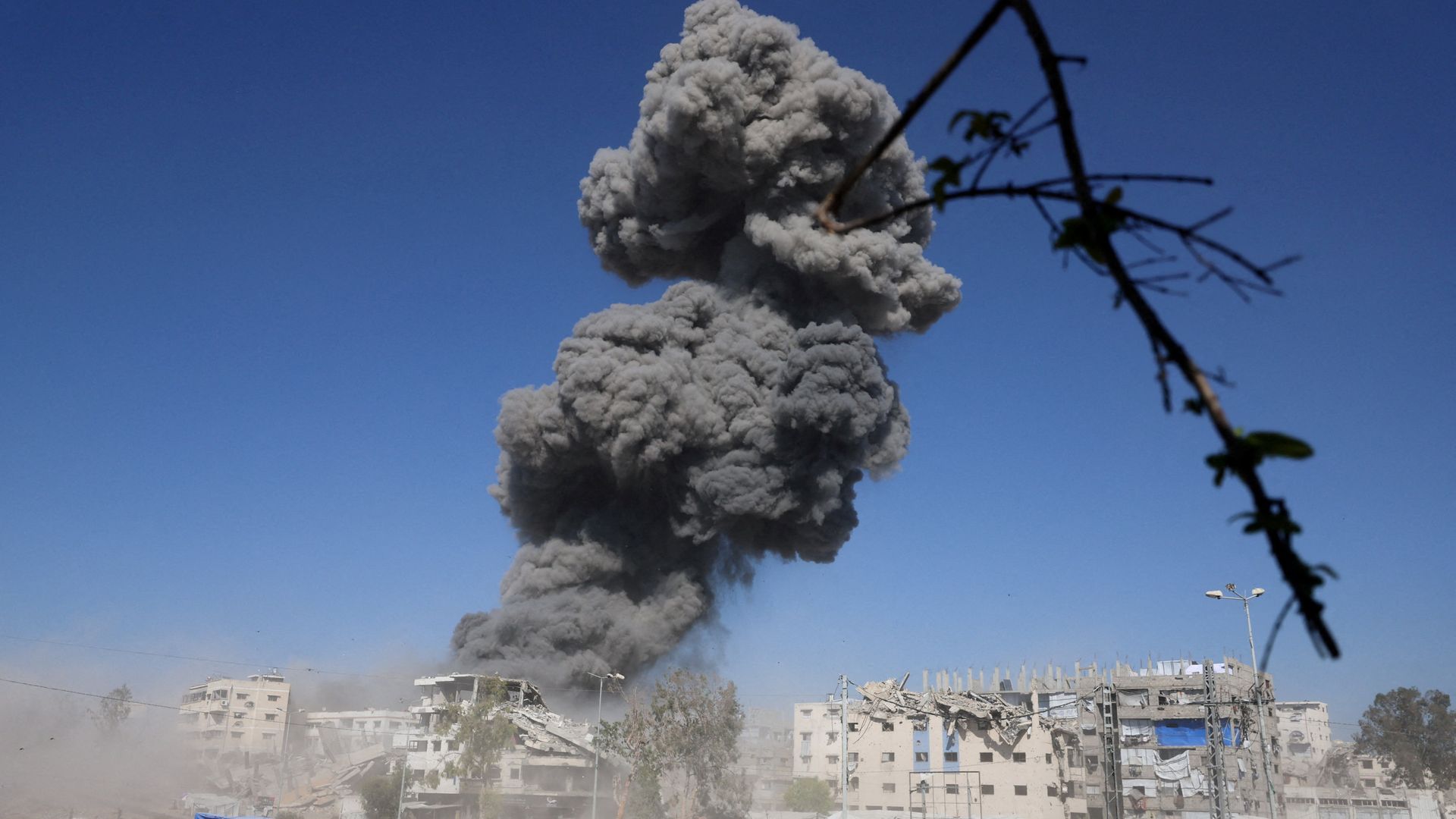
Consider the physical reality of Gaza. It is one of the most densely populated areas on earth. When a military targets a command bunker, a weapons depot, or a rocket launching site that has been deliberately placed beneath a residential building or adjacent to a school, the physical laws of blast radiuses take over.
Journalists frequently ask, "Why did they strike a residential area?" The question itself is flawed. The correct question is, "Why was a military asset positioned in a residential area?"
By framing the strike as an attack on a civilian target rather than an attack on a military target co-located with civilians, the reporting misallocates responsibility. It assumes the striking force has total control over the environment. It ignores the reality that the force choosing where to stand determines where the bombs will fall.
I have analyzed urban operations from Fallujah to Mosul. In every instance, when a conventional military attempts to root out an insurgent force embedded in a city, the civilian-to-combatant death ratio skyrockets. It is not a sign of exceptional malice; it is the structural tax of urban warfare. Pretending otherwise is a form of elite delusion.
The Flaw of Unverified Official Data
Every breaking news report from a conflict zone contains a variation of the phrase "according to Palestinian officials" or "according to local authorities."
In the context of Gaza, these officials belong to the Ministry of Health, which operates under the direct control of Hamas. The mainstream media treats these figures with a level of credulity they would never afford to a Western government or a corporate press release.
There are two massive structural problems with relying on these numbers in real-time. First, the data completely erases the distinction between combatants and civilians. When a nineteen-year-old fighter carrying an anti-tank missile is killed, they are logged in the exact same category as an innocent bystander.
Second, the speed with which these numbers are generated and disseminated makes independent verification impossible. During the 2002 Battle of Jenin, initial reports widely cited by international media claimed a massacre of thousands of civilians had occurred. Subsequent human rights investigations revealed the actual death toll was around fifty-two, the majority of whom were armed combatants.
The media never learns this lesson because the commercial incentives favor speed and emotion over accuracy. A headline screaming about a dead nine-year-old generates immediate engagement. A deeply reported piece analyzing whether the target was a high-value commander, or if secondary explosions from stored munitions caused the collapse of the building, takes days to produce. By then, the news cycle has moved on.
The Discomforting Truth of Asymmetric Leverage
If you want to stop civilian deaths, you have to understand the leverage points of the actors involved.
Right now, international pressure is applied almost exclusively to the conventional military force. The demand is always for a unilateral ceasefire, restraint, or a change in targeting parameters.
This approach has a fatal flaw: it removes any incentive for the non-state actor to stop using human shields. If embedding military assets among civilians successfully shields those assets from destruction—or guarantees a public relations victory if they are destroyed—then the practice will continue indefinitely.
The hard truth is that the current style of emotional, casualty-counting journalism actively prolongs the conflict. It provides the weaker side with a regular infusion of diplomatic leverage, allowing them to reject compromises and maintain a strategy of permanent confrontation.
Stop asking how many people died in the latest strike. Start asking what military objective was pursued, what assets were hidden in that grid coordinate, and why the international community continues to reward a defensive strategy based entirely on the accumulation of civilian tragedies. Until the analytical framework shifts from emotional tallies to strategic realities, the cycle will repeat, the headlines will look identical, and the body count will keep rising.