The coffee was still hot when Sarah walked out to the driveway. It was 7:15 AM on a crisp Tuesday, the kind of morning where the air bites at your nose and you just want to get into a pre-warmed cabin. She hit the unlock button on her key fob. Nothing happened. No chirp. No flash of lights.
She walked closer, her boots crunching on the gravel, reaching for the door handle. Her hand met empty air.
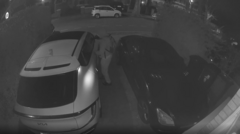
The driveway was empty. Where her dark gray SUV had been parked eight hours ago, there was only a small patch of oil and a square of shattered glass, glinting like diamonds in the morning sun.
Her heart dropped into her stomach. It is a sickening, deeply violating feeling to realize someone has invaded your space and taken your second-most valuable possession. But after the initial wave of panic, Sarah felt a strange, comforting wave of relief. She reached into her pocket, pulled out her phone, and opened a tracking app. A little blue dot pulsed calmly on the screen, sitting in an industrial park just four miles away.
Got you, she thought. She called the police, confident she would have her car back before lunchtime.
She was wrong. Three weeks later, the insurance company declared the vehicle a total loss. The blue dot had been a ghost.
We have been sold a beautiful, high-tech lie.
For the past decade, the tech industry has convinced us that a small piece of plastic and a cellular connection can solve the ancient problem of theft. We slap GPS tags into our gloveboxes, subscribe to premium factory tracking services, and rest easy believing that our cars are tethered to us by an invisible, unbreakable digital thread. We think of trackers as recovery devices.
They aren't. Not anymore.
To understand why your premium tracker is virtually useless in a modern grand theft auto scenario, you have to look past the marketing brochures and step into the reality of organized crime. Car theft is no longer a desperate teenager with a screwdriver joyriding until the gas tank runs dry. It is a highly sophisticated, multi-billion-dollar global logistics enterprise.
When a professional crew targets a vehicle, they operate with the efficiency of a pit crew. They know exactly where the factory tracking modules are hidden. They know the three most common aftermarket hiding spots. Within ninety seconds of punching the ignition, they aren't just driving away; they are actively sanitizing the vehicle.
Consider the reality of a modern thief's toolkit. They don't just carry crowbars; they carry signal jammers. These devices, easily purchased online for less than the cost of a tank of gas, plug into a cigarette lighter and flood the immediate area with noise. They drown out the tiny, fragile signals your car tries to send to GPS satellites or cell towers.
While Sarah was looking at her phone, seeing a static dot in an industrial park, her SUV was already flying down the interstate. The tracker wasn't broadcasting a live location; it was merely repeating its last known coordinate before the jammer choked its voice.
By the time the police had the paperwork processed to dispatch a cruiser to that industrial park, the tracker itself was likely sitting in a puddle on the side of the highway, ripped out and tossed from a moving window. The car was already inside a shielded shipping container, heading toward a port.
But let's say the thieves are sloppy. Let's say they leave the tracker intact. Surely then, the technology saves the day?
This is where the second failure point emerges, and it has nothing to do with software. It has to do with human resources and legal boundaries.
When Sarah called the authorities with her live tracking data, she expected a SWAT team response. Instead, she got a tired dispatcher who took a report. Law enforcement agencies across the country are facing historic staffing shortages. A stolen car, while devastating to the owner, is classified as a property crime. It sits firmly at the bottom of the priority ladder, miles beneath violent offenses, active disturbances, and traffic accidents.
Even when an officer is available, a pulsing dot on an app is rarely enough to secure a search warrant. If that blue dot is pointing at a sprawling apartment complex or a commercial warehouse with ten different units, the police cannot legally start kicking down doors based on a consumer-grade GPS signal. The margin of error on these devices can be up to thirty feet. In a dense urban environment, thirty feet is an entire block of potential suspects.
"We can't just raid a building because an iPhone says a car might be inside," one detective told me, his voice heavy with the exhaustion of explaining this to dozens of victims every week. "If we violate the Fourth Amendment based on an app, the case gets thrown out anyway."
The bitter truth is that trackers do not deter thieves. They merely document the loss in real-time.
If tech cannot save us, we have to look backward to move forward. The solutions that actually work today are decidedly low-tech, clunky, and deeply unsexy. They are the things that make a thief look at your car and decide it is simply too much trouble to bother with.
The steering wheel lock, once a relic of the 1990s, has made a massive comeback. A professional thief can bypass a digital engine immobilizer in seconds using a laptop plugged into your OBD-II port. But they cannot bypass a thick bar of hardened steel wrapped around your steering wheel without a noisy, time-consuming angle grinder. Sparks fly. Noise echoes. Time ticks away. Thieves hate time, and they hate noise.
Similarly, aftermarket kill switches—hidden buttons that physically cut power to the fuel pump—force a thief to spend precious minutes diagnosing why a car won't start. In the high-stakes world of vehicle theft, thirty seconds of failure means abandoning the target and moving to the next driveway.
We have to disabuse ourselves of the notion that we can outsmart the world with a subscription service. Security is not a passive state achieved by buying a gadget; it is an active practice of creating friction.
The sun eventually set on Sarah's empty driveway. Her new car arrived a month later, paid for by insurance but lacking the sentimental value of the vehicle that had taken her family on a dozen road trips. The dealership offered her an upgraded, state-of-the-art tracking package for an extra fifteen dollars a month.
She declined.
Instead, she bought a fifty-dollar steel lock, clamped it firmly to the steering wheel, and walked inside, leaving the driveway in darkness.