The media is panic-buying a narrative about the F-35B's "sludge problem" like it’s a surprise engineering failure. Mainstream defense reporting wants you to believe that the U.S. Navy and Marine Corps are facing an unprecedented crisis because the vertical-lift variant of the Joint Strike Fighter is clogging its engines with grease, carbon buildup, and particulate debris during short takeoff and vertical landing operations. They paint a picture of frantic engineers hunting for a quick software patch or a magic chemical flush to save the fleet.
They are asking the wrong question. They are looking at the dirt on the windshield instead of the structural failure of the engine.
The media consensus is lazy. It treats the F-35B sludge issue as a isolated maintenance hurdle that can be managed away with standard logistical adjustments. This misses the entire point of advanced military aviation physics. The sludge isn't a glitch. The sludge is the inevitable, thermodynamic tax of forcing an incredibly complex, single-engine stealth fighter to mimic a helicopter in austere, salt-crusted environments.
Trying to "fast fix" the F-35B's engine contamination without fundamentally changing how and where the military deploys the aircraft is a multi-million-dollar exercise in futility.
The Thermochemical Reality the Pentagon Ignores
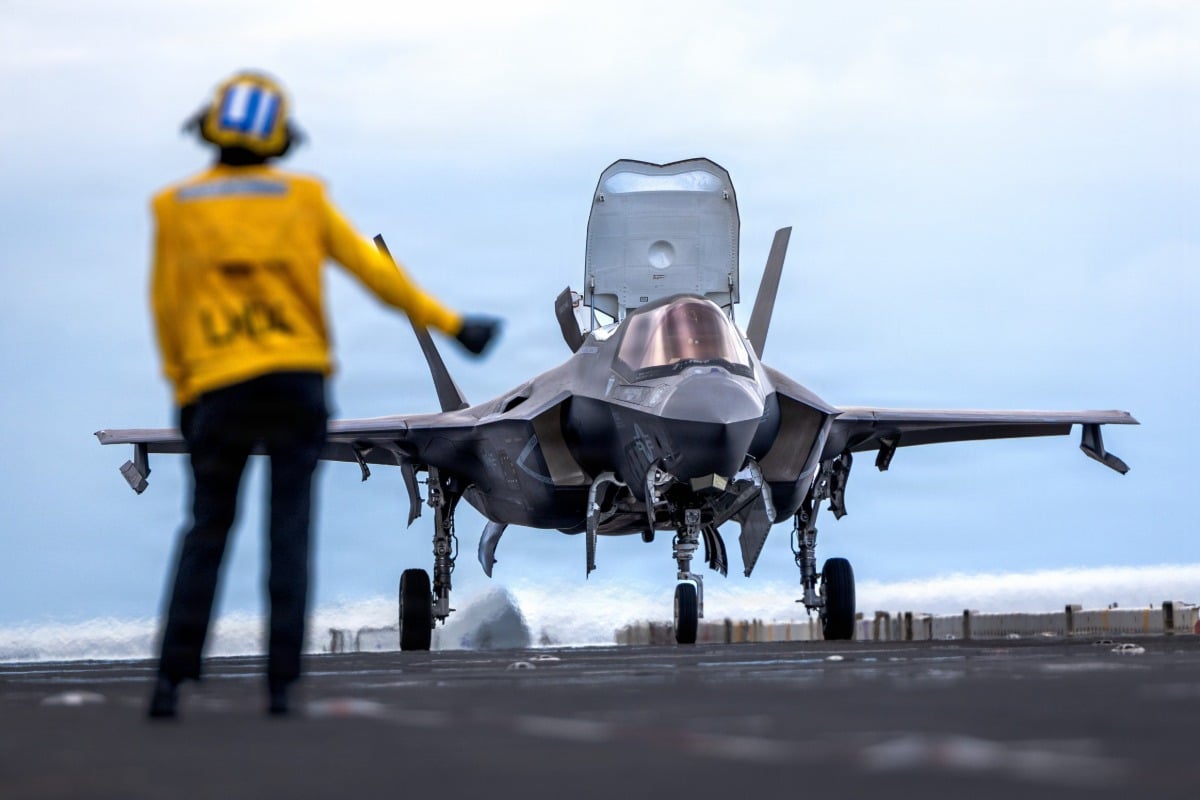
To understand why a quick fix is a fantasy, look at the actual mechanics of the Pratt & Whitney F135-PW-600 propulsion system. The F-35B relies on a counter-rotating LiftFan system driven by a clutch and drive shaft from the main engine, combined with a thrust-vectoring exhaust nozzle that redirects burning gas 90 degrees downward.
When an F-35B hovers over a flight deck or an expeditionary airfield, it creates a high-velocity, high-temperature microenvironment. The exhaust gasses don't just magically disappear. They strike the deck and rebound, creating a localized cloud of vaporized deck coatings, ingested sea salt, unburnt fuel fractions, and concrete dust.
The engine then breathes its own exhaust. This is known as hot gas ingestion.
When you mix high-temperature combustion byproducts with ambient marine salts and hyper-heated synthetic oil vapors, you do not get a clean burn. You get a chemical centrifuge. The heavy hydrocarbons in the fuel and lubricants break down under intense, cyclical thermal stress, bonding with atmospheric particulate matter. The result is the sticky, carbonaceous residue—the "sludge"—that coats compressor blades, fouls fuel nozzles, and degrades turbine efficiency.
Mainstream analysis treats this like a car engine that needs a better air filter. But you cannot filter out the laws of thermodynamics. If you operate a high-bypass turbofan in a self-generated cloud of particulate debris and thermal backflow, it will foul.
The Myth of the Austere Expeditionary Fighter
The Marine Corps championed the F-35B because of its Short Takeoff and Vertical Landing capability. The pitch was simple: operate from small amphibious assault ships or improvised, forward-deployed dirt strips closer to the fight, bypassing the need for massive, vulnerable 100,000-ton supercarriers.
I have spent years watching the military bureaucracy throw money at operational concepts that look brilliant on a PowerPoint slide but crumble under the reality of salt air and jet fuel. The F-35B is perhaps the greatest example of this divergence.
The concept of operating a highly sensitive, low-observable fifth-generation fighter out of a dusty, improvised forward base is a logistical delusion. The sludge issue highlights exactly why. The F-35B requires pristine maintenance environments, precise climate-controlled parts storage, and complex diagnostic arrays.
When you put that aircraft into a high-tempo operational cycle on an amphibious assault ship, the flight deck becomes a chemical pressure cooker. The maintenance crews are already redlined. Pretending that a "fast fix" from an engineering working group will alleviate the burden on the sailors scraping carbon off turbine faces in the middle of the Pacific is wishful thinking.
Dismantling the People Also Ask Echo Chamber
If you look at what people are asking about this issue, the fundamental premise of the public's understanding is warped.
Can a software update optimize engine parameters to prevent buildup?
No. Software cannot alter the chemical composition of vaporized aluminum deck coatings and sea salt entering a turbine core at Mach 0.5. Software can tweak fuel-to-air ratios or alter the variable vane geometry to slightly reduce thermal spikes, but it cannot stop the physical ingestion of debris during a vertical landing.
Why not just use cleaner fuel or better lubricants?
The military operates on standardized logistics. JP-5 and JP-8 fuel formulations are designed for global availability and safety aboard ships, meaning high flashpoints. You cannot easily re-engineer the chemical profile of naval aviation fuel to solve a localized fouling problem on a single variant of one aircraft without throwing the entire global supply chain into chaos.
Is this a manufacturer defect by Pratt & Whitney?
Blaming the manufacturer is the easiest way for the Pentagon to dodge accountability. Pratt & Whitney built an engine to meet the wildly conflicting requirements handed down by joint program managers who wanted a supersonic stealth fighter that could also hover like a Harrier. The engine is a marvel of engineering, performing exactly as designed under absurd constraints. The issue is the operational concept itself.
The Cost of the Quick Fix Illusion
The standard military response to an engineering bottleneck is to fund an "interim remediation strategy." This usually means more frequent inspection intervals, specialized washing rigs, and shorter component lifespans.
This approach carries a massive, hidden cost.
By shortening the time between engine overhauls to combat sludge accumulation, the Navy drastically drives up the total cost per flying hour. It pulls aircraft out of the deployment rotation, creating a cascade failure across fleet readiness numbers. A fighter jet sitting in a maintenance bay getting its compressor blades manually scrubbed with chemical solvents is a jet that isn't deterring adversaries.
The contrarian truth is that the Navy and Marine Corps must accept a permanent operational downgrade in how they use the F-35B, or they must accept that these engines are consumable items with a fraction of the operational lifespan originally promised.
Stop Cleaning the Blades and Change the Mission
The fix isn't hidden in a new cleaning solution or a modified compressor blade coating. The fix requires a brutal assessment of how the aircraft is deployed.
If the F-35B spends less time executing prolonged vertical recoveries and more time utilizing conventional runways wherever possible, the sludge accumulation drops exponentially. Vertical landings should be treated as a high-cost emergency capability, not a standard daily training routine.
Every vertical landing burns through structural life, consumes immense amounts of fuel, and bakes the engine in its own particulate filth. The military needs to stop treating the F-35B like a rugged, mud-moving Harrier replacement that can be treated poorly and washed down with a hose at the end of the day. It is an incredibly sophisticated flying supercomputer.
If you feed a supercomputer a steady diet of salt, grease, and pulverized concrete, it will break. No amount of bureaucratic hand-wringing or expedited engineering contracts will change that reality. Stop looking for a fast fix to an unfixable thermodynamic consequence. Change how you fly the plane, or buy a different plane.