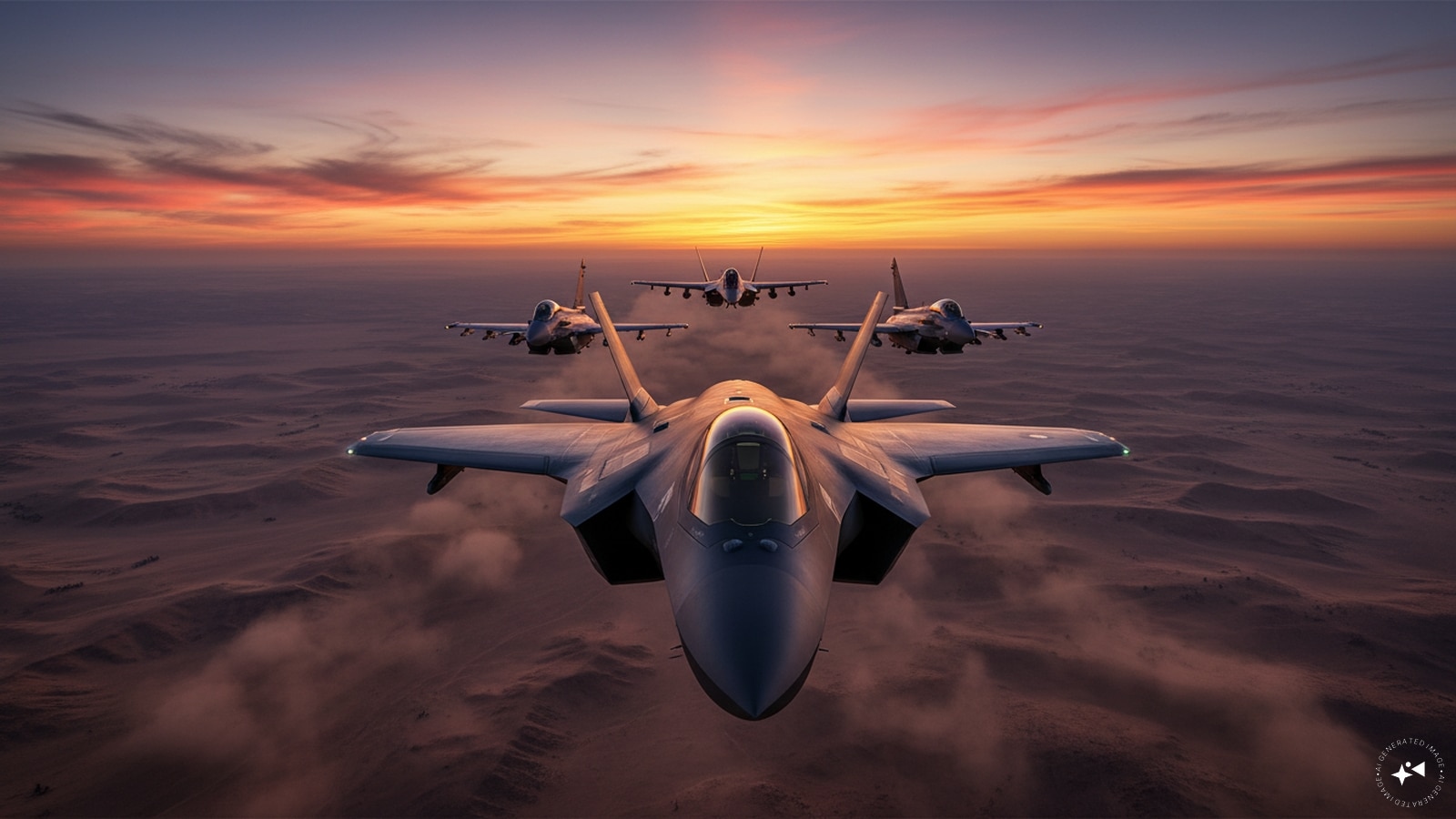
Military exercises happen all the time. Air forces fly in circles, drop dummy munitions, and talk about interoperability over stale coffee. Most of them are routine. Exercise Tarang Shakti is not. When the Indian Air Force brings together global heavyweights like the United States, France, Germany, and the UK, you are watching a major shift in how modern air combat is planned and executed.
This is India's first major international air combat exercise, and the stakes are higher than standard diplomatic handshakes suggest. Bringing fifth-generation aircraft like the American F-35 Lightning II into the skies over Rajasthan changes the dynamic completely. It forces legacy platforms and foreign crews to figure out how to talk to each other in real-time, under pressure, against simulated threats that get more complex every single year. Learn more on a similar issue: this related article.
Why the F-35 Changes the Game in Jodhpur
You cannot talk about modern air superiority without talking about data. The F-35 isn't just a fighter jet; it's a flying supercomputer that shares sensor data with everything around it. When the US deployed these stealth jets to headline Exercise Tarang Shakti at Air Force Station Jodhpur, it wasn't just about showing off radar-evading paint. It was an exercise in connectivity.
Most air forces struggle to share tactical pictures across different national networks. NATO spent decades ironing out data links, yet partnering with non-NATO allies like India presents a totally different challenge. During Tarang Shakti, participating nations tested secure communication protocols that allow fifth-generation sensors to feed targeting data to fourth-generation aircraft like the Rafale or upgraded Su-30MKI platforms. More analysis by NBC News delves into comparable views on this issue.
If you're flying an older jet, having an F-35 act as an invisible quarterback changes your tactical survival rate. The pilots aren't just practicing dogfights—which are increasingly rare in modern warfare anyway—they are practicing electronic warfare, suppression of enemy air defenses, and networked kill chains.
The Logistics Nightmare Behind the Headlines
People love to look at photos of sleek jets breaking the sound barrier, but real military experts look at fuel trucks, spare parts, and maintenance logs. Running an exercise of this scale in the Thar Desert is a logistical marathon.
Temperatures in Jodhpur during deployment windows can be brutal, testing both human endurance and sensitive avionics cooling systems. Foreign air arms had to integrate their ground crews with Indian logistics chains on the fly. Can an American maintainer swap a part using local supply lines? How do ground teams handle specialized cryptographic gear security? These are the friction points that make or break actual coalitions during a crisis.
When nations train together in dusty, austere environments, they find out what breaks first. That is the real value of Tarang Shakti. It strips away the polished PR brochures and exposes whether allied doctrines can actually function when the AC units fail and the sand gets into everything.
Moving Beyond Simple Air Shows
For years, regional air exercises were basically glorified air shows where pilots flew formation passes and traded patches. Tarang Shakti broke that mold by focusing heavily on large-force employment scenarios.
Think of it as a massive chess game played at Mach 1. Blue forces had to defend a wide operational area against heavily defended Red air defenses while managing limited tankers and airborne warning assets. Integrating French Rafales, German Eurofighters, and Indian platforms into the same strike package requires absolute precision. A timing error of thirty seconds means you miss your suppression window and your entire package gets virtually shot down by surface-to-air missile simulations.
This level of integration proves that the participating nations are preparing for high-intensity peer conflicts, not minor counter-insurgency patrols. The threats in the Indo-Pacific and European theaters share common technological fingerprints, and shared training is the only way to build muscle memory before a real conflict breaks out.
Pay attention to how these partnerships evolve over the next few years. The relationships forged over dust-caked flight lines in Jodhpur will shape procurement decisions, joint doctrine, and strategic alignments for decades to come.