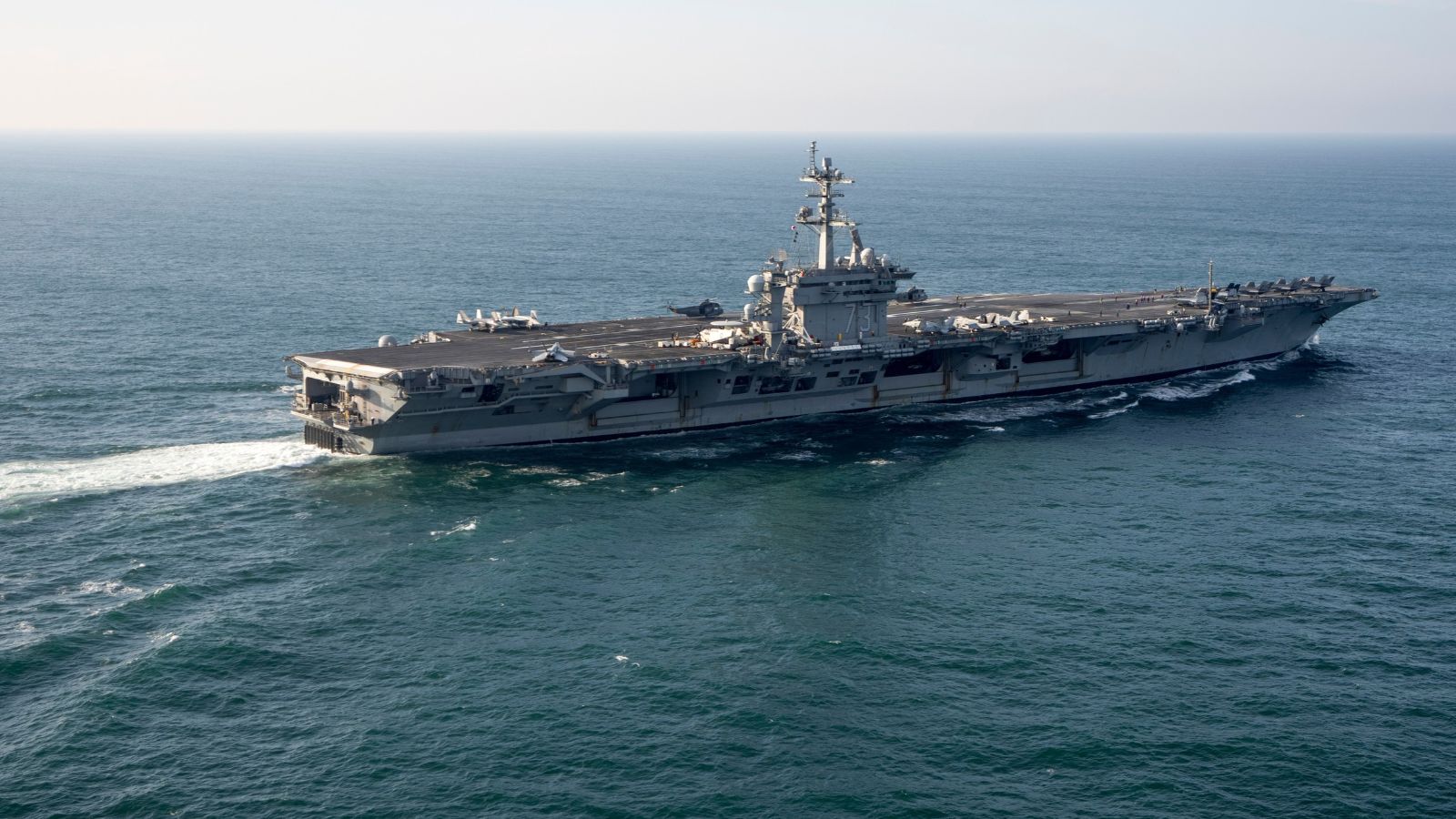
Tehran isn’t threatening a showdown to break the U.S. naval blockade. It’s threatening a showdown because the blockade is already strangling its domestic legitimacy while failing to stop the real war in the Gulf.
Every live blog and wire alert treats Iranian rhetoric as a simple binary: Washington squeezes Iranian ports, and Tehran vows fiery retaliation. Watch the headlines long enough and you’d think we’re one speech away from a massive fleet-on-fleet clash.
That’s lazy consensus. Worse, it misses the actual mechanics of what’s happening on the water and inside Iran’s economy in late 2026.
I’ve spent years tracking maritime chokepoints, sanctions evasion, and supply-chain warfare—and I’ve seen analysts, traders, and policymakers blow millions misreading bluster for operational capability. When a regime facing roughly 70% inflation, shrinking oil exports, and mounting pressure along its Iraqi border crossings talks about "all available means" or military options to lift a blockade, it isn’t necessarily announcing a suicide charge into U.S. naval guns. Often, it’s managing an internal audience that is running out of patience and spare parts.
The Lazy Consensus Around "Naval Blockade Aggression"
Conventional live coverage frames the dispute as a mirror match. Washington blocked ships tied to Iranian ports after hostilities escalated earlier in 2026, and Tehran calls that an act of military aggression under Article 51 of the U.N. Charter. Meanwhile, Iranian commanders talk about plans to break the blockade, and officials warn neighboring states like Iraq not to become Washington’s instrument by choking off land routes.
Here is what that framing gets wrong.
First, a naval blockade in international maritime law is not a vague synonym for "parking warships near a coast." Under traditional naval doctrine—and the San Remo Manual on International Law Applicable to Armed Conflicts at Sea—a lawful blockade is a belligerent measure designed to prevent vessels and aircraft of all states from entering or exiting specified ports or coasts belonging to an adversary. In practice, modern enforcement is selective, heavily scrutinized by allies who prefer freedom-of-navigation missions over unilateral blockades, and constantly tested by evasion tactics, illicit ship-to-ship transfers, and overland workarounds.
Second, treating Tehran’s threats of retaliation as proof that Iran wants a direct conventional naval battle ignores asymmetric reality. The Islamic Revolutionary Guard Corps Navy and regular forces know the math of open-water surface combat against U.S. carrier strike groups and destroyers. Iran’s real leverage isn’t winning a battleship duel. Its leverage lies in sea denial—mines, coastal anti-ship missiles, drones, harassment of commercial shipping, and raising insurance premiums and transit risks in the Strait of Hormuz.
Look at the transit numbers tracked by maritime intelligence firm Kpler in November 2026: weekly journeys through the Strait of Hormuz dropped from 217 at the start of the month to 147 by November 23. Claims of tankers hitting sea mines and catching fire, paired with sharp drops in transit volume, show that disruption doesn’t require Tehran to "break" the U.S. blockade in a single set-piece battle. Disruption works by making the whole neighborhood expensive and dangerous for everyone.
| Narrative Claim | What It Misses | Operational Reality |
|---|---|---|
| Tehran is preparing to smash through the U.S. blockade head-on | Conventional naval parity is a losing game for Iran | Asymmetric sea denial, mines, and commercial disruption impose costs without requiring fleet superiority |
| A naval blockade seals Iran off completely | Maritime enforcement cannot lock down every border or shadow route | Iran shifts toward overland trade and faces pressure to lock down land crossings next |
| Tough rhetoric signals imminent escalation above all else | Domestic legitimacy and regime survival drive public framing | Officials project strength and claim victory to rally support amid severe economic strain |
Why You’re Asking the Wrong Question
Most readers and commentators look at a headline about Tehran threatening a strong response and ask: Will Iran attack U.S. warships to break the blockade?
That’s the wrong question.
The right question is: How does Tehran turn a maritime stranglehold into diplomatic leverage while its overland lifelines are under siege?
Consider the squeeze playing out across the map. When sea lanes tighten, trade naturally tries to bend inland. Yet reports from late November 2026 highlight Washington pressing Baghdad to restrict border crossings with Iran, leaving only two open. If maritime routes are choked off and land crossings narrow, the bottleneck shifts from the Gulf to customs posts, trucking fleets, and political pressure on neighboring governments.
Imagine a scenario where a sanctioned economy loses both cheap maritime bulk shipping and easy neighboring land access at the same time. Freight costs spike. Spare parts for trucks and machinery grow scarce. Inflation—already tearing through household purchasing power—becomes an acute political fuse. In that environment, fiery speeches from Tehran aren’t just aimed at the Pentagon. They are aimed at domestic hardliners, regional partners, and negotiators in capitals that want the Strait of Hormuz calm and predictable.
Answering the Questions People Actually Search
"Can Iran actually break a U.S. naval blockade?"
Not in a conventional stand-up fight, and pretending otherwise is wishful thinking on either side of the argument. Even when individual vessels slip past or evade enforcement—as maritime reporting has noted during months of blockade operations—the broader chokehold on revenue and regular trade remains heavy.
What Iran can do is raise the political and economic price tag of enforcing the blockade. Allies don’t always share identical mandates or enthusiasm for unilateral blockades, energy markets jitter whenever tanker traffic drops, and every incident near vital shipping lanes tests domestic tolerance for prolonged entanglement. Breaking a blockade on paper and making it costly to sustain are two very different things.
"Why does Tehran call sanctions and blockades an act of aggression?"
Because legally and rhetorically, labeling a naval blockade an act of military aggression sets up a self-defense argument under Article 51 of the U.N. Charter. Whether adversaries accept that legal framing or not, it gives Tehran diplomatic cover to justify asymmetric pushback, mine threats, shipping harassment, or demands that lifting the blockade is a precondition for reopening smooth passage through Hormuz.
It also lets leadership flip the script at home. Instead of admitting that economic isolation is biting hard, officials can frame every hardship as resistance to foreign coercion and claim moral or strategic standing even under intense pressure.
"What happens to global shipping while the standoff drags on?"
Commercial shipping pays a "risk tax" whether a full-scale naval battle breaks out or not. Look at how quickly transit numbers can fall when mines, warnings, and conflicting routes collide in a narrow waterway. Even when navies insist certain corridors are safe, commercial operators, insurers, and crewed vessels price in worst-case scenarios.
That’s why you don’t need a massive fleet engagement to feel the shockwaves. A drop in weekly transits, rerouted cargoes, and tense standoffs over border crossings ripple straight into freight rates, energy markets, and regional diplomacy.
What Heavy Hitters Get Right—and Where My View Has Risks
Serious strategic thinkers—from maritime historians like Julian Corbett and Alfred Thayer Mahan to modern conflict analysts at institutions like the Institute for the Study of War and maritime risk firms—have long pointed out that blockades are blunt instruments whose second-order effects rarely stay neat. They squeeze the target, strain alliances, and push adversaries toward indirect retaliation.
Let me be candid about the downside of my contrarian read. If you assume Tehran’s threats are purely performative or limited to low-level harassment, you can get blindsided by miscalculation. Wars and maritime crises don’t always escalate by master plan; they escalate by accident, misread signals, a stray mine hitting the wrong hull, or a commander acting under political pressure to "do something". Underestimating an adversary’s willingness to absorb pain—or misjudging a domestic political breaking point—is how smart analysts end up wrong.
Actionable Moves for Anyone Tracking This Crisis
If you trade commodities, run supply chains, manage geopolitical risk, or simply refuse to be fooled by headline whiplash, stop reading live updates like a sports ticker. Do this instead:
- Track transit counts and border news, not just angry quotes. Watch independent maritime transit figures and cross-border enforcement moves. Rhetoric is cheap; shipping volumes and customs closures move real goods and real money.
- Separate "blockade enforcement" from "Strait of Hormuz disruption." They overlap geographically, but they operate on different mechanics. Don’t conflate port interdiction with total waterway closure without checking what’s actually moving.
- Price in miscalculation risk, not neat rationalism. Build scenarios around accidental escalation, mine incidents, and proxy spillover, even when neither side benefits from an all-out collision.
Stop waiting for a movie-script naval clash to tell you the blockade matters—the squeeze is already reshaping trade, borders, and risk on the water right now.


