Dwayne Johnson wants you to believe that a ten-year turnaround for a live-action remake is perfectly normal because human flesh and blood brings deeper emotional weight to a story.
He is dead wrong.
The immediate critical and box office collapse of the live-action Moana remake proves that Hollywood’s current obsession with recycling recent intellectual property has reached a breaking point. Defending the film as an exploration of human emotion is nothing more than sophisticated PR damage control for a project designed to print money.
The Myth of Human Emotion in a CGI Cage
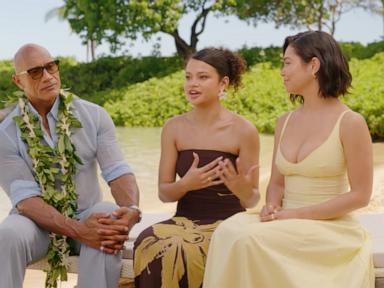
At the Los Angeles premiere, Johnson claimed that seeing a real human being go through these trials translates better than animation. This argument falls apart under basic creative scrutiny.
The production spent upwards of $200 million on this remake. The result is not an intimate human drama. It is an actor standing in front of a giant digital green screen, surrounded by hyper-realistic computer-generated water, singing to a digital crab.
Animation is not a lesser medium that needs to be upgraded by flesh and blood. Animation is an artistic choice that allows for deliberate expressionism. When the original animated Maui pulled down the sky or shape-shifted, it worked because the medium allowed for infinite elasticity. When a live-action actor attempts the same feat, the human face becomes secondary to the digital visual effects team working eighty hours a week to make a bald man's wig look natural.
I have seen studios blow hundreds of millions of dollars attempting to replicate stylized animation in a physical space. It fails every single time because it forces reality to compete with imagination. The moment you introduce a real human into an environment that requires 90% digital composition, you do not ground the story. You shatter the illusion.
The Generation Gap Fallacy
Director Thomas Kail argued that a decade is enough time for a new generation to warrant a revival, comparing the film to a Broadway theater production. This is an incorrect understanding of how cinematic distribution works.
Theater revivals occur because a stage show is localized, ephemeral, and structurally dependent on the live performers present in the room on any given night. A film is permanent. The 2016 animated Moana did not vanish into the ether when the credits rolled. It lives indefinitely on digital streaming platforms, where millions of children watch it daily.
- Seven-year-olds from 2016 are now seventeen.
- They do not need a live-action copy to experience nostalgia; they can press play on the original artifact.
By slashing the buffer window between an original film and its remake down to a single decade, the studio has stripped away the necessary temporal distance that makes a remake relevant. A remake should recontextualize an old story for a changing culture, not mimic a modern hit while the original cultural footprint is still fresh.
The Reality of Cultural Exploitation Versus Opportunity
The creative team heavily leaned on the narrative that this live-action adaptation is essential because it provides physical representation and job opportunities for Pacific Islander actors.
While casting new talent like Catherine Lagaʻaia is undeniably a positive step for industry access, using representation as a shield against creative criticism is a cynical marketing strategy. True representation does not mean trapping indigenous actors inside a rigid, pre-existing template written ten years ago by white screenwriters to fulfill a corporate release schedule.
If the goal was genuine cultural amplification, that $250 million production budget could have funded a dozen original stories rooted in Oceanic mythology, helmed by indigenous directors with complete creative autonomy. Instead, the money was funneled into a safe, familiar financial asset designed to mitigate risk for shareholders.
The Technical Reality Check
Look at the numbers coming out of opening weekend. A measly $4.5 million in Thursday previews pointing toward a disastrous $35 million opening weekend for a movie that cost a quarter of a billion dollars to produce. The early reviews sit at a brutal 31% on Rotten Tomatoes.
Audiences are smart. They can smell the lack of creative necessity from a mile away. The internet spent days mocking Johnson’s long, flowing wig because the visual asset looked entirely unnatural against his highly recognizable physical brand.
That wig is a perfect metaphor for the entire film. It is an expensive, artificial addition forced onto a product that did not have the structural foundation to support it.
Stop pretending these live-action updates are driven by artistic evolution or deep life lessons. They are corporate resource management disguised as cinematic art, and the audience has finally decided to stop buying tickets to the rerun.