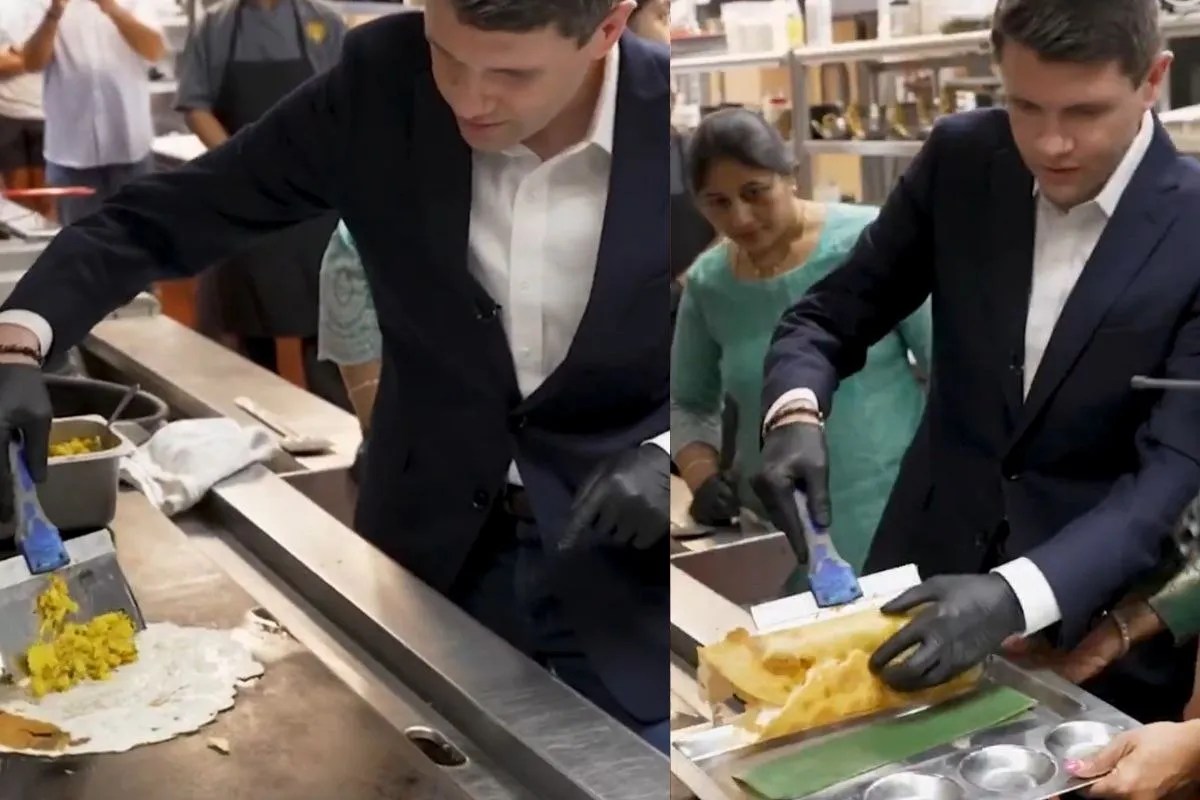
Diwali greetings. Namaste on cable news. Mentioning Bollywood or cricket at a suburban town hall.
Every election cycle in the United States, political reporters write the exact same story. They claim candidates suddenly discovered Indian culture and are chasing a unified, fast-growing voting bloc.
That story is lazy. It mistakes stagecraft for strategy.
When American politicians light a diya or post a festive greeting, they are rarely trying to win over every Indian American voter through cultural flattery. They are signaling to donors, bundling networks, swing-district activists, and geopolitical observers. Treating a Diwali photo op as a simple headcount of ethnic ballots misses how American campaign finance and coalition politics actually work.
The Lazy Consensus Around Cultural Outreach
Conventional coverage treats ethnic outreach like a vending machine. Put a cultural reference in. Get an ethnic vote out.
That model assumes Indian Americans vote as a single, predictable herd. They do not. Indian Americans span multiple generations, distinct regional and linguistic backgrounds from across India, varied immigration histories, and sharp ideological divides. Some prioritize abortion access or climate policy. Others care more about taxes, small-business regulation, school choice, or U.S.-India defense ties.
Even raw population numbers complicate the simple "swing bloc" narrative. In most U.S. states, Indian Americans remain a small share of total eligible voters. Yet in tight congressional districts or key metropolitan suburbs, turnout and donor energy can still matter at the margins.
I have watched campaign strategists and corporate public affairs teams burn millions of dollars on superficial cultural pandering. One political committee I advised years ago poured budget into flashy festival sponsorships while ignoring local voter registration, policy briefings, and precinct captains. The photos looked great in local press clips. The actual turnout lift in the target zip codes was barely distinguishable from noise.
Why do so many campaigns keep repeating that mistake? Because cultural gestures are cheap, photogenic, and easy for consultants to put on a slide deck. Building real policy credibility and durable community relationships takes years, not six weeks before Election Day.
What Politicians Are Actually Courting
To understand why American politicians lean into Indian cultural touchpoints during election season, stop looking at the ballot box first and look at political mechanics.
1. Donors, Bundlers, and High-Turnout Civic Networks
Political campaigns run on money, volunteer hours, and organizational reach. Indian Americans have high median household incomes and strong participation in civic, business, medical, and tech networks. A well-placed event or cultural acknowledgment helps candidates access fundraising circles and local surrogates who can open doors across a metro area.
2. The Myth of a Single Monolith
Political scientists who study Asian American voting behavior—such as scholars at the Carnegie Endowment for International Peace and academic researchers tracking the Indian American Attitudes Survey—have repeatedly shown that partisan alignment and issue priorities shift over time and vary across generations. Younger voters and earlier arrivals do not always react to the same cues as newer immigrants or high-income suburban professionals. A candidate who assumes a single cultural signal locks in every Indian household is building on sand.
3. Geopolitics and Domestic Framing
U.S.-India relations sit at the center of Indo-Pacific strategy, supply-chain diversification, and tech talent debates. Domestic speeches touching on India often double as signals to foreign-policy hawks, trade groups, and diaspora commentators watching how Washington positions itself globally.
Imagine a scenario where a Senate candidate in a battleground state skips local economic policy forums with South Asian small-business owners and instead stages a scripted cultural celebration two weeks before the vote. Local activists notice the gap between applause and substance. Voters who care about healthcare costs or immigration backlogs do not change their minds just because a candidate learned how to pronounce a holiday greeting.
Answering the Questions Voters Actually Ask
People searching about election-season cultural outreach usually ask blunt questions. Most of those questions start from a shaky premise.
"Are Indian Americans a decisive swing bloc in U.S. elections?"
Usually no on a statewide scale, occasionally yes at the razor-thin margin in specific districts or suburbs. Calling an entire diverse population a single "decisive bloc" exaggerates uniformity while underestimating how small margins are decided by persuasion, turnout, and crossover voters across many groups.
"Do cultural pandering and festive greetings actually win votes?"
Rarely by themselves. Voters reward candidates who show up consistently, respect their intelligence, and speak to concrete concerns like cost of living, jobs, education, and representation. A festive greeting without policy substance feels like a campaign prop.
"Why do both parties do it if the payoff is uncertain?"
Because in close races, marginal advantages compound. If a visible nod helps recruit a few key fundraisers, energizes a handful of local volunteers, or blocks an opponent from claiming exclusive goodwill, campaigns take the low-cost shot.
The Trade-Offs of My Contrarian Take
Pushing back against the "cultural outreach wins votes" narrative has its own blind spots, and pretending otherwise would be dishonest.
Symbolism is not completely meaningless. Representation matters to people who spent decades feeling invisible in American politics. Seeing leaders acknowledge major holidays or community milestones can lower alienation and signal basic respect, especially when paired with genuine engagement.
Over-correcting into pure cynicism can also blind strategists to real coalition building. Campaigns that ignore cultural literacy altogether can come across as tone-deaf or indifferent. The trap is treating symbolism as a substitute for substance—not assuming every cultural moment is pure bad faith.
How Smart Campaigns and Advocates Actually Win
If you are running a campaign, advising a candidate, or organizing within the community, ditch the election-eve checklist and do the unglamorous work instead.
- Audit actual district math before buying ads. Know the exact voter file numbers, registration rates, and historical turnout in your specific precincts rather than repeating national talking points.
- Lead with material issues, not stereotypes. Put clear positions on economy, healthcare, housing, immigration, and foreign policy front and center, and tailor communication to real generational and regional differences.
- Show up outside campaign season. Community trust built in off-years survives negative ads and media cycles; last-minute seasonal outreach rarely does.
- Measure persuasion and turnout, not applause. Track whether outreach moves undecided voters or brings low-propensity voters to the polls, instead of counting social media likes and event photos.
Elections are not won by reading off a cultural dictionary in October. They are won by earning trust before the cameras turn on.


