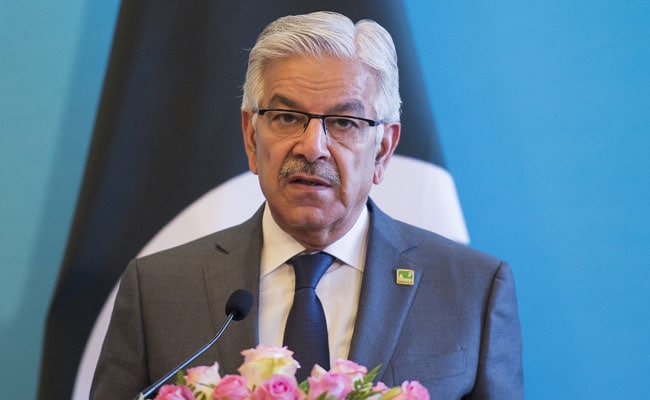
The media establishment on both sides of the Radcliff Line is feeding you a comfortable lie. Following Pakistani Defence Minister Khawaja Asif's televised declaration that Islamabad will "definitely go to war" if its water security is threatened, mainstream commentators fell back on their tired scripts. New Delhi dismissed it as a "desperate bid to cover up internal failings" and divert attention from the chaos in Pakistan-occupied Kashmir. Islamabad blamed Indian "water weaponization" and the sudden decision by New Delhi to put the 1960 Indus Waters Treaty in abeyance following last year's Pahalgam terror strike.
Both narratives are fundamentally flawed. They treat a structural, macroeconomic resource collapse as a theatrical series of political press releases. Learn more on a similar issue: this related article.
I have watched state bureaucracies incinerate billions on geopolitical posturing while missing the underlying math. The lazy consensus insists this is a diplomatic standoff triggered by cross-border terrorism and aggressive rhetoric. The brutal truth is far more dangerous. The Indus Waters Treaty is not being destroyed by politicians. It is being crushed by the unyielding laws of hydrology, climate realities, and absolute economic mismanagement. Stopping the water or threatening a nuclear conflict will not solve the underlying crisis because the premise of the entire debate is completely wrong.
The Myth of the Controlled Tap
The loudest panic in Islamabad centers on the fear that India will physically block the western rivers—the Indus, Jhelum, and Chenab. This fear intensified after reports emerged indicating that the flow of these waters could be heavily restricted or redirected by June 2028. This panic betrays a total ignorance of basic engineering. Additional journalism by NBC News delves into comparable views on the subject.
You cannot simply turn off a river system that discharges over 170 billion cubic meters of water annually. India lacks the reservoir capacity to store or divert this volume of water on short notice. Building the infrastructure required to entirely reroute the Chenab or the Jhelum requires decades of massive capital expenditure and complex engineering across the most unstable mountainous terrain on earth.
If New Delhi magically managed to stop the water tomorrow without the infrastructure to divert it, it would flood its own major infrastructure projects, agricultural zones, and population centers in Jammu and Kashmir. The threat of immediate, catastrophic water starvation via Indian engineering is logistically impossible.
The Internal Self-Sabotage
What the competitor articles willfully ignore is that Pakistan is running out of water entirely on its own. The real threat to Islamabad is not a tap in New Delhi; it is the systemic collapse of its own domestic distribution architecture.
Data from the Sindh irrigation department reveals that key canal networks, including the North West Canal, are operating at a staggering 64.1 percent shortfall. The Sukkur Barrage is facing unprecedented drops in water levels. This is not because India has choked the supply. It is because of structural silting, massive transmission losses, and an agricultural elite that mismanages water with impunity.
Pakistan possesses the world's largest contiguous irrigation system, yet it features some of the lowest water productivity metrics globally. Imagine a scenario where a business loses 40 percent of its raw materials to leakage before they ever hit the factory floor, and then blames its supplier for a inventory shortage. That is the reality of the Indus basin distribution network. Sugar cane and flood-irrigated rice crops are grown in hyper-arid zones. This is an economic absurdity sustained solely by political patronage.
The Flawed Premise of the 1960 Treaty
The World Bank-brokered 1960 treaty was designed for a static, mid-20th-century climate profile. It partitioned the rivers neatly: India took the eastern three (Ravi, Beas, Sutlej), and Pakistan took the western three (Indus, Jhelum, Chenab).
This arrangement entirely ignored glacier recession dynamics in the Himalayas and explosive population growth. When the treaty was signed, the combined population of the basin was a fraction of what it is today. No treaty can partition water that no longer exists in the volumes originally recorded.
By keeping the treaty in abeyance, New Delhi is attempting to force a fundamental renegotiation to address cross-border security. But weaponizing water agreements as a blunt instrument for counter-terrorism ignores the absolute finality of ecological deadlines. The glaciers feeding the Indus basin are melting at accelerated rates. Within decades, the peak runoff period will shift dramatically, followed by an permanent volume contraction. You cannot litigate or threaten your way out of a drying basin.
The Cost of the Standoff
There is an undeniable downside to challenging this status quo. Acknowledging that the treaty is obsolete means opening a geopolitical Pandora’s box.
If the 1960 framework completely disintegrates without a replacement based on real-time data and joint ecological management, the region enters uncharted territory. International lenders will freeze funding for hydro-engineering projects across the basin due to the sheer legal uncertainty. Foreign direct investment will avoid two nuclear-armed states locked in a dispute over a disappearing vital resource.
The political class in both nations benefits from the current theater. For Islamabad, blaming external sabotage is an easy way to deflect from an economic collapse and internal instability. For New Delhi, taking a hard line satisfies domestic political demands for a firm stance against cross-border security threats. Meanwhile, the actual water table continues its steady drop.
The conventional debate asks how to preserve or enforce a 66-year-old legal document. The real question is how either state plans to prevent an absolute agricultural wipeout across the subcontinent over the next twenty years. War will not fill the reservoirs. Dropping legal treaties will not stop glacier retreat. The regional elite is arguing over the ownership of a house that is actively burning down.


