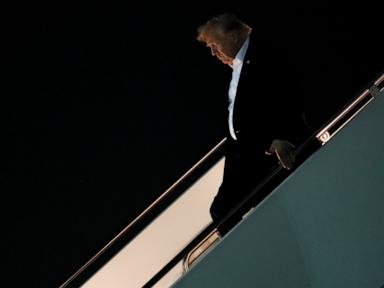
The media is obsessed with the mechanics of a monarch. Maggie Haberman and Jonathan Swan just dropped their latest insider epic, Regime Change, detailing the first year of Donald Trump’s second term. The consensus from the press corps is predictable: Trump has successfully transformed from the "hunted" into the "hunter," systematically dismantling institutional guardrails and pushing the outer limits of executive power. They point to the $400 million East Wing ballroom construction, the separate bedrooms, the gold-leaf flourishes, and the sudden purges of independent agency heads as definitive proof of a terrifying new era of autocracy.
It is a neat, cinematic narrative. It is also completely wrong.
The lazy consensus among political analysts is that executive strength is measured by how much noise a president makes while defying norms. They look at a flurry of executive orders, a reshaped Oval Office, and public spats with the Federal Reserve as evidence of an unbended presidency. In reality, this fixation on aesthetic authoritarianism misses the actual mechanics of governance. True executive power is not a gold cap or an unvetted policy decree; it is the quiet, institutional capacity to enforce a long-term agenda. What the establishment labels as an unprecedented expansion of presidential authority is actually something far more volatile: a structural hollowout that creates the illusion of absolute control while reducing the state's actual ability to execute.
I have watched political operations blow millions of dollars and massive capital trying to force change through pure executive decree, only to watch those policies vaporize the moment they hit a federal docket. The press looks at the spectacle; insiders look at the plumbing.
Consider the reality of the so-called "hunter" presidency. The administration boasts of signing over 60 executive orders in the opening weeks of the second term, targeting birthright citizenship and shuttering federal agencies. The media sounds the alarm over a constitutional crisis. But check the courts. The vast majority of these high-profile directives are immediately paused or blocked by federal judges. Writing an order on a piece of paper does not make it law, no matter how many flags you erect on the North Lawn. A truly powerful executive does not get constantly bottlenecked by district judges in Texas or California; a powerful executive commands a disciplined legal apparatus that secures permanent structural change.
The current White House strategy is not an expansion of power. It is an admission of weakness. When an administration cannot pass sweeping legislation through Congress, it resorts to executive orders. This is governance by dry-erase board—easily wiped away by the next occupant of the room. When Trump joked to House and Senate leaders about "Trump 2028" baseball caps, the press treated it as a terrifying threat to the two-term limit. It is actually a distraction from a massive operational vulnerability: the total absence of a sustainable legislative legacy.
This brings us to the People Also Ask dilemma that paralyzes mainstream political analysis: Does a president have the constitutional authority to reshape independent agencies like the Federal Reserve or the CDC?
The brutal, honest answer is that the office possesses the raw authority to fire personnel, but lacks the structural authority to control the consequences. Removing figures like Lisa Cook from the Federal Reserve Board or firing CDC leadership satisfies the base and looks dominant on a cable news chyron. However, the immediate structural cost is catastrophic. True institutional power relies on predictability and market confidence. The moment you politicize the mechanics of monetary policy, the bond market reacts, capital costs rise, and international trust erodes. The presidency might win the afternoon press cycle, but it loses the structural leverage required to manage a global economy. You cannot command a market by executive fiat.
The book details a frantic Situation Room meeting convened by Chief of Staff Susie Wiles over the handling of the Jeffrey Epstein file releases, where Vice President JD Vance reportedly suggested using friendly media figures like Tucker Carlson to manage the fallout. The press interprets this as a calculated effort to manipulate public information. The more accurate, terrifying reality is that it reveals an administration perpetually in defensive damage-control mode, lacking the basic internal coordination to manage its own disclosures. That is not the behavior of an all-powerful hunter. That is the behavior of a chaotic startup trying to put out fires with a garden hose.
The establishment wants you to believe that the primary threat to the republic is a hyper-potent executive branch. The actual danger is a fragmented, erratic executive that replaces policy substance with cultural grievances and architectural renovations.
If you want to understand where the real power lies in modern Washington, stop looking at who controls the decor of the Queen’s Bedroom. Look at the administrative state's underlying architecture. The real authority belongs to the career bureaucrats, the procurement officers, the federal judges, and the bond traders who actually keep the machinery running. An executive who spends his capital building a $400 million ballroom while his core policy directives languish in appellate courts is not an emperor. He is a landlord who thinks he owns the building just because he changed the locks on the front door.
Stop misinterpreting theatrical dominance for structural control. The louder an administration screams about its absolute authority, the less real power it actually possesses.


