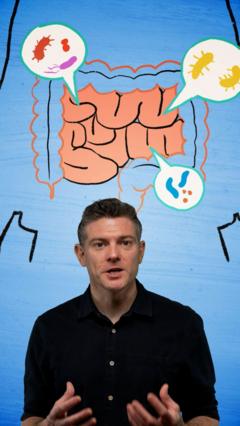
You feel a sudden knot in your stomach before walking into a high-stakes meeting. You call it a gut feeling. You think it's just a metaphor. It isn't.
That sensation is your enteric nervous system talking. Science calls this massive network of nerves the second brain, and it operates right inside your digestive tract. Most health blogs talk about this system like it's just a backup generator for your digestion. They tell you to eat some yogurt and call it a day. That advice misses the entire point.
Your second brain doesn't just digest your lunch. It alters your mood, shapes your decisions, and commands your immune system. It runs a complex communication network that constantly influences your actual brain. If you ignore how this system works, you sabotage your mental health and physical well-being.
http://googleusercontent.com/image_content/199
The Massive Nerve Network Inside Your Belly
Your gut contains roughly 100 million neurons. That is more than your spinal cord contains. It's a staggering number of nerve cells lining your esophagus, stomach, and intestines. This system is known as the enteric nervous system, or ENS.
For decades, scientists assumed the ENS simply managed the mechanical mechanics of digestion. They thought it broke down food, absorbed nutrients, and expelled waste on orders from above. We now know that's wrong.
The second brain is incredibly autonomous. It doesn't take orders from the skull. Dr. Michael Gershon, a neurobiologist at Columbia University and author of The Second Brain, proved that the gut can function entirely on its own even if the main connection to the brain—the vagus nerve—is severed.
Think about that. Your gut has its own reflexes, its own memory, and its own sensory capabilities. It operates like an independent intelligence system inside your body. When you experience a literal gut reaction, your ENS is processing information and reacting before your conscious mind even registers a thought.
The Secret Chemistry of Your Mood
Most people think of happiness as a purely mental state. They assume depression and anxiety start and end in the head. They look at brain chemistry, focusing heavily on neurotransmitters like serotonin and dopamine.
Here is the twist. Your brain isn't the primary producer of these chemicals.
Your gut produces roughly 95% of the serotonin in your body. Serotonion is the exact neurotransmitter responsible for regulating your mood, sleep, appetite, and pain tolerance. Popular antidepressants, known as SSRIs, work by increasing serotonin levels. Yet, the vast majority of this chemical lives and works in your digestive tract, managed by your second brain.
How does this affect your daily life? The communication goes both ways. The gut and the brain talk through the gut-brain axis.
http://googleusercontent.com/image_content/217
When your second brain spots trouble—like inflammation, bad bacteria, or toxic foods—it sends distress signals up to the skull. This isn't a quiet whisper. It's a loud alarm. Researchers at institutions like Johns Hopkins Medicine have found that irritation in the gastrointestinal system sends powerful signals to the central nervous system. These signals can trigger intense bouts of anxiety and deep shifts in mood.
If you suffer from chronic anxiety or unexplained brain fog, the root cause might not be psychological stress. It might be an inflamed second brain sending constant panic signals up the vagus nerve.
The Microbiome Connection
You can't talk about the second brain without talking about the microscopic army living inside it. Your gut microbiome contains trillions of bacteria, viruses, and fungi. They aren't invaders. They belong there.
These microbes act like a localized pharmacy. They break down dietary fibers into short-chain fatty acids like butyrate, acetate, and propionate. These compounds protect your brain, lower overall inflammation, and keep your gut lining intact.
When your microbiome gets out of balance, a condition called dysbiosis occurs. The bad bacteria take over. They produce toxins that damage the gut lining, leading to what doctors call increased intestinal permeability, or leaky gut.
When your gut leaks, toxins enter your bloodstream. Your immune system freaks out. The resulting systemic inflammation travels straight to your brain, impairing cognitive function and draining your energy.
Real World Cost of Ignoring Your Second Brain
Let's look at Irritable Bowel Syndrome, or IBS. For generations, doctors told IBS patients that their pain was psychological. They said it was all in their heads.
Recent clinical studies have flipped this thinking completely. Researchers now realize that IBS is often driven by a hypersensitive second brain. The nerves in the gut become hyper-reactive to normal digestive processes, sending exaggerated pain signals to the brain.
The same applies to neurological conditions. Dr. Heiko Braak discovered that the characteristic protein clumps of Parkinson’s disease actually appear in the gut nerves years before they show up in the brain. The disease may actually start in the digestive tract and travel upward over time.
Ignoring your gut health isn't just about dealing with bloating or occasional heartburn. It is a direct threat to your cognitive longevity and emotional stability.
How to Optimize Your Second Brain Right Now
Stop buying generic probiotic pills expecting a miracle. Most commercial supplements don't survive the stomach acid anyway. If you want to fix your gut-brain axis, you need a targeted, strategic approach.
Ditch the Ultra-Processed Foods
Emulsifiers, artificial sweeteners, and preservatives destroy the protective mucous layer of your gut. They kill off beneficial bacteria strains like Akkermansia muciniphila, which keeps your gut barrier strong. Cut the packaged snacks. Eat real food.
Feed the Good Guys with Diverse Fiber
Your gut microbes eat what you eat. If you eat the same five foods every week, your microbiome diversity plummets. Aim for 30 different plant-based foods each week. Mix up your vegetables, nuts, seeds, and grains. This fuels a diverse, resilient ecosystem.
Incorporate Fermented Foods Intelligently
Skip the sugary yogurt drinks. Focus on unpasteurized, traditionally fermented foods. Think sauerkraut, kimchi, kefir, and genuine kombucha. A study from the Stanford School of Medicine found that a diet rich in fermented foods increases microbiome diversity and significantly lowers inflammatory markers.
Manage Chronic Stress to Protect the Vagus Nerve
Stress kills your gut health. When you are constantly stressed, your body activates the sympathetic nervous system. It cuts blood flow to your digestive tract, slows down enzyme production, and damages the gut lining. Practice deep, diaphragmatic breathing. This stimulates the vagus nerve, flips the switch back to the parasympathetic mode, and allows your second brain to do its job.
Pay attention to what your stomach tells you. That bloat, that ache, or that sudden wave of anxiety after a trash meal isn't a random glitch. It is your second brain trying to save you from yourself. Listen to it. Change what you put into it. Your mind will thank you.