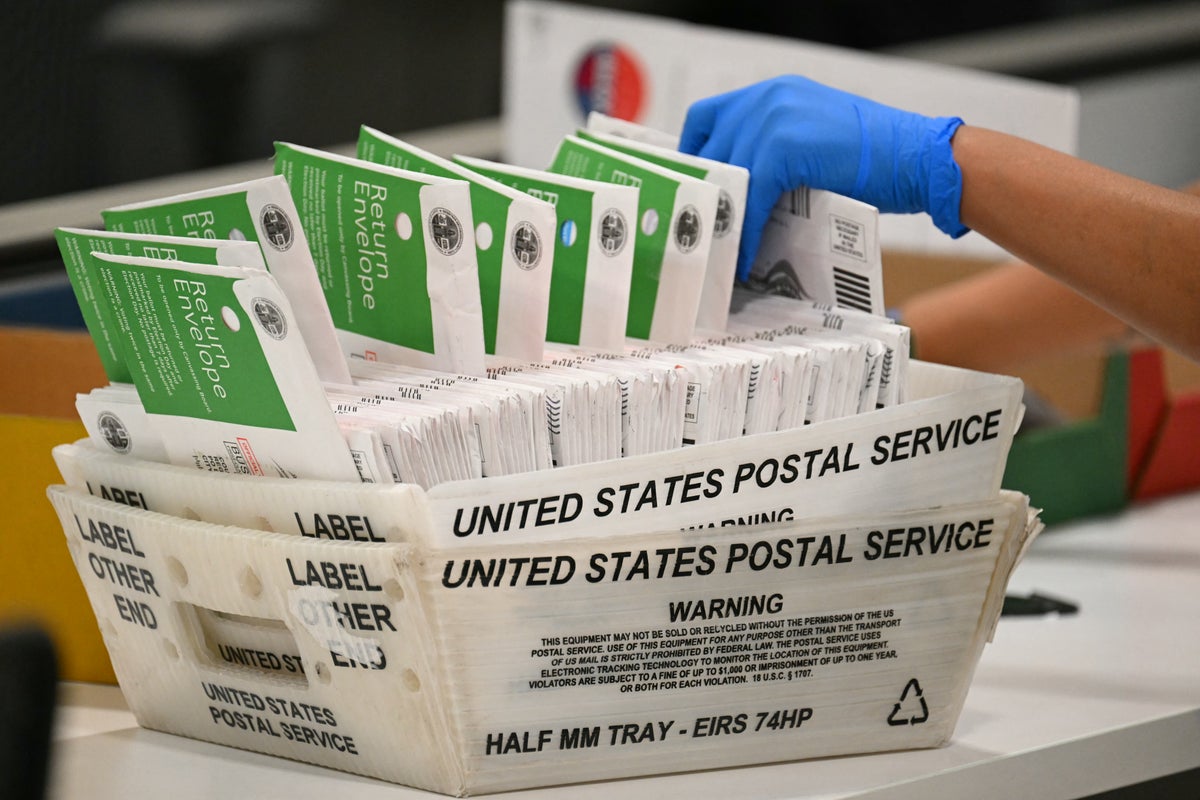
The lazy consensus across the media landscape claims that Donald Trump's executive order targeting postal voting is simply an exercise in partisan chaos designed to suppress turnout for the upcoming midterms. Pundits clutch their pearls over federal overreach, judges issue emergency injunctions, and everyone pretends the current decentralized mail-in system is a pristine monument to democratic efficiency.
They are missing the entire point.
The fight over postal ballots headed back to the Supreme Court is not a traditional partisan battle. It is a structural collision between twentieth-century state administrative law and twenty-first-century logistical reality. While legal analysts obsess over constitutional separation of powers, they ignore the rot at the core of how ballots move from county clerks to kitchen tables.
Let us look past the talking points. The current system relies on an antiquated patchwork of local mailing protocols that leaves massive margins for administrative failure, untracked handling, and chain-of-custody gaps. When the executive branch attempts to force standardized barcoding and centralized eligibility databases through the U.S. Postal Service, it exposes a deeper truth: local election boards have resisted technical modernization for decades because opacity protects administrative incompetence.
Critics point to the chaotic rollout and whistleblower warnings about technological glitches in the postal portals as proof that the mandate should be discarded. That logic is backwards. Software transitions in government logistics are always messy. If we rejected every administrative overhaul due to initial implementation friction, agencies would still use carbon paper. The panic from state officials stems from forced compliance with verifiable standards, not just the compressed timeline.
Imagine a scenario where every commercial shipping enterprise operated with the decentralized, opaque tracking methods of municipal election mail. Packages would vanish daily, accountability would dissolve, and consumer trust would plummet. Yet, when it comes to the primary instrument of civic selection, we treat systemic administrative vulnerability as a feature rather than a flaw.
The dirty secret of mail-in voting expansion is that both parties treat ballot security as a tactical weapon rather than an engineering challenge. One side screams disenfranchisement while ignoring legitimate verification vulnerabilities; the other side pushes sudden federal mandates designed to stress-test administrative capacity right as voting begins. Both approaches prioritize short-term political advantage over institutional integrity.
If you want a resilient election infrastructure, you cannot rely on fifty states operating completely disparate mail protocols with zero unified tracking standards. But you also cannot drop a rigid federal choke point onto the postal service weeks before ballots hit the mail without inviting operational gridlock.
The real solution requires separating administrative modernization from electoral panic. Standardization is necessary, but it demands multi-year implementation runways, not eleventh-hour executive mandates backed by Supreme Court scrambles. Until we fix the underlying logistics with technical competence instead of political theater, every election cycle will remain a crisis waiting to happen. Stop blaming the desire for verification. Start demanding systems that actually work.