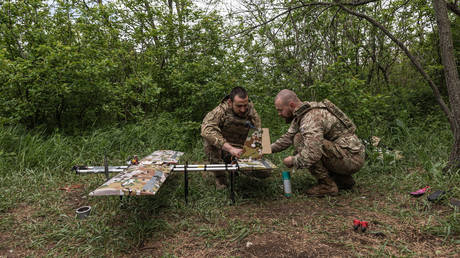
Another target drone washes up on a beach in Türkiye. The media immediately treats it like a downed stealth bomber or a massive security breach. Newsrooms run grainy footage, local authorities cordon off the sand, and commentators whisper about escalating maritime conflicts or black-market military tech.
It is pure, unadulterated theater.
The collective obsession with washed-up maritime and aerial drones exposes a massive gap in how the public understands modern hardware attrition. The media reports on these incidents as if every piece of military equipment is an irreplaceable, multi-million-dollar asset. They treat a stray piece of carbon fiber like a sovereign crisis.
Here is the reality the defense industry understands but never states out loud: most of what washes ashore is designed to be lost.
The Cheap Disposable Illusion
When a target drone like a British-made Banshee or a local Turkish tactical UAV ends up bobbing in the surf, the immediate assumption is failure. "The drone crashed." "The mission failed."
I have spent years evaluating procurement pipelines and hardware lifecycle costs. Let me tell you how defense budgets actually work. Target drones and low-tier surveillance assets are treated exactly like ammunition. You do not hold a press conference when a 155mm artillery shell explodes; you should not hold one when a low-cost target drone hits the water after a training exercise.
These systems are built cheap by design. They use commercial-grade fiberglass, off-the-shelf GPS modules, and small, short-life engines. They are meant to simulate threats so that radar operators and air defense crews can get live-fire practice.
If a target drone survives three flights, it has already delivered an incredible return on investment. The fact that one occasionally misses its recovery parachute and floats across the Black Sea or the Mediterranean is not a technical failure. It is a rounding error in a logistics spreadsheet.
The Data Security Panic Is a Myth
The second lazy narrative that surfaces during these events is the "intelligence goldmine" myth. Commentators love to speculate about reverse-engineering or intercepted telemetry data.
"Local authorities are inspecting the debris to determine its origin and retrieve data."
Inspect what, exactly?
Modern military hardware utilizes volatile memory architectures. The second a drone loses power or deviates from its geo-fenced operating area, critical data keys are wiped automatically. What remains on a washed-up target drone is about as useful to a foreign intelligence agency as a broken smartphone from 2018.
Furthermore, reverse-engineering a low-tech drone hull offers zero strategic advantage. Any state actor capable of building a basic defense infrastructure already knows how to mold fiberglass and mount a two-stroke engine. There are no secret propulsion systems or alien sensor suites inside these hulls.
The False Premise of Coastal Infiltration
Let us dismantle the "People Also Ask" consensus regarding coastal drone sightings. The public consistently asks: Are washed-up drones evidence of covert surveillance operations gone wrong?
The short answer is no. If a state actor wants to spy on a coastline, they use high-altitude long-endurance (HALE) platforms or satellite constellations that operate far outside the reach of local air defenses and waves. They do not send a loud, low-altitude target drone that can be brought down by a flock of gulls or a stiff headwind.
When a drone washes up in places like Istanbul or Sinop, it is almost always the result of simple hydrodynamics and geography. The Black Sea features intense, counter-clockwise currents. A drone ditched off the coast of Crimea or Romania weeks ago will naturally migrate toward the Turkish straits. It is not an infiltration strategy; it is basic oceanography.
The Reality of Modern Attrition
To understand why the media gets this so wrong, you have to look at the sheer volume of hardware currently being deployed in global testing and training theaters.
| Drone Type | Primary Function | Expected Lifespan | Unit Cost Estimate |
|---|---|---|---|
| Target Drone | Air Defense Practice | 1–3 Missions | $10,000 - $50,000 |
| Tactical Recon | Short-range Scouting | 10–20 Flights | $80,000 - $250,000 |
| Strategic UAV | Long-range ISR | Multi-year | $15M+ |
When a $20,000 target drone goes missing, nobody initiates a multimillion-dollar naval salvage operation to find it. They let it float. The cost of fuel for a single patrol boat to hunt down a drifting target drone often exceeds the value of the drone itself.
Stop Treating Attrition as News
The media treats the drone as the story because it is tangible, visual, and scary to the uninitiated. But the real story is our inability to accept that modern warfare and training are incredibly messy, high-attrition endeavors.
The defense sector is moving toward a model of massive, disposable swarms. The sky and the sea will increasingly be filled with low-cost, short-life autonomous hardware. As this trend accelerates, thousands of these units will malfunction, run out of fuel, or get knocked off course by bad weather.
If the public panics every time a piece of military plastic washes onto a beach, we are in for a very long, very exhausting decade of manufactured scares.
Stop looking at the washed-up hull as a sign of escalating tension or technological secrets. It is trash. It is military litter that missed the garbage collector. Treat it like a deflated party balloon that drifted into your backyard, pack it up, and move on.