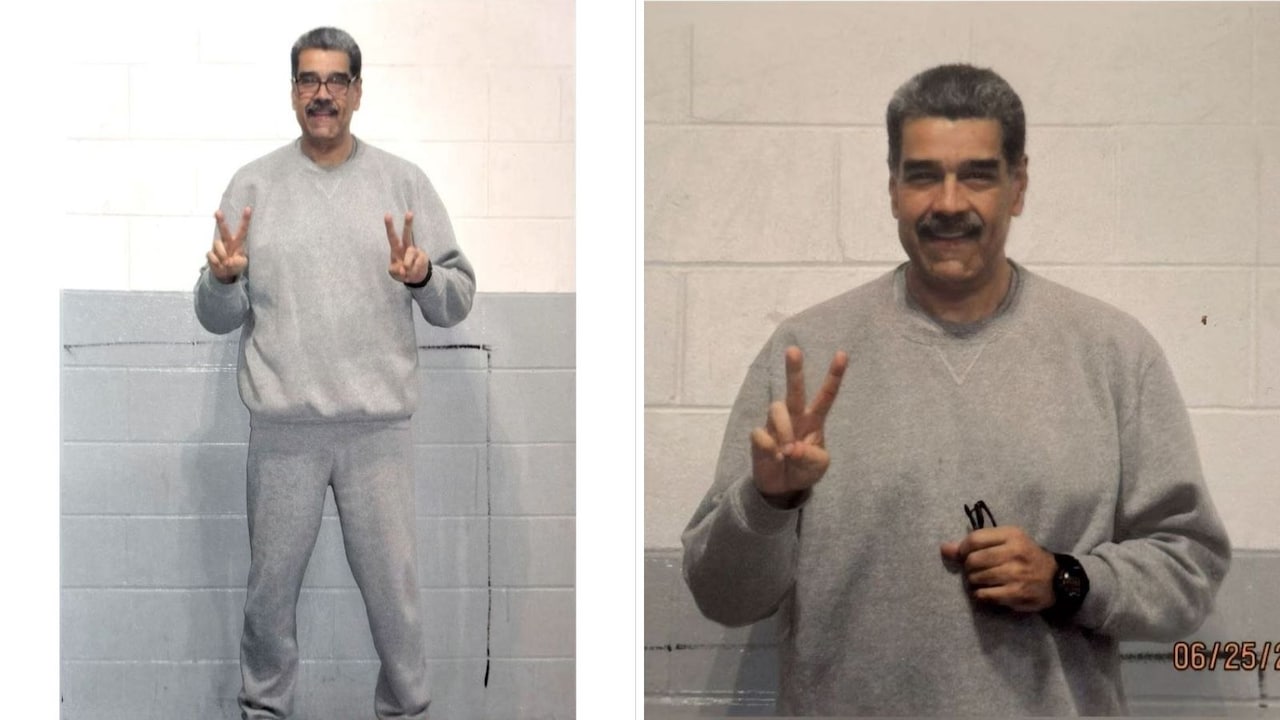
The media is eating it up. Every major outlet just ran the exact same lazy narrative about Nicolás Maduro smiling from a federal holding cell, flashing a defiant thumbs-up, posing for a staged photo meant to project unbroken revolutionary grit. Analysts on cable news are hyperventilating about symbolism, optics, and the eternal struggle between empire and resistance. It is complete theater, and everyone involved is playing their assigned role.
Stop buying the mythology.
When a deposed dictator ends up in American custody, the spectacle you see on your screen is never a window into reality. It is a managed product. The conventional wisdom claims that a photo of Maduro behind bars proves the reach of international justice or signals the irreversible collapse of 21st-century socialism. On the flip side, the regime's loyalists insist the image proves he is unbroken, a martyr waiting for history to vindicate him. Both sides are wrong. Both sides are falling for a very old, very tired script.
I have watched foreign policy amateurs trip over their own shoelaces for decades, mistaking staged photo-ops for strategic shifts. Let us look at what is actually happening beneath the veneer of the press release.
The Economics of a Show Trial
Power does not vanish because a leader changes zip codes. When you strip away the moralizing editorials, high-stakes geopolitics is a messy ledger of leverage, supply chains, and transactional security. A former head of state sitting in an American detention center is not just a prisoner; he is a massive bargaining chip wrapped in state secrets and oil contracts.
The lazy consensus says Maduro is finished, neutralized, and stripped of his influence the second the cell door clangs shut. That is a child's understanding of statecraft. High-level political prisoners retain value precisely because of what they know and who they can implicate. The real power play is not happening in a courtroom or a holding cell. It is happening in back rooms where sanctions relief, frozen sovereign assets, and backdoor energy concessions are being traded like commodities on a dark pool exchange.
If you think a viral photograph tells you who is winning this war, you are staring at the magician's left hand while the right hand picks your pocket.
Dismantling the Optics Trap
Let us address the viral image directly. The circulating photo of Maduro looking defiant was not leaked by a rogue guard. It was cleared, curated, and released with a specific objective. For Washington, displaying a foreign adversary in custody validates the domestic security apparatus and feeds the narrative of unyielding American dominance. For Caracas and its remaining regional allies, that same photo is weaponized to rally domestic nationalism, painting the capture as imperialist kidnapping rather than accountability.
Everyone gets what they want out of the transaction. The algorithm gets fed, partisans get their adrenaline fix, and the structural realities of Venezuela's humanitarian and economic crisis remain entirely unchanged. Changing the occupant of a jail cell does not automatically rewrite a petro-state's institutional rot or instantly restore democratic norms to a fractured society.
Imagine a scenario where Maduro is quietly cut loose or transferred to house arrest in a friendly third-party nation six months from now because a secret energy pact required it. You would not be surprised if you understood how power actually operates. Treaties are written in ink, but state survival is written in pragmatism.
The Real Danger of Simplistic Narratives
When journalists reduce a complex geopolitical crisis to a single face behind bars, they commit a dangerous intellectual fraud. They erase the millions of ordinary Venezuelans whose lives were hollowed out by hyperinflation, systemic corruption, and institutional decay long before any federal indictment was ever drafted.
Focusing on the theater of the cell distracts from the structural reforms needed to rebuild a nation. It allows corrupt domestic elites—both inside the former regime and within the fractured opposition—to launder their own reputations while the public focuses on a reality TV spectacle.
We need to stop asking whether Maduro looks strong or weak in custody. That is the wrong question entirely. The right question is: what systemic vulnerabilities in international law and global energy markets allowed this kleptocracy to operate with impunity for decades in the first place? Until we answer that honestly, every photo op is just a distraction keeping the machine running.
Do not look at the prisoner. Look at the balance sheet.