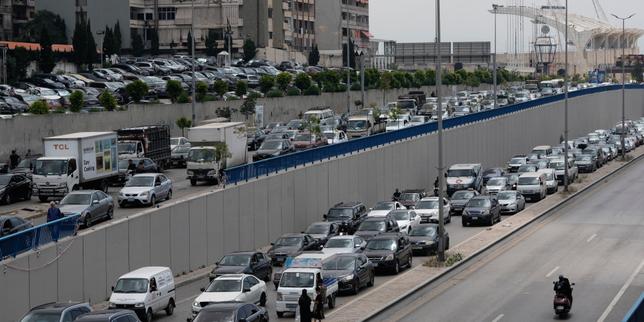
Mainstream war correspondence has devolved into a repetitive exercise in stenography. When a headline flashes that a military force has issued evacuation orders for a dense urban center like the southern suburbs of Beirut, the media apparatus moves in lockstep. The narrative is instantly set: a humanitarian crisis is quantified purely by body counts, and military strategy is judged solely by the immediate chaos of displacement.
This framework misses the entire mechanics of modern asymmetric warfare.
The lazy consensus dominating the airwaves views evacuation warnings through a single, flat lens—either as a cynical public relations cover for indiscriminate bombardment or as a purely humanitarian gesture. It is neither. By focusing entirely on the immediate drama of the exodus and the grim tally of casualties, observers fail to understand that evacuation orders are a sophisticated, aggressive instrument of psychological and operational warfare designed to reshape the physical and political geography of a conflict zone.
The Illusion of the Clean Battlefield
The core flaw in current geopolitical analysis is the belief that urban warfare can be structured like a medieval siege with clear lines of demarcation. It cannot. When a military power orders civilians to vacate a sector, it is not merely clearing a path for munitions; it is attempting to strip an embedded insurgent force of its primary strategic asset: human terrain.
In dense metropolitan areas, the civilian infrastructure is the combat environment. Every apartment block, subterranean transit route, and medical facility possesses dual-use potential. When the media reports on these evacuations, they treat the targeted zone as a static collection of homes.
[Traditional View]   Civilians -> Static Infrastructure -> Passive Targets
[Strategic Reality]  Population Removal -> Subterranean Exposure -> Structural Neutralization
An evacuation order is an operational lever designed to force a choice upon an embedded adversary. It forces the hidden combatant to either retreat alongside the civilian populace—thereby exposing themselves to surveillance and interception—or remain in a depleted, highly visible environment where their tactical advantages are severely compromised. To report on these orders as mere precursors to destruction ignores the profound intelligence-gathering apparatus that triggers them.
The Broken Math of Casualty Trophies
Every morning, the public is fed a new ledger of death. "Nearly 3,500 dead since March," the tickers scream. This raw number is presented as the definitive metric of a campaign's morality and efficacy.
This is data literacy at its absolute worst.
A raw casualty count tells you nothing about the strategic vector of a war. It does not differentiate between combatants and non-combatants, nor does it explain the operational value of the targets neutralized. I have analyzed military campaigns for two decades, and the most dangerous mistake an analyst can make is treating a body count as a scoreboard.
In asymmetric conflict, an insurgent force actually benefits from a high civilian casualty rate within the court of global public opinion. It is their primary asymmetric weapon against a technologically superior adversary. By aggregating all fatalities into a single, terrifying digit, international reporting validates this strategy. It incentivizes the nesting of military assets within civilian centers because the political cost of extraction becomes too high for the attacking force to bear.
The harsh truth nobody wants to acknowledge is that a low casualty count can coexist with absolute strategic failure, while a high casualty count can accompany the total dismantlement of a terrorist or insurgent infrastructure. If you judge the success of an operation purely by the length of the obituary columns, you are measuring the noise, not the signal.
Psychological Displacement as a Weapon of Attrition
When hundreds of thousands of people flee the southern suburbs of a major capital, the immediate reporting focuses on the logistics of displacement—tents, food shortages, choked highways. This is a critical human issue, but it obscures the deeper geopolitical impact.
Evacuation is not a temporary pause in normalcy; it is a permanent redistribution of political pressure.
Imagine a scenario where a state's internal stability relies on a delicate sectarian balance. Forcing a specific demographic out of their stronghold and scattering them into other regions of a country does not just protect them from bombs; it weaponizes their presence against the host government.
- Resource Strain: The sudden influx of displaced populations breaks the back of municipal infrastructure in safe zones.
- Political Friction: It forces rival political factions within the country to confront the reality of a war they may not want to fight.
- Insurgent Isolation: It strips the armed group of its social shield, leaving them exposed to domestic political backlash from the very people they claim to protect.
The displacement itself is the munition. It creates a secondary front line within the domestic politics of the nation under fire. The attacking military knows that the government in question cannot sustain the social friction of a permanently displaced populace. The evacuation order is designed to break the political will of the state, long before the artillery pieces run hot.
The Flawed Questions of the "People Also Ask" Box
Look at the standard inquiries driving public interest during these crises. The questions themselves reveal a fundamental misunderstanding of the reality on the ground.
Are evacuation orders legal under international law?
The international legal framework demands that a military force give effective advance warning of attacks that may affect the civilian population, unless circumstances do not permit. The media treats these warnings as proof of impending war crimes, when legally, they are the exact opposite. They are an explicit attempt to comply with the principle of distinction. The controversy isn't the legality of the notice; it is the practical impossibility of compliance in a theater where the exit routes are compromised and the destination is insecure.
Why do civilians refuse to leave after an evacuation notice?
The standard answer is fear of losing property or lack of resources. The brutal, unvarnished reality is often far more sinister. Embedded forces frequently use coercion, checkpoints, and physical blockades to prevent their own population from leaving. A civilian who stays is a shield; a civilian who leaves is a lost asset. Until reporting addresses the active prevention of flight by territorial rulers, the analysis remains completely compromised.
The Strategic Failure of Total Attrition
To be absolutely clear, this contrarian reality does not mean the current operational doctrine of urban evacuation is a flawless success. It carries a massive, frequently fatal blind spot.
While removing the civilian population allows for the application of maximum firepower with reduced collateral damage, it creates a geopolitical vacuum that cannot be filled by kinetic force alone. You can flatten a suburb, clear the tunnels, and neutralize the leadership cadre. But the very act of mass displacement breeds the next generation of asymmetric actors.
I have watched militaries burn through billions of dollars implementing perfect tactical evacuations, only to realize they have merely outsourced the insurgency to the next town over. The tactical victory of a cleared sector is almost always offset by the strategic disaster of a radicalized, displaced population. The operational precision of the warning does nothing to mitigate the long-term political blowback.
The current reporting on the Middle East conflict will continue to fail because it treats war as a series of disconnected, tragic events. It focuses on the smoke and the sirens while completely missing the structural engineering of the campaign. Evacuation orders are not humanitarian favors, nor are they random acts of cruelty. They are the deliberate, calculated restructuring of the battlespace—and until we analyze them as such, we are just looking at pictures of ruins without understanding the blueprint that created them.