The financial press is currently obsessed with the "Global AI Spillovers" narrative. They look at ASML, SAP, and Schneider Electric, see a rising stock chart, and scream that Europe has finally caught the fever. It’s a comforting bedtime story for fund managers who missed the Nvidia boat.
It is also a lie.
What we are witnessing isn't a tech renaissance. It is a desperate flight to quality within a wasteland of digital stagnation. The "AI plays" in Europe aren't soaring because they are winning the innovation race; they are soaring because they are the only things left standing in a regulatory minefield that has successfully strangled every other potential competitor.
Investors aren't buying Europe's vision of the future. They are buying the toll booths.
The Monopoly Mirage
The consensus view suggests that because companies like ASML are essential to the AI supply chain, Europe is a co-pilot in this revolution. This misses the mechanical reality of how these businesses operate.
ASML is a monopoly by accident of history and extreme capital intensity, not because the European ecosystem "fostered" (to use a term I despise) a culture of risk. In fact, if ASML were founded today in the current European regulatory environment, it would likely be regulated into obscurity before it ever perfected Extreme Ultraviolet (EUV) lithography.
When you buy SAP because of its "AI integration," you aren't betting on a breakthrough. You are betting on the fact that European corporations are so deeply entrenched in legacy systems that they have no choice but to pay whatever "AI tax" SAP attaches to their subscription. It is a play on inertia, not ingenuity.
The Regulatory Suicide Pact
The US builds. China scales. Europe regulates.
This isn't just a witty trope; it's a structural death spiral. The EU AI Act is being championed as a "global standard" for safety. In reality, it is a 450-page suicide note for European startups. While Mistral AI puts up a brave face, they are fighting a war with one hand tied behind their back by bureaucrats who confuse "risk mitigation" with "value creation."
I have spent the last decade watching European founders move to Palo Alto or Austin the moment they hit Series A. Why? Because in Europe, the first question from a government official isn't "How fast can this grow?" but "How can we tax this and which committee ensures it’s 'ethical' according to 27 different jurisdictions?"
The market is rewarding the "European AI plays" precisely because they are the only ones big enough to survive the compliance costs. This isn't a healthy market. It’s a cartel.
The Hardware Trap
Everyone loves the "pick and shovel" analogy. If Nvidia is the shovel, then Europe’s power management and cooling companies—your Schneiders, your Legrands—are the handles.
But there is a fundamental flaw in the "Global Tech Frenzy" thesis: hardware is a commodity business with long cycles and brutal margins. Software scales at zero marginal cost.
Europe is effectively providing the plumbing for a house it doesn't own and isn't allowed to live in. We are seeing a temporary spike in valuation because the world is building data centers at a frantic pace. But once the infrastructure build-out plateaus, these "industrial AI plays" will return to their natural state: slow-growth utilities.
To call this an "AI boom" is like calling a plumber a "tech mogul" because he fixed the sink at Google.
The Talent Drain Nobody Talks About
The most brutal truth? Europe’s best AI minds are already on the payroll of Alphabet, Meta, and OpenAI.
Imagine a scenario where a brilliant researcher at ETH Zurich or Oxford develops a new architecture for sparse transformer models. In the US, they get $20 million in seed funding and a cluster of H100s by Friday. In Europe, they spend six months filling out grant applications and another six months worrying about whether their training data violates a localized interpretation of the GDPR.
The stock prices of SAP and ASML don't reflect a vibrant ecosystem. They reflect the fact that capital has nowhere else to go. It is a "scarcity premium." There are so few liquid, large-cap tech options in Europe that any company even tangentially related to a GPU gets bid up to insane multiples.
Stop Asking if Europe Can Catch Up
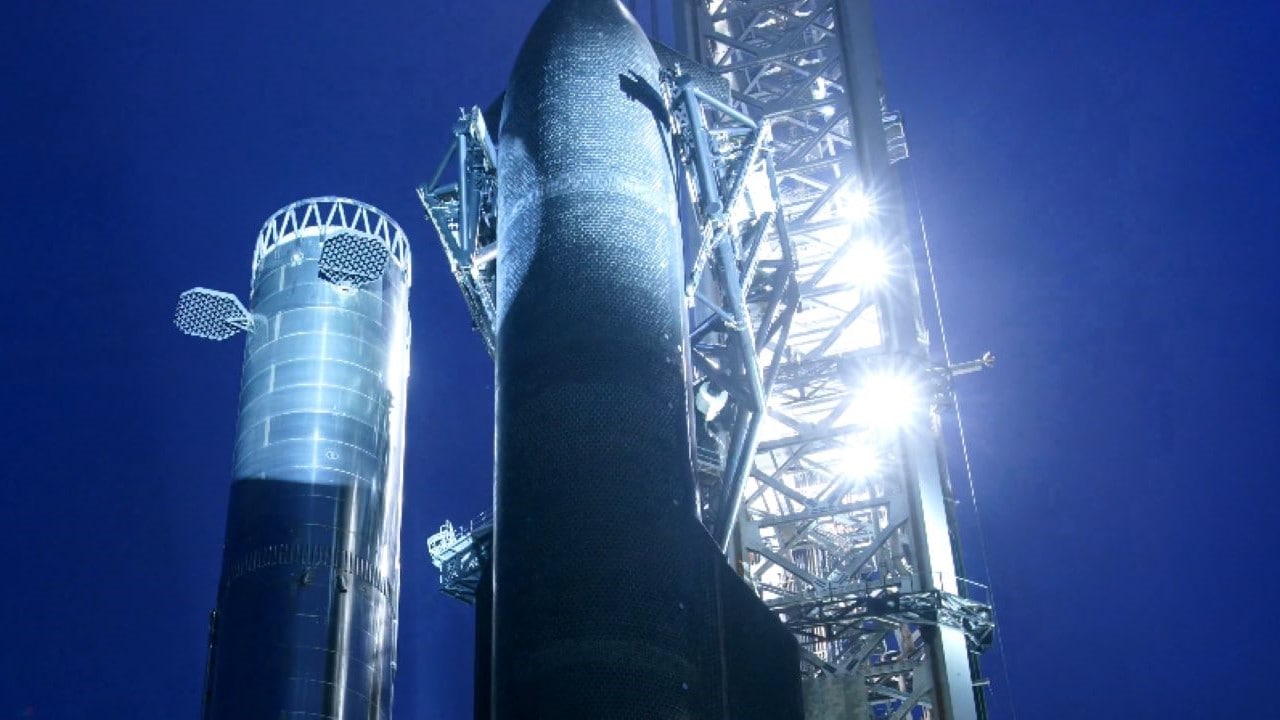
The question itself is flawed. You don't catch up to a rocket ship by building a better bicycle.
The US tech frenzy isn't "going global" in the way the media suggests. It isn't a rising tide lifting all boats. It is a vacuum. It is sucking the capital, the talent, and the compute power out of every other region.
Europe’s "soaring" tech stocks are the final gasps of a continent trying to convince itself it is still relevant in a world where the speed of compute has replaced the rule of law as the primary driver of GDP.
If you want to invest in the future, follow the compute. If you want to invest in a museum that still has functioning electricity, buy Europe.
The "spillover" isn't a sign of health. It is the overflow from a bucket that is already full. When the US market eventually corrects, these European "AI plays"—built on the shaky foundation of hardware cycles and legacy software lock-in—won't just dip. They will evaporate.
Stop looking for the "European Nvidia." It doesn't exist. It wasn't allowed to be born.