Residents in Daejeon finally got a good night’s sleep after a tense, five-hour ordeal that felt like a movie script. An escaped wolf from the Daejeon O-World zoo sparked a city-wide panic, proving that even the most secure facilities have blind spots. You’d think modern zookeeping would be foolproof. It isn’t. When a predator wanders into the woods near a major metropolitan area, the gap between civilization and the wild disappears instantly.
The escape happened around 9:40 AM when a seven-year-old female wolf named "Sari" slipped through an open gate while keepers were cleaning the enclosure. It wasn't a complex breakout. It was human error. Plain and simple. This wasn't a case of a wolf digging a tunnel or scaling a fence. Someone left a door unlatched. That’s all it takes to trigger an emergency response involving hundreds of police officers, firefighters, and specialized hunters.
The Hunt for Sari in the Daejeon Hills
Daejeon isn't just a tech hub. It’s surrounded by rugged terrain and hiking trails. Within minutes of the escape, the local government blasted out emergency cell phone alerts. People were told to stay indoors. Hikers were evacuated from nearby Mount Bomun. Imagine being halfway up a trail only to be told a gray wolf is sharing the path with you.
The search party wasn't messing around. They deployed 100 police officers and 140 firefighters. They even brought in professional hunters with dogs. This highlights a massive logistical challenge. How do you find a camouflaged animal in dense brush without accidentally hurting it—or someone else?
- 9:40 AM: Escape reported during routine cleaning.
- 10:30 AM: Emergency alerts sent to residents’ phones.
- 11:00 AM: Mount Bomun trails closed to the public.
- 2:00 PM: Sighting confirmed near the zoo perimeter.
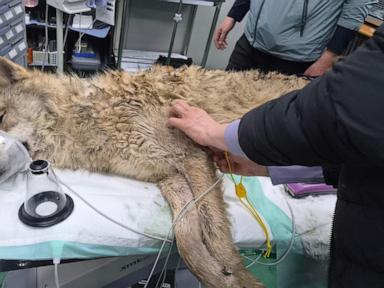
- 4:30 PM: Sari was spotted and neutralized with a tranquilizer dart.
The search lasted roughly five hours. During that window, the tension in the city was palpable. Social media was flooded with photos of empty streets and nervous commuters. People didn't know if they were looking for a terrified animal or a dangerous hunter.
Why Zoo Escapes Are a Recurring Nightmare
This isn't South Korea’s first rodeo with escaped animals. We've seen zebras in the streets of Seoul and monkeys on the loose before. But a wolf is different. There’s a primal fear attached to "Canis lupus." Even though Sari was born in captivity and likely more afraid of humans than we were of her, the public perception of risk is much higher with a carnivore.
Zoos often face a dilemma. They want to provide naturalistic environments, which often means less obvious barriers. But those environments must be perfectly maintained. In Sari’s case, the failure was operational. If the protocols for double-entry doors or "lock-before-you-clean" rules aren't followed to the letter, these incidents are inevitable.
Experts from the Korean Association of Zoos and Aquariums (KAZA) often point out that staff fatigue and routine complacency are the biggest threats to safety. When you do the same cleaning job 300 days a year, you might forget to check a latch once. That one time is when the wolf gets out.
The Cost of Captivity and Public Safety
Some people argued that the wolf should have been left alone or that the response was too aggressive. That’s easy to say until a wolf is in your backyard. The reality is that an animal raised in a zoo has no survival skills in the wild, but it still has its instincts. It’s a danger to itself and to the community.
Captive-born wolves don't know how to hunt deer. They look for easy meals. That usually means trash cans, small pets, or unfortunately, interactions with humans that can go south fast. The zoo had to bring her back, not just for the public’s sake, but for her own health.
The recovery process itself is risky. Tranquilizing an animal isn't like the movies. It doesn't happen instantly. Once the dart hits, the animal often runs in a panic for several minutes before the drugs kick in. If Sari had run toward a road or a cliff during that time, the outcome could have been fatal. Luckily, she was cornered in a forested area near the zoo's rear entrance.
Learning from the Daejeon Incident
The city of Daejeon is now reviewing its safety protocols. They've promised better training for zookeepers and more automated locking systems. Honestly, it shouldn't take an escape to realize that manual latches are a weak point.
If you live near a zoo or frequent hiking trails in South Korea, you need to know how to handle these situations. Don't assume the authorities have everything under control immediately.
- Keep your phone alerts on. Local governments use these for a reason. Don't silence them.
- Avoid the area. Don't go "wolf spotting." You'll only get in the way of the professionals and put yourself at risk.
- Secure your pets. Escaped predators are attracted to the scent of smaller animals. Keep your dogs and cats inside until the "all clear" is given.
Sari is back in her enclosure now. She’s reportedly healthy and recovering from the sedation. The zookeepers involved are likely facing disciplinary action. It's a happy ending this time, but it serves as a stark reminder. Our control over nature is much more fragile than we like to admit.
Check the official Daejeon O-World website for updates on their new security measures if you’re planning a visit. Stay aware of your surroundings, especially if you're hiking near the park boundaries. One open gate is all it takes to change your afternoon plans.