The door frame of a Palestinian home in the West Bank is more than a piece of architecture. It is a boundary between a world of increasing chaos and the only place where a family can still breathe. But lately, that boundary is dissolving. It isn't just being broken by hammers or bulldozers. It is being dismantled by a specific, calculated terror that targets the most private parts of human existence.
A recent report by the Association of Israeli-Palestinian Physicians for Human Rights reveals a grim evolution in the mechanics of displacement. It details how sexual violence—and the threat of it—is being used as a systematic tool by both soldiers and settlers to force Palestinians from their land. This isn't random. It is a strategy designed to break the spirit before it breaks the body.
Consider a woman we will call Maryam. She lives in a small village nestled against the hills, where the olive trees are older than the state itself. Her day used to be measured by the sun and the needs of her children. Now, it is measured by the sound of engines. When the settlers arrive, they don't always come with a legal eviction notice. Sometimes, they come with a camera. They film her in her private spaces. They make gestures that strip away her dignity without ever laying a finger on her.
This is the "invisible" violence. It is the weaponization of shame in a society where honor and privacy are the bedrock of community life. When a soldier subjects a man to a strip search in front of his daughters, or when a settler makes explicit threats against the women of a household, the goal is the same: to make the home feel like a cage where no one is safe.
The Anatomy of Pressure
The report tracks a terrifying uptick in these incidents since October 2023. The data isn't just a collection of numbers; it is a map of a disappearing geography. The violence described is multifaceted. It includes physical assault, but it leans heavily into the psychological. Threatening to "shame" a family in a conservative village is often more effective at clearing a house than a tear gas canister.
The strategy relies on the understanding that once the sanctity of the family unit is violated, the will to stay on the land begins to crumble. If you cannot protect your children from seeing you humiliated, or if your wife cannot walk to the well without facing verbal sexual predation, the very earth beneath your feet starts to feel like a betrayal.
Soldiers often act as the shield for the settlers. While the settlers carry out the most overt acts of harassment, the military presence ensures there is no recourse. If a father tries to intervene when his son is being searched provocatively, he is the one who ends up in zip-ties. The power imbalance is total. It creates a vacuum where the law does not exist for the occupied, only for the occupier.
The Architecture of the Siege
To understand why this is happening now, we have to look at the larger goal. The aim is "area C"—the 60 percent of the West Bank under full Israeli military and administrative control. This is the land where the settlements grow. To make room for that growth, the existing population must be made to leave "voluntarily."
How do you make someone leave a home their grandfather built? You make the cost of staying higher than the pain of leaving. You cut off their water. You burn their crops. And finally, you target their bodies and their dignity.
Medical professionals involved in the report describe a "lingering trauma" that prevents people from returning to normalcy. A victim of sexualized violence doesn't just recover when the soldiers leave the room. The trauma sits in the corner of the kitchen. It follows them to bed. It makes the idea of "home" a memory rather than a reality.
The report highlights cases where detainees were subjected to invasive searches that served no security purpose. They were performances of dominance. When a person is stripped and mocked, the message is clear: You do not own yourself. You do not own this space. You are here only because we allow it, and we can take your dignity whenever we choose.
The Silence and the Storm
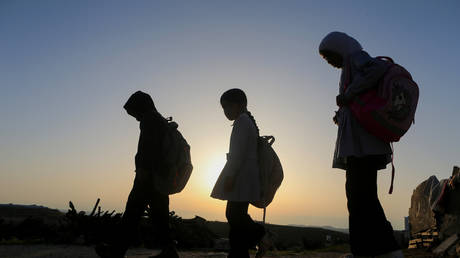
The world often looks at the West Bank through the lens of geopolitics—treaties, maps, and high-level negotiations. But those things are abstractions. The reality is found in the trembling hands of a man who can no longer look his wife in the eye because of what happened at a checkpoint. It is found in the silence of a girl who no longer wants to go to school because of the things the settlers shouted at her.
There is a profound loneliness in this kind of suffering. Because it involves sexualized shame, many victims are hesitant to speak. The perpetrators know this. They bank on the silence. They use the cultural fabric of Palestinian society against itself, knowing that the fear of social stigma can be as powerful as the fear of a bullet.
But the report is a crack in that silence. By documenting these "gendered tactics," it forces a recognition of what is actually happening behind the closed doors of the occupation. It isn't just a dispute over borders. It is an assault on the human psyche.
The Cost of the Unseen
If we continue to ignore the role of sexual violence in displacement, we are complicit in a lie. We are pretending that this is a "clean" conflict, a matter of security and defense. But there is nothing defensive about filming a woman through her bedroom window. There is no security gained by humiliating a grandfather in front of his village.
These acts are designed to produce a specific outcome: the total displacement of a people. When the physical body is no longer a safe place to inhabit, the land becomes secondary. The tragedy is that this works. Families are moving. Villages are thinning out. The map is changing, not through a signed treaty, but through a series of private, agonizing violations.
We must look at the threshold again. We must see the door frame not as a piece of wood, but as the last stand of human dignity. When that is gone, what is left? The olive trees remain, but the people who tended them are scattered, carrying a weight that no map can ever show.
The hills of the West Bank are beautiful, but they are increasingly quiet. That silence isn't peace. It is the sound of a people being broken, one household, one body, and one memory at a time. The real cost of the occupation isn't measured in hectares or kilometers. It is measured in the hollowed-out eyes of those who were forced to choose between their land and their soul.
The light is fading over the hills of Area C. In a small house, a family sits in the dark, listening for the sound of a car door closing. They are not waiting for a guest. They are waiting to see if tonight is the night the threshold finally disappears.