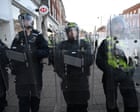
The Surrey Police have officially shuttered their investigation into a reported gang-rape in Epsom, concluding that no evidence exists to support the claim that the attack took place. For a community that spent the last week gripped by fear, the sudden reversal brings a cold kind of relief. It also raises uncomfortable questions about the anatomy of a modern police investigation and the speed at which public panic outpaces forensic reality.
When the report first surfaced, the response was textbook. A cordoned-off wooded area near the local common. Forensic teams in white suits. Door-to-door inquiries that left residents checking their locks twice. The narrative was terrifyingly simple: a woman had been intercepted by a group of men in broad daylight and subjected to a horrific ordeal. But as the days passed, the digital and physical footprints that usually follow such a violent encounter failed to materialize. No CCTV footage caught the suspects. No witnesses heard the struggle. The physical evidence at the scene did not align with the testimony provided.
Surrey Police took the rare step of being explicit in their dismissal of the case. They didn't just say the investigation was "inactive." They stated flatly that the incident did not happen. This isn't a failure of policing, but rather a demonstration of the heavy machinery of modern verification.
The Invisible Grid of Modern Surveillance
In a town like Epsom, you are almost never truly alone. If you walk from the High Street toward the outskirts, you are tracked by a patchwork of Ring doorbells, council-run CCTV, and dashcams. These devices form an invisible grid. When a violent crime is reported, the first move for investigators is to "clock" the victim and any potential suspects on this grid.
In this instance, the grid was silent. Detectives spent hundreds of man-hours scrubbing through footage from every conceivable angle surrounding the reported site. They found nothing. No groups of men moving in coordination. No distressed individual fleeing the scene. In the world of investigative journalism, we call this the "dog that didn't bark." In a high-traffic area during daylight hours, the total absence of a digital trail is often as telling as a clear photograph.
Physical forensics provided the secondary blow to the report’s credibility. Soil samples, clothing fibers, and biological markers are the bedrock of any sexual assault case. When a group of people is involved, the forensic "noise" is usually loud. There are more footprints, more DNA transfers, and more disturbances to the environment. The Epsom site, however, remained sterile.
The Cost of the False Alarm
We must address the fallout. A false report isn't a victimless event, even if no one is wrongly imprisoned. The immediate cost is measured in police resources—diverting specialized sexual safe-guarding units away from ongoing, verifiable cases. These units are already stretched thin across the UK. Every hour spent chasing a phantom in Epsom was an hour taken away from a victim whose attacker is still on the streets.
Then there is the social cost. When the police announce that a reported gang-rape was unfounded, it provides ammunition to those who wish to doubt all survivors. It creates a "cry wolf" effect that makes the next genuine victim hesitate before coming forward. This is the structural damage that remains long after the police tape is taken down.
Why People Report Crimes That Did Not Occur
To understand the "why," we have to move past simple malice. While some false reports are driven by a desire for revenge or attention, many stem from complex psychological breaks or "misremembered" trauma. In some cases, an individual might experience a genuine mental health crisis where the brain constructs a narrative to explain a feeling of intense vulnerability or terror.
Psychiatrists often note that in high-stress environments, the line between a perceived threat and a physical one can blur. However, the police are not social workers. Their mandate is the law. Once they determine the physical reality does not match the verbal claim, they must move on. To do otherwise is to waste public funds and risk the integrity of the justice system.
The Shadow of Public Panic
The Epsom case highlights a dangerous feedback loop between social media and local news. Within hours of the initial report, local Facebook groups were flooded with "descriptions" of suspects that the police had never actually released. These descriptions often relied on racial tropes or recycled warnings from other towns.
This viral panic creates a pressurized environment for the police. They are forced to investigate not just the crime, but the rumors surrounding the crime. In this case, the pressure was so immense that the Force felt compelled to issue a definitive statement of "no evidence" to settle the public’s nerves. It was a tactical move to stop the spread of misinformation that was starting to target innocent groups of men in the area.
The Mechanics of the Decision
How does a Chief Inspector reach the point of saying "this didn't happen"? It is a process of elimination.
- Digital Synchronization: Comparing the victim's phone GPS data with their stated timeline. If the phone shows the individual was elsewhere, the narrative collapses.
- Biological Consistency: Checking for injuries that match the specific mechanics of the reported struggle.
- Witness Saturation: If twenty people were in the vicinity and saw nothing, the probability of the event drops toward zero.
In the Epsom investigation, all three pillars failed to support the claim. The police didn't find "insufficient evidence" to prosecute; they found a complete absence of an event. This distinction is vital. It protects the community from a phantom threat and protects the legal system from a fraudulent precedent.
The Problem of Resource Reallocation
The UK’s criminal justice system is currently operating on a knife-edge. The backlog of cases in the Crown Courts is at an all-time high. When an investigation of this scale is launched—involving multiple units, forensic labs, and high-ranking officers—it burns through a significant portion of the local budget.
There is an argument to be made for "malicious reporting" charges, but the police rarely pursue them in these contexts. Why? Because the threshold for proving intent is incredibly high. It is easier, and often more compassionate, to simply close the book and focus on the next call. But that leaves the taxpayer footing the bill for a week-long ghost hunt.
Beyond the Headline
The Epsom story is a reminder that we live in a world where the physical and the digital must align for a truth to be established. We no longer live in an era where a single testimony can stand alone without the support of the "invisible grid." For the residents of Epsom, the streets are safe again, but the memory of the panic remains.
The investigation is over. The tape is gone. The woods are quiet. We are left only with the reminder that in the hunt for justice, the hardest truth to accept is sometimes the one where nothing happened at all.
Check the facts before sharing the fear. Ground your safety in data, not in the frantic echoes of a community message board.