The Triad of Operational Failure in Hemorrhagic Fever Containment
The escalation of an Ebola virus disease outbreak to 87 recorded fatalities within the Democratic Republic of Congo highlights systemic friction points across three critical vectors: logistical velocity, surveillance fidelity, and community trust integration. Standard public health reporting often mischaracterizes high mortality rates as a simple failure of medical supply chains. In reality, the compounding death toll reflects a classic failure of operational capacity under exponential stress.
To systematically dismantle the crisis, the situation must be viewed through a structured epidemiological framework. Containment relies on minimizing the reproduction number ($R_0$) down to a value below 1. The breakdown in this specific outbreak can be mapped directly to three distinct bottlenecks.
                  [Outbreak Escalation]
                           │
         ┌─────────────────┼─────────────────┐
         ▼                 ▼                 ▼
   Logistical         Surveillance       Community
    Velocity            Fidelity        Resistance
   Bottleneck          Bottleneck       Bottleneck
1. The Logistical Velocity Bottleneck
The physical geography of the affected Congolese regions dictates the latency of the response. When the time elapsed between symptom onset, diagnostic confirmation, and isolation exceeds the viral incubation and transmission window, containment fails. The current 87 deaths indicate that the virus is moving faster than the local supply chain can deploy personal protective equipment (PPE), therapeutic monoclonals, and Ervebo vaccines.
2. The Surveillance Fidelity Bottleneck
Unreported burials signal a collapse in contact tracing precision. When communities bypass official health channels to conduct traditional burials, the transmission chain goes dark. Each unmonitored funeral functions as a super-spreader event, injecting high viral loads into new networks without the knowledge of epidemiological surveillance teams.
3. The Community Resistance Bottleneck
The friction between centralized, top-down medical interventions and local cultural paradigms creates a data vacuum. Resistance to health workers is not arbitrary; it is a rational response to historical distrust, perceived external interference, and the high visibility of lethal outcomes within isolation units.
Quantification of Transmission Dynamics: The Cost of Latency
Understanding why mortality spikes requires a look at the mathematical mechanics of Ebola transmission during traditional burial practices. The deceased human body harbors its highest viral load at the time of death. Consequently, the transmission risk curve peaks precisely when formal medical oversight is rejected.
The breakdown of the transmission cycle reveals distinct variables that accelerate the outbreak:
- Viral Shedding Index: Post-mortem fluids possess an exponentially higher concentration of viral particles compared to early-stage blood or saliva samples.
- Contact Surface Area: Traditional preparation of the body involves direct, unprotected manual contact by multiple family members, multiplying the exposure vectors simultaneously.
- Super-Spreader Multiplier: A single unmanaged traditional burial can yield an individual reproduction number ($R_i$) of 5 to 10 secondary cases, far exceeding the standard community $R_0$ of 1.5 to 2.5 observed during casual transmission.
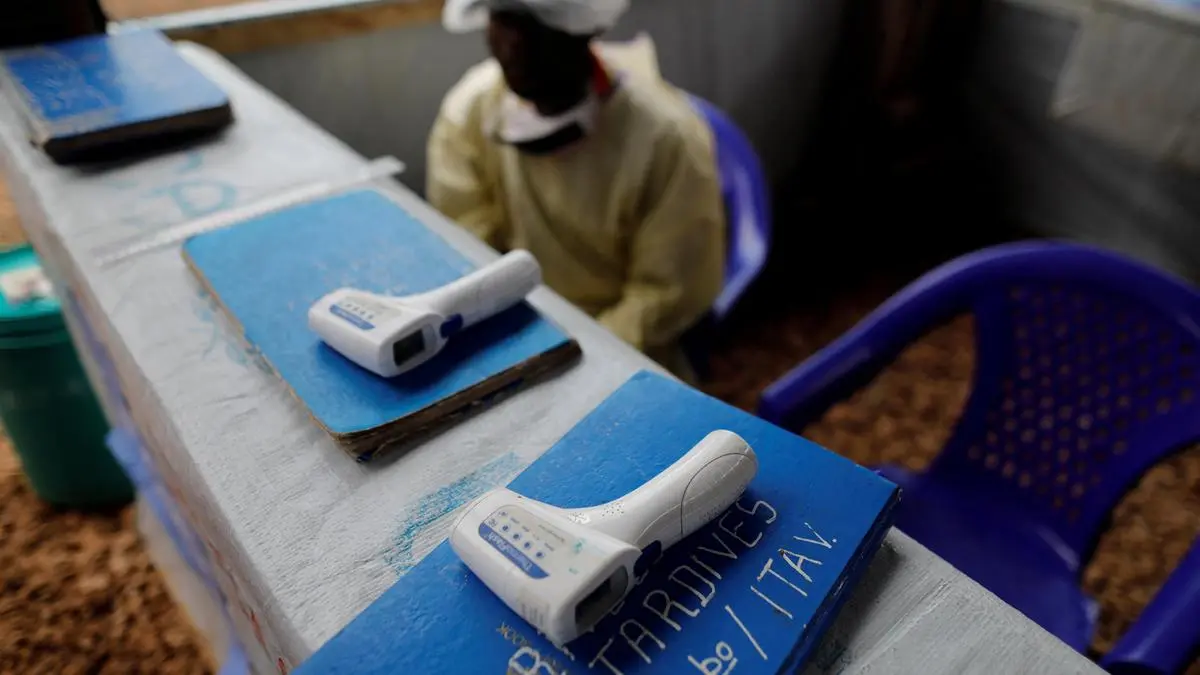
The second limitation compounding this dynamic is diagnostic latency. When a blood sample must travel over unpaved infrastructure to a centralized laboratory in Goma or Kinshasa, the turnaround time stretches to 48 or 72 hours. During this latency window, the suspect patient remains either within the community or in a general ward, driving nosocomial (hospital-acquired) amplification. This creates a bottleneck where the rate of new infections outpaces the rate of diagnostic confirmation.
The Containment Matrix: Structural Interventions vs. Reality
Deploying a standard intervention framework without local adaptation guarantees operational friction. The table below categorizes the standard deployment matrix alongside the specific structural points of failure observed in the current Congolese context.
| Intervention Pillar | Theoretical Mechanism | Operational Point of Failure |
|---|---|---|
| Ring Vaccination | Vaccinate all contacts and contacts-of-contacts to create a human shield of immunity around an active case. | Incomplete contact lists due to skipped tracing, leaving massive gaps in the geographic ring. |
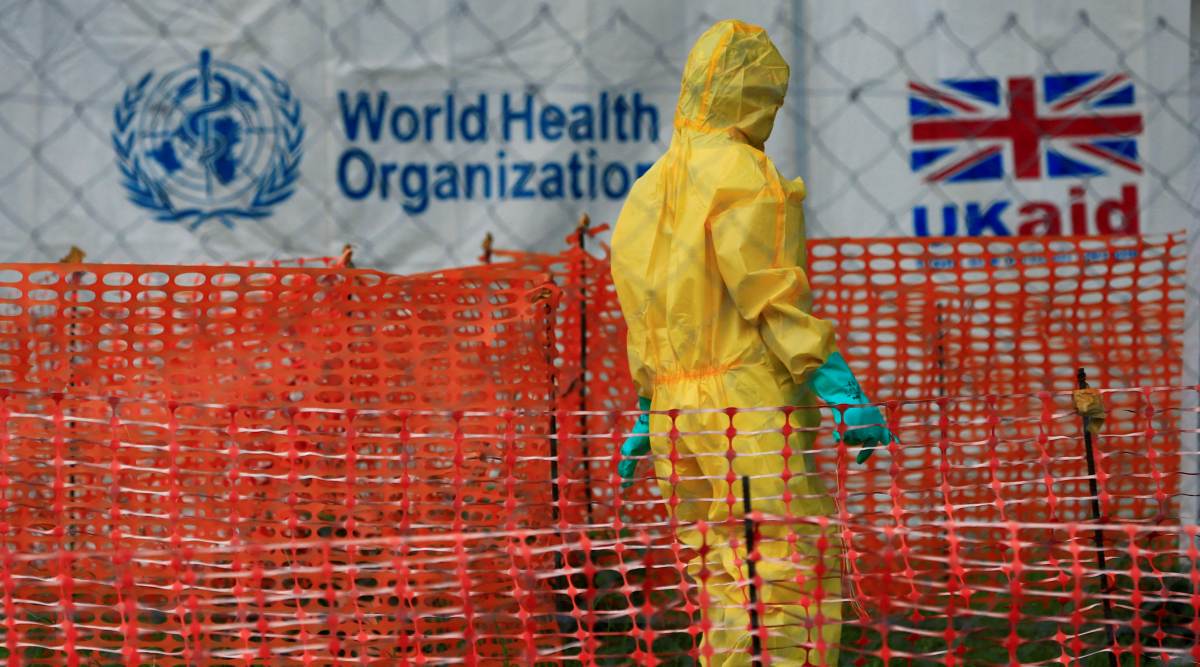
| Safe and Dignified Burials (SDB) | Deployment of trained Red Cross or civil protection teams to decontaminate and bury the deceased in body bags. | Visual presentation of teams in white biohazard suits alienates mourners, driving burials underground. |
| Decentralized Treatment Centers (ETUs) | Establish localized Ebola Treatment Units to isolate patients and administer mAb114 or REGN-EB3 therapies. | Late-stage presentation means patients arrive near death, cementing the local perception that ETUs are execution chambers. |
The disconnect between theory and execution stems from treating an epidemic purely as a biological problem rather than a complex sociopolitical system. The allocation of international capital frequently prioritizes expensive medical technologies over basic field infrastructure and local linguistic adaptation.
Deconstructing the Unreported Burial Phenomenon
The metric of "constant burials" cited by local observers is the ultimate lagging indicator of a runaway epidemic. It proves that the official caseload data represents only a fraction of the actual viral footprint. To understand why families choose secret burials over free medical care, we must analyze the economic and social cost functions governing their decisions.
Social Cost Function = Loss of Community Standing + Economic Cost of Official Interventions + Spiritual Violation Trauma
When an individual dies in an official ETU, the body is typically withheld from the family, treated with chlorine, and buried in an anonymous plot. For the community, this represents an unacceptable spiritual rupture. The perceived cost of losing spiritual continuity outweighs the perceived risk of contracting a disease with a 50% to 90% case fatality rate.
Furthermore, the economic reality cannot be ignored. The breadwinner's admission into an isolation ward instantly halts household income. If the health apparatus does not offset this economic shock with food security and direct support for dependents, the community will actively hide symptomatic individuals to preserve short-term economic survival.
This behavioral feedback loop creates a severe data deficit. Epidemiologists build predictive models based on hospital admissions, while the actual expansion of the virus is driven by the invisible network of clandestine funerals.
Strategic Reconfiguration of the Outbreak Response
The current trajectory of 87 deaths indicates that traditional containment methods are yielding diminishing returns. To reverse the exponential growth curve, the response architecture must pivot toward a decentralized, low-friction model that prioritizes velocity and trust over centralized control.
Decentralize Diagnostics to the Point of Care
The reliance on centralized PCR testing must be superseded by the widespread deployment of automated, field-ready molecular diagnostics like GeneXpert systems at the village level. Reducing the diagnostic window from days to hours stops nosocomial transmission before it starts and allows immediate, targeted ring vaccination.
Transition to Community-Led Safe Burials
The imagery of external actors entering villages in full-body PPE must be phased out where possible, or strictly modified. Training local youth leaders and respected community figures, providing them with modified, less intimidating protective gear, and allowing family members to view the burial from a safe distance bridges the gap between biological safety and cultural necessity.
Implement Direct Economic Compensation for Isolation
To incentivize early reporting, public health agencies must treat isolation as a civic service rather than a quarantine. Households that volunteer symptomatic members for testing and isolation must receive immediate, tangible economic compensation, including food rations and income replacement. This flips the incentive structure, making compliance economically advantageous.
The execution of these steps determines whether the outbreak is contained within the current sub-regions or escalates into a multi-provincial crisis that threatens cross-border international transit corridors.