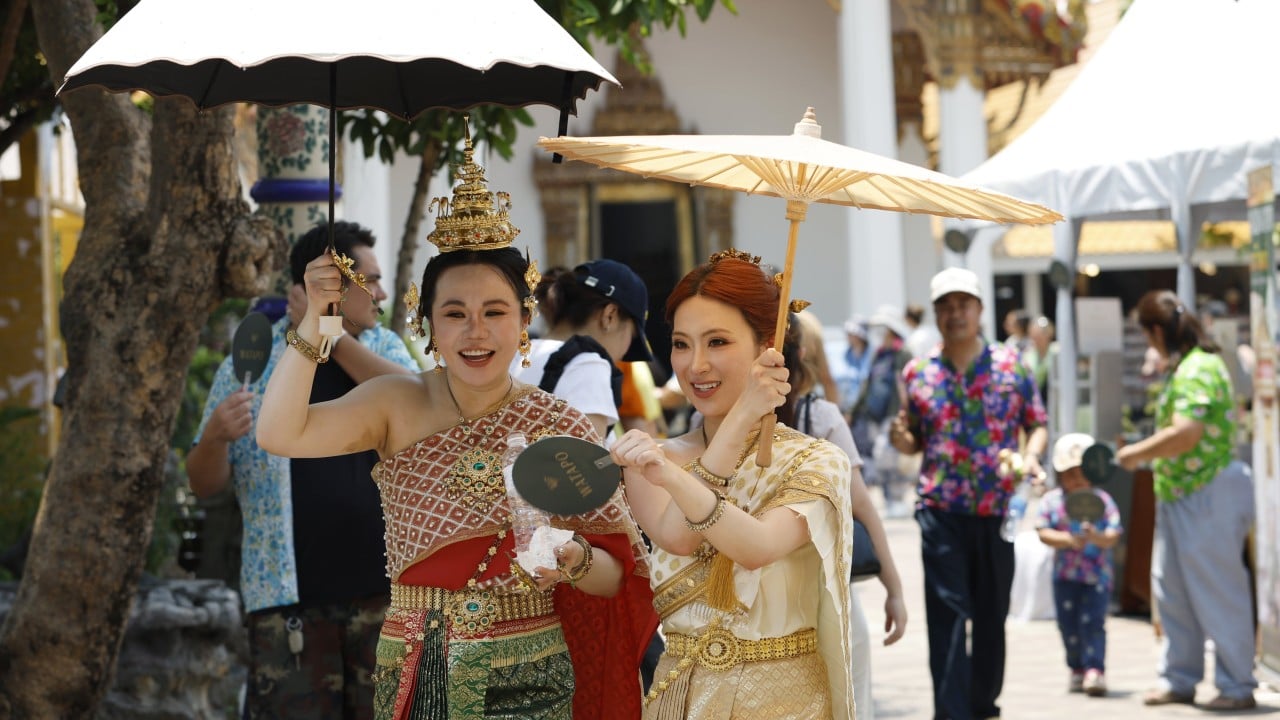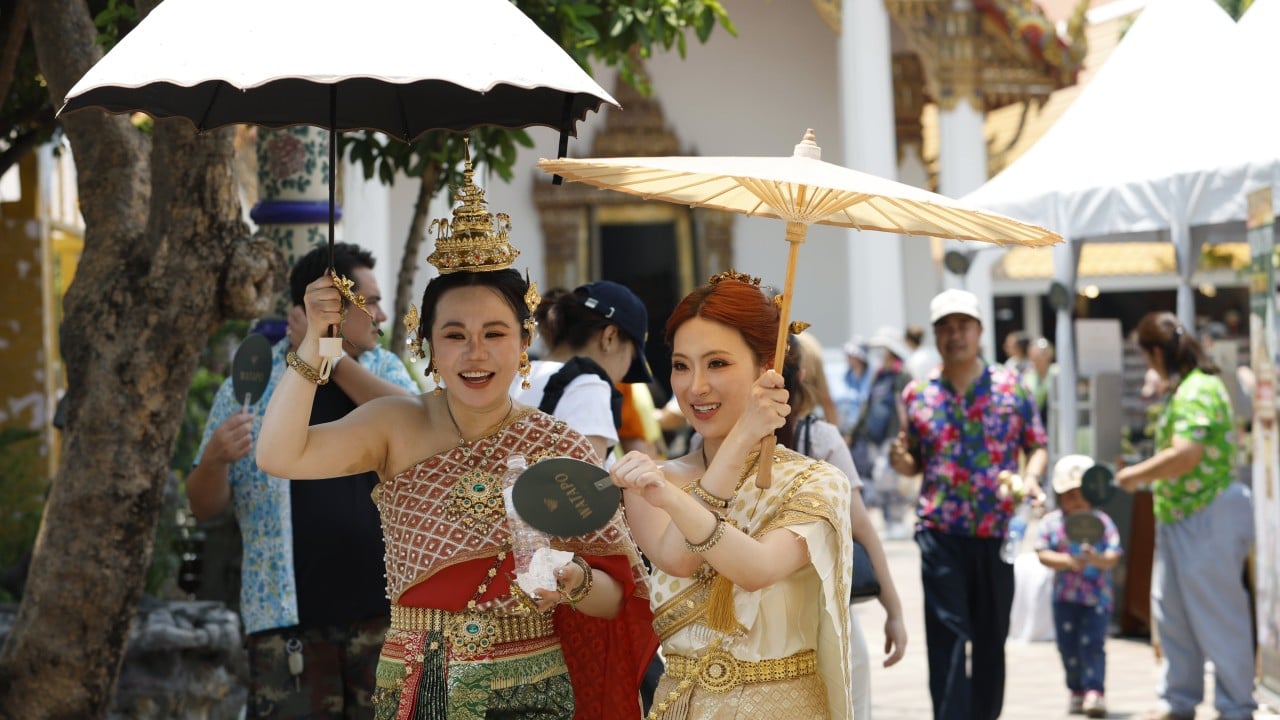
The lobby of a five-star resort in Phuket usually sounds like a symphony of European languages. You hear the low hum of German vowels, the sharp clip of British English, and the lyrical rise and fall of French. For decades, this was the soundtrack of the Thai high season. It was predictable. It was safe. It was the bedrock of a multi-billion dollar industry that banked on the northern hemisphere’s desire to escape the grey slush of February for the white sands of the Andaman Sea.
Now, that symphony has gone quiet.
The reasons aren't found on the beach, but thousands of miles away in the desert. War in the Middle East has a long reach. When the sky over Iran fills with the orange glow of missiles, the ripple effect doesn't stop at the border. It travels through the fuel lines of long-haul carriers. It infects the insurance premiums of Boeing 787s. It settles into the psyche of a family in Munich who decides that, perhaps this year, flying across a volatile corridor is a risk they aren't willing to take.
The European traveler hasn't disappeared, but they have become ghosts. Their absence is felt in the echoing hallways of luxury villas and the frantic recalculations happening in back-office boardrooms from Bangkok to Koh Samui.
The Pivot of the Phoenix
Consider Somchai. He is a composite of the many hotel managers currently staring at occupancy spreadsheets that look like a heart monitor flatlining. For years, Somchai’s staff were trained to understand the specific needs of the Nordic traveler. They knew to stock certain wines, to keep the air conditioning at a brisk $21^\circ\text{C}$, and to prepare breakfast buffets heavy on cold cuts and sourdough.
But the sourdough is molding.
The geopolitical reality is that Thailand cannot wait for the West to feel safe again. Tourism contributes roughly $12%$ to Thailand's GDP, and the industry is currently learning a brutal lesson in diversification. The pivot isn't just a business strategy; it is a survival reflex. If the chairs at the table are empty, you don't keep waiting for the old guests. You invite the neighbors.
This is the year of the Asian traveler. Specifically, the year Thailand decided to stop being a Western playground and start being a regional sanctuary.
The shift is visible in the smallest details. Those cold-cut stations are being replaced by congee bars and dim sum steamers. The signage, once dominated by English and Cyrillic, now prioritizes Mandarin, Hindi, and Korean. It is a fundamental re-engineering of the hospitality DNA.
The Invisible Stakes of a Canceled Flight
Why does a war between Iran and its neighbors matter to a bellhop in Krabi? It’s a matter of physics and finance.
European travel to Southeast Asia relies on a very specific set of flight paths. When those paths are contested or closed, airlines have two choices: cancel the route or fly around. Flying around means more fuel. More fuel means higher ticket prices. In a world where the cost of living is already squeezing the middle class in London and Berlin, a $300 hike in airfare is the difference between a dream vacation and a staycation.
The regional market doesn't have this problem. For a traveler from Mumbai or Chengdu, Thailand isn't a long-haul odyssey; it’s a long weekend.
But attracting these guests isn't as simple as switching a flag in the lobby. The Asian market is not a monolith. The "curated stay" is the new weapon in the hotelier's arsenal. To woo a guest from New Delhi, you need to understand the importance of multi-generational travel. You need rooms that connect, kitchens that understand the nuances of Jain diets, and wedding packages that can scale to five hundred people.
To woo the digital nomad from Seoul, you need something else entirely. You need hyper-fast $5\text{G}$, aesthetic "Instagrammable" corners that look better on a screen than they do in person, and a 24-hour wellness culture that fits a high-pressure lifestyle.
A Tale of Two Economies
Imagine a luxury resort in the North of Thailand, tucked into the misty hills of Chiang Rai.
In the old world, this resort lived on the "Bucket List" economy. Wealthy retirees from the United States would come to see the elephants, stay for three nights, and leave. They were one-and-done visitors.
Today, that same resort is targeting the "Repeat Weekend" economy of the Asian middle class. They are courting the young professional in Singapore who is burnt out and needs a 48-hour digital detox. This guest doesn't care about the traditional tourist traps. They want a specific type of coffee, a specific type of pillow, and a guarantee that the spa uses local, organic herbs.
The stakes of this transition are invisible but massive. If Thailand fails to capture the Asian market, the infrastructure of the country’s most famous islands will crumble. We aren't just talking about hotel profits. We are talking about the boat captains, the coconut farmers, the massage therapists, and the street food vendors who live on the crumbs of the tourist dollar.
The Iranian conflict is a reminder that the globalized world is a fragile web. When one strand snaps, the whole thing sags.
The New Map of Hospitality
Hoteliers are now forced to become amateur sociologists. They are studying the rise of the Indian middle class with the intensity of a hawk. Estimates suggest that by 2030, India will have the largest number of outbound travelers in the world. Thailand is positioning itself as the primary beneficiary of that surge.
It is a radical departure from the 1990s and 2000s, when the "Exotic East" was sold as a product for Western consumption. Now, the East is consuming itself.
There is a certain poetic justice in it. The beautiful landscapes of Thailand are being reclaimed by those who live in the same time zone. The "curated stays" are becoming more authentic because the cultural gap between the host and the guest is narrowing. You don't have to explain the concept of Kreng Jai to a neighbor.
But the transition is messy.
Staffing is a nightmare. Finding enough Mandarin speakers or staff fluent in the cultural nuances of the Middle East—who are also heading to Thailand in record numbers to escape their own regional instability—is a logistical hurdle that no amount of money can easily clear. It requires education, time, and a willingness to admit that the old playbook is obsolete.
The Resilience of the Golden Hour
Walk onto a beach in Koh Lanta at sunset. The light is still the same. The water still turns that impossible shade of bruised purple as the sun dips below the horizon. The palm trees still lean over the sand like tired giants.
The nature of the destination hasn't changed, but the people watching the sunset have.
There is a group of young women from Kuala Lumpur taking selfies near the tide line. There is a family from Tokyo teaching their toddler how to build a sandcastle. The German couple who used to occupy those loungers every year for three weeks is gone, replaced by a rotation of shorter, more frequent visits from across the continent.
It is a faster, more frantic version of paradise.
The hotel owners who are winning this game are the ones who stopped looking at the news from Tehran with despair and started looking at the flight schedules from Ho Chi Minh City with hope. They understood that while war can close a border, it cannot kill the human urge to wander.
The map of the world is being redrawn by necessity. The "Empty Chair" is being filled, but the person sitting in it is looking for something different. They aren't looking for a colonial fantasy or a postcard from a distant land. They are looking for a home away from home that understands their language, their food, and their rhythm.
The era of the "Universal Tourist" is dead. The era of the "Specific Guest" has begun.
As the night settles over the Andaman, the lights of the resorts flick on one by one. From a distance, they look exactly as they did five years ago. But inside, the menus have changed, the music has shifted, and the future of an entire nation is being bet on a new kind of guest.
The symphony is playing again. It’s just a different tune.
Thailand is no longer waiting for the world to calm down. It is simply moving on with the people who are already there. If you look closely at the sand, the footprints are different, but they lead to the same warm water. The ocean doesn't care where you came from, and increasingly, neither does the lobby.