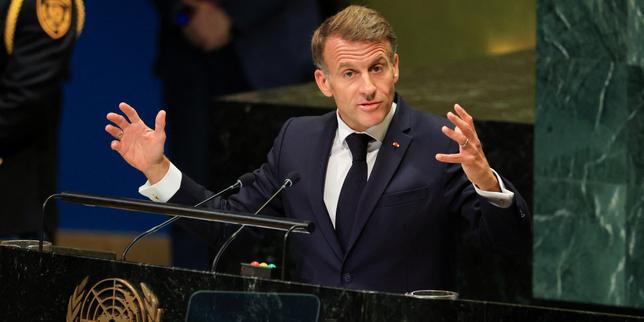
When world leaders step up to the podium at the United Nations General Assembly, everyone expects diplomatic niceties. They usually offer polite nods to cooperation while quietly pursuing their own national interests behind closed doors. But sometimes the velvet gloves come off completely. Emmanuel Macron used his final appearance at the UN lectern to deliver a blistering defense of multilateralism, pushing back hard against the unilateral impulses championed by figures like Donald Trump.
If you've been watching international relations over the last few years, you know this clash isn't just about personal chemistry. It represents a fundamental fracture in how global power operates. Let's look at what actually happened behind the headlines and why this ideological tug-of-war matters for the future of international law.
The Battle Over Multilateralism
The core tension in New York boiled down to a simple question: should global affairs be governed by rules or raw power?
Donald Trump’s approach has always prioritized bilateral leverage and America First nationalism, often treating international organizations as bureaucratic friction rather than useful forums. Macron took the exact opposite stance. Standing at the very podium Trump had used earlier, the French president warned against a world sliding backward into an era where might makes right.
"We don't want to see might is right prevail," Macron declared, cutting straight through diplomatic euphemisms. He argued that international institutions are the only bulwark preventing the world from descending into absolute chaos.
Critics often dismiss these speeches as empty theater. After all, what can a speech actually achieve when major powers ignore UN resolutions daily? But diplomacy at this level isn't about immediate enforcement. It’s about drawing a hard line in the sand. Macron needed to rally European allies who feel increasingly caught between an aggressive Russia, an unpredictable American administration, and a rising China.
Confronting the Reality in Gaza and Ukraine
Global summits love abstract principles until concrete crises test them. Macron didn't shy away from the hard stuff. He directly called out the diplomatic failures surrounding the Middle East, taking aim at proclaimed peace plans that haven't managed to open a single humanitarian corridor.
"Must we contemplate this spectacle which shames us all?" he asked the assembly, pointing out the stark reality of stalled aid and expanding settlements in the West Bank. It was a direct jab at Washington's handling of regional diplomacy, signaling that European capitals are growing increasingly impatient with ineffective frameworks.
On Ukraine, the message was equally uncompromising. Macron framed the ongoing conflict not just as a regional European border dispute, but as a test case for global sovereignty. Letting Russia redraw borders by force sets a dangerous precedent for every other nation watching from the sidelines. By tying European security directly to the survival of international law, he tried to box in any potential backroom deals that might sacrifice Ukrainian territory for short-term political convenience.
Why This Strategic Rift Changes Everything
You might wonder why a French president's parting words at the UN should change your perspective on geopolitics. Here is the reality. The post-World War II order is cracking up.
When traditional allies openly contradict each other on the world stage, smaller nations take notice. They start hedging their bets. We are moving away from a unipolar or even a reliable bipolar world into a messy multipolar reality where transactional deals override long-term alliances.
Macron’s speech was an attempt to keep the old architecture standing while acknowledging its severe cracks. Whether Europe actually has the economic and military muscle to back up that vision is an entirely different story. Words at the UN are cheap, but unity among European states remains fragile.
The stage is set for a more fractured global economy and a return to hard-nosed regional competition. Pay attention to how middle powers respond because the era of unquestioned American-led global consensus is officially over.