The air in the community center smelled of wet wool and floor wax. Outside, the rain was a relentless gray curtain over the city, the kind of weather that usually keeps the casual voter at home, staring at the kettle. But today was different. People didn't just walk to the polls; they leaned into the wind. They carried the weight of a government in limbo.
For months, the Liberal party had been treading water. Every headline was a reminder of the razor-thin margin, a legislative paralysis that meant every ambitious bill or necessary reform was dead on arrival. Premier Carney wasn't just fighting an opposition; he was fighting the math. Without a majority, the machinery of the state had ground to a rhythmic, frustrating halt. Meanwhile, you can explore similar developments here: Trump and the Bold Plan for a Strait of Trump in the Middle East.
The Quiet Weight of a Single Vote
Consider a woman named Martha. She is not a political strategist. She doesn't spend her nights refreshing polling data or analyzing swing-state demographics. She is a retired teacher who worries about the rising cost of the prescriptions her husband needs. To Martha, the "Liberal majority" isn't a headline. It is the difference between a government that can actually pass a healthcare subsidy and one that spends four years arguing about the color of the stationary.
When Martha stepped into that booth, her hands were cold. She looked at the ballot, a small slip of paper that felt heavier than it should. In that moment, the abstract concept of a "special election" became a physical reality. She was one of the few who would decide if the deadlock would break or if the gears would continue to grind. To explore the complete picture, check out the excellent report by BBC News.
She marked her 'X'.
That single action, repeated in thousands of tiny booths across the district, was the spark. The numbers began to trickle in shortly after 8:00 PM. At first, it was a murmur. A few percentage points here, a lead in a traditionally hostile precinct there. But as the night deepened, the murmur turned into a roar.
The Breaking of the Dam
Politics is often described as a game of chess, but that implies a level of cold logic that rarely exists in the heat of a campaign. It is more like a dam holding back a massive reservoir of public expectation. For three years, that dam had held. The Liberals could promise, but they couldn't deliver. They could propose, but they couldn't execute.
Carney knew this better than anyone. Imagine the Premier in his office, looking at a stack of unsigned documents—policies on housing, climate initiatives, infrastructure grants—all gathering dust because the numbers didn't add up. It is a specific kind of agony for a leader to have the vision but not the keys to the engine.
The special election wins changed the physics of the room. By securing these seats, Carney didn't just win a few more desks in the chamber; he seized the mandate. The majority is a blunt instrument, but it is the only one that works in a democracy built on the 50-percent-plus-one rule.
The opposition's strategy had been simple: obstruct and wait. They banked on the fatigue of the public, hoping the stagnation would be blamed on the man at the top rather than the system that shackled him. It was a gamble that nearly paid off. But voters like Martha decided they were tired of waiting. They chose the risk of movement over the certainty of a standstill.
The Sound of a Shift
When the final results were confirmed, the atmosphere at Liberal headquarters wasn't just celebratory. It was a collective exhale.
The victory was decisive. It wasn't a fluke or a statistical anomaly. It was a clear signal that the electorate had grown weary of the "hung parliament" narrative. They wanted a driver in the seat who actually had his hands on the wheel.
But with great power comes a very specific, very public kind of pressure.
Until now, Carney had a built-in excuse for every failure. "The opposition blocked us," he could say. "We don't have the numbers," his ministers would moan to the press. That shield has evaporated. Every failure from this moment forward belongs entirely to the Liberal party. They have the majority. They have the budget. They have the clock.
The transition from a minority government to a majority is like moving from a rowboat to a steamship. You have more power, yes, but you also have a much larger wake. Every turn you make is scrutinized. Every mistake is magnified.
The Human Cost of Stagnation
We often talk about "legislative agendas" as if they are grocery lists. They aren't. They are the blueprints for how people live.
Take a young couple trying to buy their first home. In a deadlocked government, housing grants are a "debate topic." In a majority government, they become a check in the mail. For a small business owner struggling with archaic tax codes, the majority is the difference between a reform bill passing in October or being sent back to committee for the fifth time in two years.
The stakes are never invisible to those who are waiting for the results.
The special election wasn't just a win for a party; it was a release valve for a frustrated public. People are tired of the theater of politics. They are tired of the performative outrage and the endless bickering that leads to nowhere. They want to see the road paved. They want to see the schools funded. They want to see the people they elected actually doing the job.
The Long Road Ahead
The morning after the election, the rain had stopped. The city was damp, but the sun was trying to peek through the clouds.
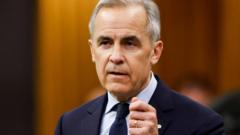
Carney stood before the cameras, not with the manic energy of a man who had just won a prize, but with the sober expression of a man who had just been handed a massive responsibility. He spoke about "getting to work," a phrase that is often a cliché but, in this context, felt like a desperate necessity.
The Liberal majority is now a reality. The path is clear. The excuses are gone.
In the quiet of her kitchen, Martha drank her coffee and looked at the news. She saw the map, now shaded in a color that represented her choice. She didn't feel like a hero of democracy. She felt like a person who had done a small, necessary chore. She had helped clear the brush so that something could finally be built.
The true test of Carney’s leadership begins now. It is easy to campaign when you are the underdog fighting against a stalemate. It is much harder to govern when you have everything you asked for and the world is watching to see if you actually know what to do with it.
The silence of the deadlock has been replaced by the noise of expectation. It is a loud, demanding sound. It is the sound of a country waiting to see if its faith was well-placed or if the new majority is just another chapter in a long book of broken promises. The pen is in Carney's hand, and for the first time, no one is holding his wrist.
The page is turning.