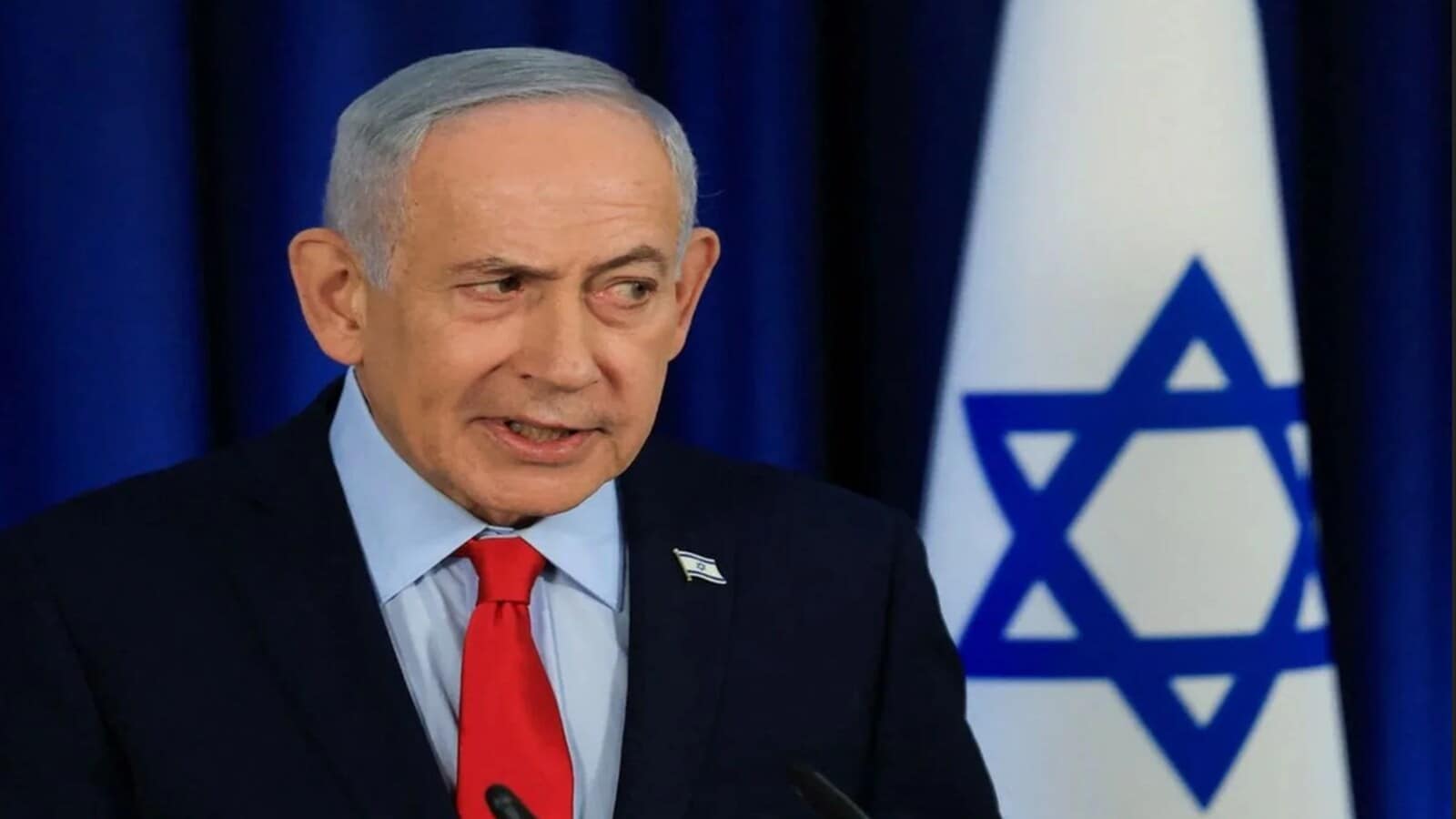
The October 2026 Israeli parliamentary election was never a standard referendum on incumbent governance; it was a stress test of how an electorate prices catastrophic intelligence failure against active multi-front military escalation. Standard political coverage frames Benjamin Netanyahu’s political survival through personality politics and binary voter sentiment. That framing obscures the structural mechanics driving the Knesset deadlock.
To understand the post-election paralysis following the late October vote—where Likud and its right-wing partners secured 53 seats against 48 for Gadi Eisenkot’s opposition bloc, leaving 19 seats held by Arab parties as the mathematical fulcrum—one must deconstruct the conflicting incentives governing Israeli voter behavior, military-civilian friction, and coalition game theory.
The Dual-Liability Equation of Wartime Incumbency
In conventional democratic theory, prolonged conflict triggers a "rally 'round the flag" effect that insulates the executive branch from domestic accountability. Conversely, catastrophic intelligence failures—such as the October 7, 2023 Hamas assault—typically trigger immediate leadership decapitation. Netanyahu’s campaign operated inside the friction between these two opposing forces.
Voters did not evaluate the administration on a single axis. Instead, electoral decision-making split into two competing risk assessments:
- Retrospective Accountability: Measuring the systemic collapse of deterrence, border defense, and intelligence integration that enabled the October 7 breaches.
- Prospective Escalation Management: Assessing which executive leadership structure possesses the risk tolerance to prosecute high-intensity, multi-front campaigns—specifically the direct military exchanges with Iran initiated in 2025 and expanded in early 2026.
When political discourse centers on retrospective failure, the incumbent coalition loses ground because the chain of command leads directly to the Prime Minister’s Office. When discourse shifts to active existential threats and regional deterrence, the incumbent regains structural advantage. By framing the campaign around the necessity of sustained kinetic pressure on Tehran and absolute opposition to parliamentary reliance on Arab factions, Netanyahu deliberately attempted to shift voter utility functions from backward-looking punishment to forward-looking survival.
Civil-Military Friction and the Deterrence Paradox
A critical blind spot in surface-level election analysis is the operational divergence between political survival timelines and military readiness cycles. During the final weeks of the October 2026 campaign, acute friction surfaced between the political echelon and the Israel Defense Forces (IDF) General Staff, led by Chief of Staff Lt. Gen. Eyal Zamir.
The core conflict revolved around operational directives regarding Iran. Following joint US-Israeli strikes earlier in 2025 and spring 2026—which the Prime Minister publicly characterized as having neutralized Tehran’s enrichment and ballistic production capabilities—the political narrative shifted abruptly in October toward warning of imminent nuclear threats and pushing for renewed offensive operations.
This creates an acute strategic paradox:
- Tactical Overreach vs. Strategic Exhaustion: Continuous multi-front operations across seven theaters degrade munitions stockpiles, exhaust reserve manpower, and compress decision-making windows. When political leadership demands immediate kinetic escalation prior to an election, the military establishment faces the risk of initiating a regional conflagration without defined strategic end-states or external logistical backing.
- Institutional Guardrails: Lt. Gen. Zamir’s reported insistence that high-risk operational directives be formally documented in writing illustrates a classic principal-agent breakdown. The military command acted to insulate itself from executing politically timed operations that lacked pure security justification, effectively creating an institutional check on executive war powers during an active campaign.
- External Alliance Constraints: Sovereign military action by Israel remains tethered to Washington’s diplomatic and logistical bandwidth. Reports that the White House resisted renewed strikes on Iran ahead of the November 2026 US congressional midterms demonstrate that Israel’s unilateral escalation ceiling is strictly bounded by American domestic electoral cycles.
The Knesset Arithmetic and Coalition Game Theory
The resulting seat distribution in the 120-member Knesset—53 for the Netanyahu bloc, 48 for the Eisenkot-led opposition, and 19 for Arab factions—locks Israeli governance into a zero-sum stalemate where neither primary bloc commands the 61-seat threshold required for an outright majority.
This distribution exposes three structural constraints governing coalition formation:
1. The Asymmetric Veto
Netanyahu’s 53-seat bloc is ideologically cohesive on core security posture, anchored by Likud and bolstered by far-right factions like Itamar Ben-Gvir’s Jewish Power. However, this cohesion acts as a ceiling. Because the bloc categorically rejects parliamentary cooperation with Arab parties—and those parties refuse to underwrite a right-wing nationalist government—Netanyahu has zero mathematical path to 61 seats without defecting members from the opposition.
2. The Opposition’s Coordination Dilemma
Gadi Eisenkot, tasked by President Isaac Herzog with assembling a governing coalition, controls 48 core seats. To reach 61, his bloc requires external support or abstentions from the 19 Arab mandates. While this unlocks a mathematical majority—demonstrated immediately in November 2026 when the opposition installed Matan Kahana as Knesset Speaker with Arab party backing—it introduces severe ideological fragility. A coalition spanning right-leaning security hawks (such as Avigdor Lieberman and Naftali Bennett), centrists (Yair Lapid), left-wing Democrats (Yair Golan), and non-Zionist Arab parties possesses low internal cohesion. Any aggressive military escalation in Gaza, Lebanon, or Iran threatens to fracture the parliamentary confidence of the Arab factions, collapsing the government from within.
3. The Caretaker Advantage
Under Israel’s Basic Laws, an incumbent Prime Minister remains in a caretaker capacity until a successor secures a Knesset vote of confidence. This creates a perverse incentive structure. Netanyahu does not need to form a government to retain executive authority; he only needs to prevent Eisenkot from stabilizing one. By attacking any opposition alignment with Arab legislators as a betrayal of national security during wartime, Likud applies continuous political pressure on right-wing members of Eisenkot’s bloc to defect or stall negotiations.
Operational Mechanics of the Post-Election Stalemate
The appointment of an opposition-backed Knesset Speaker alters the legislative terrain even before a cabinet is sworn in. Control over the Knesset presidium dictates the parliamentary agenda, allowing the 48-seat bloc and its external partners to advance structural legislation designed to dismantle the incumbent’s institutional defenses.
Specifically, legislative control enables three immediate operational maneuvers:
- Commissioning a State Inquiry: Establishing a formal, independent state commission of inquiry into the October 7 intelligence and policy failures—an investigation the caretaker administration consistently resisted while active combat persisted.
- Reversing Judicial Overhauls: Repealing the judicial restructuring statutes passed by the previous coalition, thereby restoring Supreme Court oversight over ministerial appointments and executive decrees.
- Enacting Executive Term Limits: Passing legislation restricting prime ministerial tenure or barring individuals under criminal indictment from forming future governments, directly targeting Netanyahu’s eligibility in any subsequent snap election.
However, passing legislation in a fragmented parliament is operationally distinct from governing a country engaged in active regional warfare. A government dependent on outside parliamentary support lacks the unified cabinet discipline required to execute long-term diplomatic settlements, negotiate ceasefires in northern pilot zones along the Lebanese border, or manage complex normalization frameworks that demand explicit commitments regarding Palestinian statehood.
Strategic Trajectory and Forecast
Israel’s political system has entered a phase of structural instability where electoral outcomes cannot resolve underlying security contradictions. The electorate delivered a mandate for accountability on October 7 while simultaneously refusing to grant a governing majority to any bloc willing to rely permanently on Arab parties during an active regional conflict.
For political actors and institutional observers, the decisive variable over the next 90 days is not ideological compromise, which remains structurally blocked, but institutional attrition:
- Expect Legislative Warfare Before Executive Stability: The Eisenkot bloc will utilize its newly won control of the Knesset speakership and the Foreign Affairs and Defense Committee to force transparency on October 7 intelligence records and constrain caretaker executive authority, even if formal cabinet formation stalls.
- External Constraints Will Cap Military Escalation: With the US administration signaling reluctance to endorse renewed large-scale strikes on Iran prior to January 2027, the caretaker government’s ability to alter the domestic political equation through a sudden regional escalation is severely restricted.
- High Probability of a Repeat Election Cycle: Because a coalition reliant on 19 external Arab seats cannot survive sustained military operations, and a 53-seat right-wing bloc cannot govern without legislative majorities, any government formed by Eisenkot will function primarily as a transitional administrative vehicle. Once key institutional reforms—specifically the October 7 inquiry and judicial reversals—are enacted, internal ideological contradictions will force a collapse, returning Israel to the polls within 12 to 18 months under fundamentally altered legal and leadership rules.