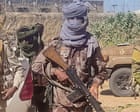
The paramilitary Rapid Support Forces systematically executed civilians, weaponized artificial starvation, and executed a calculated campaign of ethnic cleansing during their brutal multi-month siege and eventual capture of El Fasher, the last government stronghold in Darfur. According to an extensive investigation released by Amnesty International on July 1, 2026, these acts constitute documented crimes against humanity. The findings expose a horrific apparatus of violence explicitly targeting non-Arab communities, utilizing a 57-kilometer network of dirt berms as execution traps for fleeing families, and deliberately targeting children on a scale unseen in modern conflict.
For 18 months, the international community watched El Fasher slowly choke under a ruthless blockade. Now, the grim reality of what occurred behind those closed lines has finally emerged, detailing an operational blueprint for modern mass atrocity that the world chose to ignore.
The 57-Kilometer Kill Zone at the Berms
Escape was an illusion. When the Rapid Support Forces, led by General Mohamed Hamdan Dagalo, launched their final, overwhelming offensive against the Sudanese Armed Forces on October 26, 2025, hundreds of thousands of terrified residents attempted to flee the city. They were met by an engineered nightmare.
The paramilitary group had constructed a massive, 57-kilometer network of defensive dirt walls and trenches, known as berms, encircling the escape routes. These fortifications were not designed solely for military defense. They functioned as a slaughterhouse.
Survivors who managed to crawl through the brush describe how paramilitary fighters waited at these choke points, sorting fleeing civilians by their ethnicity. Non-Arab tribal groups, including the Zaghawa, Fur, and Masalit, were pulled from crowds. Hundreds were executed on the spot. Others were forced into arbitrary detention or subjected to torture.
One 58-year-old woman who survived the gauntlet recounted seeing more than 1,000 bodies rotting inside the trenches. Fighters openly boasted to her that they intended to fill the entire length of the earthworks with the corpses of those trying to escape. Children were not spared. Fighters frequently shot young boys at point-blank range, viewing them not as collateral damage, but as future battlefield adversaries or immediate targets for extermination.
Famine as a Weapon and the Enclosure of Darfur
The physical slaughter at the edge of the city was merely the final act of a protracted campaign of starvation. Long before the final assault, the paramilitary group choked off all incoming trade, commercial routes, and humanitarian aid convoys.
Famine became the primary administrative tool of the siege. By mid-2025, conditions inside the city had deteriorated to the point where residents were forced to consume ambaz. This substance, a dense byproduct of peanut oil processing, is traditionally used strictly as cattle feed. Human beings were reduced to eating animal fodder just to keep their organs from failing.
Medical infrastructure was systematically dismantled to maximize human suffering. During the height of the siege and its immediate aftermath, fighters repeatedly shelled and raided the Saudi Maternity Hospital, a protected medical facility. Investigators documented scores of patients, doctors, and desperate relatives executed inside the wards.
Pregnant women were forced to give birth in sweltering, unventilated underground bunkers or directly on the dirt while dodging sniper fire. Malnourished mothers, unable to produce breast milk, watched their newborns waste away to skin and bone. The deliberate destruction of water plants and food warehouses ensured that survival was dictated entirely by chance.
The Command Structure and Named Killers
A critical element of this latest investigation is the direct attribution of command responsibility. Mass atrocities are frequently dismissed by perpetrators as the actions of rogue elements or undisciplined foot soldiers. The evidence in Darfur refutes this entirely.
The systematic nature of the violence reveals a highly organized chain of command operating under explicit operational objectives. Three high-ranking commanders have been directly named as responsible for these severe violations of international humanitarian law.
- Major General Gedo Hamdan Ahmed Mohamed: Widely known by his nom de guerre "Abu Shok," he oversaw the broader operational theater and the strategic deployment of forces that executed the final encirclement.
- Lieutenant Colonel Abbas Khater Bakhit: Implicated in directing field operations where systematic executions and ethnic screening occurred.
- Commander Al-Fateh Abdullah Idris: Known locally as "Abu Lulu," whose units were active in the targeted destruction of residential sectors and civilian infrastructure.
The language utilized during these operations confirms the deeply ideological and racialized nature of the campaign. Fighters systematically deployed dehumanizing slurs, such as falangay, a term deeply rooted in regional concepts of servitude and subhuman status, while assaulting non-Arab civilians. Entire villages outside the city center, such as Abu Zerega, were completely leveled, burned, and cleared of their populations between late 2024 and early 2025, fulfilling the classic definitions of ethnic cleansing.
The Network of Shipping Containers
For those who were not killed outright at the berms or starved in their homes, a different horror waited. The paramilitary force established a network of clandestine detention facilities on the eastern outskirts of El Fasher, most notably at the Mina al-Bari center.
Prisoners were crammed into standard metal shipping containers for months on end. These iron boxes, exposed to the blistering desert sun, became ovens. Air circulation was nonexistent. Detainees were packed so tightly that stretching their legs or lying down was impossible.
Survivors of Mina al-Bari describe a deliberate policy of medical neglect and psychological torment. Guards routinely told dying prisoners that their survival was of no consequence to the high command. Torture inside the containers was regular, structural, and designed to break the psychological spine of the captive population.
The Failure of Global Will
The tragedy of El Fasher is not just that these events occurred. The tragedy is that they were entirely predictable.
Nearly two decades ago, the international community pledged "never again" after the original Janjaweed militias devastated the Darfur region. The current paramilitary force is the direct organizational descendant of those very same Janjaweed units. They used the same tactics, targeted the same ethnic groups, and relied on the exact same global apathy to escape accountability.
External actors have actively fueled this fire. Despite an existing United Nations Security Council arms embargo on Darfur, a steady influx of foreign weaponry has flowed to both the paramilitary forces and the Sudanese Armed Forces throughout the civil war. This continuous supply chain has allowed both factions to sustain a war on civilians that has displaced nearly 14 million people nationwide, creating the largest displacement crisis on Earth.
The response from global capitals has been limited to toothless statements of concern and repetitive diplomatic condemnations. These statements carry no weight on the ground in Darfur. Without an immediate, enforceable ceasefire and the urgent deployment of an independent international civilian protection force, the remaining pockets of non-Arab populations in Darfur face complete erasure. The cycle of impunity remains unbroken, and the dirt berms of El Fasher stand as a monument to a global system that looks away when the costs of intervention are deemed too high.