The wind in Kaktovik does not just blow. It carves. It searches for a gap in your parka, a sliver of exposed skin, or a weakness in your resolve. Here, on Barter Island at the jagged northern crown of Alaska, the Beaufort Sea is a slate-gray neighbor that offers no apologies. For decades, this tiny Inupiat village was defined by its isolation and its whales. Then, the bears arrived in numbers no one expected.
They came because the ice left. As the Arctic pack ice retreated further north into the deep ocean, the polar bears—the nanuq—found themselves stranded or seeking the safety of solid ground. They were drawn by the scent of the aktiq, the remains of bowhead whales harvested by the village during their traditional fall hunts. Suddenly, Kaktovik wasn't just a subsistence community. It was the polar bear capital of the United States. Meanwhile, you can read similar stories here: The Capital Allocation Matrix Structural Liquidity and Time Optimization in Washington DC.
But the boom was fragile. A global pandemic slammed the door shut. Regulations tightened. The once-steady stream of photographers and thrill-seekers dried up, leaving a community caught between a disappearing past and an uncertain, frozen future. Now, the village is trying to reclaim the narrative. They aren't just selling a view of a predator; they are trying to save their way of life.
The Weight of a Frozen Economy
Consider a man standing on the gravel shore, squinting against the glare of the Arctic sun. Let’s call him Robert. He is a hypothetical composite of the guides who have spent their lives navigating these waters. To Robert, a polar bear isn't a postcard image or a symbol of a warming planet. It is a neighbor. A dangerous, majestic, and increasingly frequent neighbor. To see the full picture, check out the detailed article by Lonely Planet.
In the peak years before 2020, Kaktovik saw upwards of 2,000 visitors in a single season. In a village of roughly 250 people with no roads leading in or out, that is an invasion. Small planes buzzed onto the gravel strip. Every bed was filled. The local economy shifted. Money from tourism meant better equipment for the whale hunt, more fuel for the winter, and a way for young people to stay in the village instead of migrating south to Fairbanks or Anchorage.
When the tourism industry halted, the silence was deafening. The boats stayed docked. The specialized polar bear viewing permits sat unused. The "cold facts" of economic reports don't capture the anxiety of a father wondering if his son will have to leave the ancestral lands because the outside world stopped coming to look at the bears.
A Delicate Dance on the Ice
Safety in Kaktovik is not a suggestion. It is a survival trait. To understand the stakes of reviving this industry, you have to understand the physical reality of the Arctic. You cannot just walk out of your hotel—there are no hotels in the traditional sense, only small lodges—and go for a stroll.
The village employs "polar bear patrollers" who roam the perimeter in trucks, using spotlights and cracker shells to keep the bears away from the houses. It is a constant, high-stakes choreography. The bears are hungry. They are opportunistic. And they are everywhere.
The revival of tourism isn't just about opening the doors; it’s about managing the friction. The U.S. Fish and Wildlife Service, along with the village corporation, sets strict rules. Boats must maintain a specific distance. Only a handful of guides are authorized. This isn't a theme park. It is a sovereign indigenous community that happens to share a backyard with the world's largest land carnivore.
The tension lies in the balance. If the tourism is too successful, the village loses its soul to the spectacle. If it fails, the village loses the financial engine that keeps it viable in a modern world.
The Whale and the Bear
The heart of the story isn't actually the bear. It’s the whale.
The Inupiat people have hunted bowhead whales for millennia. This is not sport; it is sacred. It is the food that sustains them through months of darkness. After the whale is harvested and the village has taken what it needs for the winter, the "bone pile" is established away from the living quarters. This is where the bears congregate.
This relationship is symbiotic and ancient, though the scale has changed. Historically, a few bears might wander through. Now, it’s common to see forty or fifty bears lounging on the barrier islands, their white fur stained pink from the whale remains.
Visitors pay thousands of dollars to sit in a small boat and watch a mother bear teach her cubs how to scavenge. They see the raw power of nature. But the invisible stake is the cultural sovereignty of the Kaktovik residents. They are sharing their tradition—the whale hunt—to provide a stage for the bears.
One might think that a warming Arctic would make the bears disappear. In reality, it has pushed them into Kaktovik’s lap. The bears are moving from the ice to the land because the land is the only thing left. This makes Kaktovik a frontline observer of a changing globe.
Rebuilding the Bridge
The path back to a thriving tourism industry is paved with logistical nightmares. Costs are astronomical. A gallon of milk in Kaktovik can cost three times what it does in the lower 48 states. Bringing in tourists requires functioning aircraft, heated accommodations, and highly trained guides who understand both the biology of the bear and the nuances of the weather.
Small local businesses are currently fighting to bridge the gap. They are investing in better boats that can handle the choppy Beaufort Sea while providing a stable platform for photographers. They are navigating the labyrinth of federal permits that were put on ice during the pandemic.
But there is a deeper hesitation.
Some elders worry that the bears are becoming too accustomed to humans. Others fear that the influx of "outsiders" will disrupt the quiet dignity of the village. The struggle to revive tourism is, at its core, a struggle for agency. The people of Kaktovik want to be the masters of their own story, not just the backdrop for someone else’s vacation.
The Silence of the Tundra
If you sit long enough on the edge of the village, past the last house and the last barking sled dog, the scale of the Arctic begins to sink in. It is a vast, indifferent white.
Then, a shape moves.
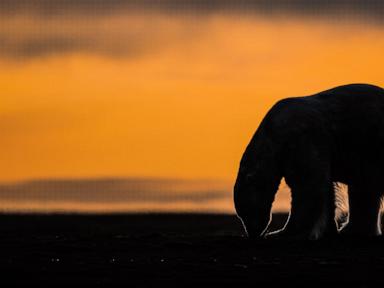
It isn't the stark, bleached white of a piece of paper. A polar bear is the color of old cream, of weathered bone. It moves with a deceptive, rolling gait that covers ground faster than you can run. When you see one, the air in your lungs feels thinner. You realize you are no longer at the top of the food chain.
That feeling—that sudden, sharp hit of humility—is what Kaktovik sells.
The village is currently working with conservation groups and government agencies to ensure that as the tourists return, they do so with a footprint that doesn't crush the fragile tundra. They are looking at tiered entry systems and educational programs that force visitors to understand the Inupiat perspective before they ever pick up a camera.
Why it Matters to the Rest of Us
We often treat the Arctic as a laboratory or a museum. We look at charts of receding ice and declining birth rates among bear populations. But Kaktovik reminds us that the Arctic is a home.
When the village tries to revive its tourism, it isn't just about the bottom line. It’s about proving that a traditional community can adapt to a world that is shifting beneath their boots. It’s about the pride of a guide who can show a visitor the exact moment a bear scents the air.
The bears will keep coming as long as the ice keeps melting. The tourists will keep coming as long as the bears are there. The question is whether we can enter that space with enough respect to leave it intact.
The great white bear stands on a spit of sand, looking out at a sea that used to be frozen solid this time of year. Behind the bear, a village is waking up, brewing coffee, and preparing for a day of work. They are two different worlds, pinned together on a tiny island, waiting to see what the next season brings.
The engine of a small boat sputters to life in the harbor. A guide checks his binoculars. The horizon is empty, for now, but the bears are out there, and the world is starting to find its way back to the north.