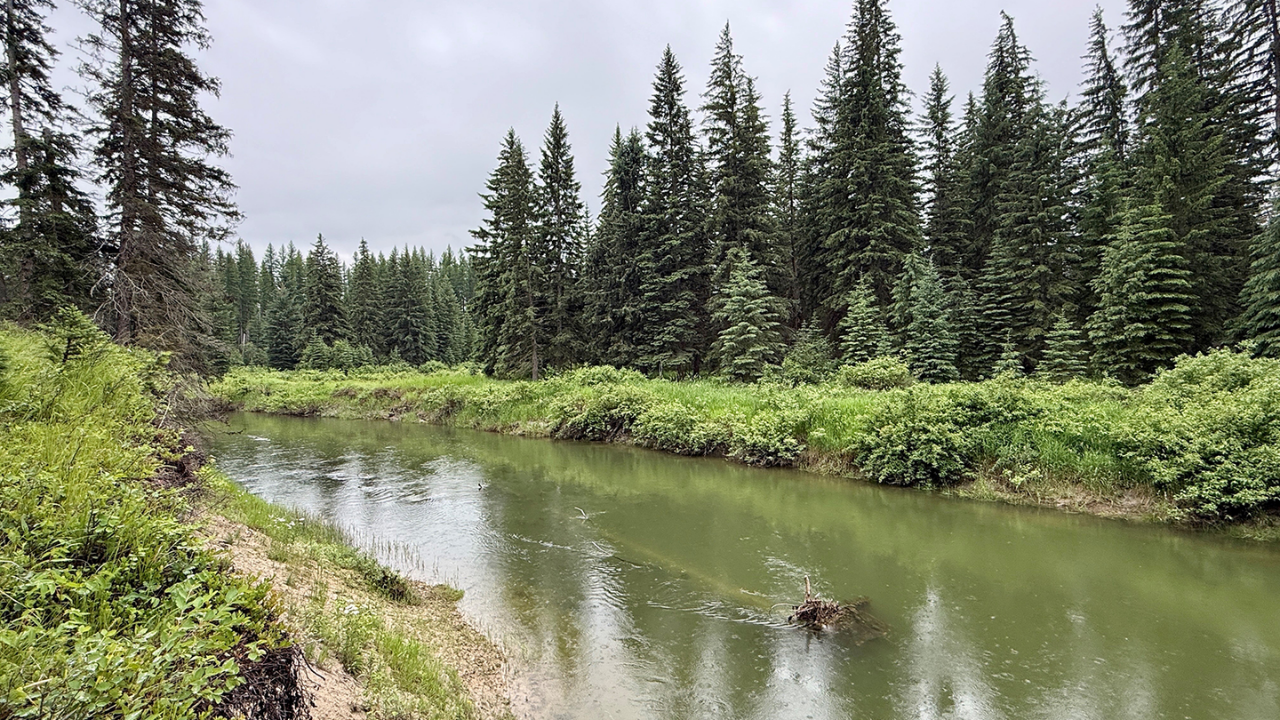
Private landownership in high-amenity rural geographies presents an inherent structural conflict between real estate monetization and ecological preservation. When market pressures incentivize the subdivision and conversion of riverfront property into residential footprints, private actors face a binary choice: capture short-term capital gains through development or encumber the asset with perpetual restrictions. The twenty-three-year holding period and subsequent conservation easement executed by Sean and Melodye Rooney across their fifty-seven-acre property along the Stillwater River in Montana illustrates the operational mechanics of shifting an asset from speculative real estate to a permanent ecological reserve. Deconstructing this trajectory reveals the precise legal, financial, and ecological variables that govern modern private land conservation.
The Legal Mechanics of Deed Severance
At the core of private land preservation sits the conservation easement, a legal instrument that fundamentally alters the bundle of property rights associated with fee-simple ownership. Property ownership is traditionally conceptualized as a bundle of sticks, where each stick represents a distinct right—such as the right to build, subdivide, timber, mine, or farm.
When a landowner enters into an agreement with a qualified land trust, such as the Flathead Land Trust in this specific regional context, they execute a voluntary conveyance of specific rights. In the case of the Rooney property, the agreement permanently strips away the right to subdivide or construct non-agricultural residential units, while leaving the underlying fee-simple title in private hands.
The economic calculus of this transaction requires evaluating opportunity costs. Real estate markets in western Montana have historically rewarded subdivision, converting historical parcels into high-density housing developments. By permanently removing development rights, the landowner foregoes potential future liquidation value. In return, federal and state tax incentives, including charitable donation deductions for conservation easements under Internal Revenue Code Section 170(h), offset a portion of this economic sacrifice. However, the primary driver for long-term holders is rarely immediate tax optimization; rather, it is the creation of an immutable legal shield against external market volatility.
Habitat Connectivity and the Cost of Spatial Fragmentation
Ecological systems do not recognize property boundaries. The fifty-seven acres owned by the Rooney family derive their conservation value not merely from their internal biological diversity, but from their spatial position within a broader ecological matrix. Bordered by river frontage, riparian forests, wetlands, and agricultural hay ground, the property functions as a biological corridor.
Spatial fragmentation represents the single greatest threat to large carnivore and ungulate populations in the Northern Rockies. When contiguous habitats are carved into fractional lots, wildlife movement vectors are disrupted. Species requiring expansive home ranges—such as grizzly bears, gray wolves, mountain lions, and elk—encounter physical barriers, fencing, and human-wildlife conflict zones that degrade habitat utility.
Empirical monitoring via camera traps deployed on the property documented frequent movement of these apex predators and migratory ungulates. The presence of species like the grizzly bear swimming across the Stillwater River or mountain lions traversing internal travel routes confirms that the property acts as a functional migratory bridge. By placing the fifty-seven acres under a permanent easement, the transaction prevents the erection of physical barriers and preserves population genetics by maintaining unobstructed gene flow across the river corridor.
Operational Dualism: Agriculture Coexisting with Conservation
A common misconception in land preservation is that ecological integrity requires the complete cessation of human economic activity. The Rooney model demonstrates an alternative framework: operational dualism, where agricultural productivity and conservation objectives operate in parallel.
More than twenty acres of the property remain dedicated to hay production. This active agricultural management serves a dual purpose. Economically, it maintains the property's tax status and operational utility. Ecologically, low-intensity agricultural uses like haying often preserve open structural conditions that prevent forest encroachment while avoiding the toxic runoff and soil compaction associated with intensive row-crop agriculture or residential subdivision.
Furthermore, active habitat intervention enhances ecological yields. In 2025, the family initiated a targeted restoration project focusing on a ponded area and surrounding wetland zones. Wetlands perform vital ecosystem services, including nutrient cycling, flood mitigation, and aquifer recharge. By engineering hydrological enhancements into a working agricultural parcel, the management strategy bridges the gap between passive non-interference and active habitat engineering. Aquatic species native to the system, such as bull trout and westslope cutthroat trout, benefit directly from the thermal regulation and sediment trapping provided by healthy adjacent wetlands and riparian buffers.
Integrating Private Holdings into Institutional Scientific Frameworks
Modern conservation science increasingly relies on distributed data collection networks rather than isolated, state-owned reserves. Private landholdings that implement long-term monitoring contribute critical empirical data points to regional and national biological assessments.
The inclusion of observational data from the Rooney property into programs like Snapshot USA, coordinated by the Smithsonian Institution, exemplifies how private conservation directly feeds institutional research. Camera-trap data gathered over years provides longitudinal population dynamics for mammals that evade traditional census methods.
When private citizens act as frontline researchers, the cost of ecological data acquisition drops significantly for public agencies and non-governmental organizations. The intersection of private land stewardship and standardized scientific monitoring transforms a private family holding into an active node within a national ecological database. This data-driven approach shifts land conservation from an aesthetic preference to a measurable, scientifically verifiable input.
Multi-Decade Tenure and Asset Governance Dynamics
The twenty-three-year temporal gap between the initial acquisition of the property in 2003 and the finalization of the conservation easement highlights the operational timeline required for successful land preservation. Rushed conservation agreements often fail due to misaligned family governance or an incomplete understanding of long-term site management liabilities.
A two-decade holding period allows landowners to observe seasonal shifts, hydrological extremes, wildlife migration patterns, and ecological degradation vectors empirically. This extended observation window transforms abstract conservation goals into a hyper-specific, localized management strategy. During this multi-year phase, the asset transitions from a speculative weekend retreat to an integrated socio-ecological system.
Governance continuity across generations remains a critical vulnerability in private land protection. When original purchasers age or transfer assets to heirs, estate tax burdens can force liquidations or subdivisions. A conservation easement acts as an institutional ballast against generational friction. By encumbering the deed prior to generational transfer, the original owners eliminate the option of future partition, effectively binding successors to a pre-determined ecological charter.
Strategic Execution for Long-Term Land Assets
Property owners and land trusts navigating similar preservation projects must prioritize structural alignment over sentimentality. The path forward requires three precise operational interventions.
First, conduct a rigorous baseline ecological audit to quantify the exact biological value of the parcel, mapping specific migration corridors, wetland hydrology, and endangered species utilization before approaching a land trust.
Second, model the financial and tax implications over a ten-to-twenty-year horizon, incorporating estate tax mitigation, property valuation adjustments, and ongoing stewardship obligations into a unified financial ledger.
Third, establish clear operational protocols for working lands within the easement terms, ensuring that agricultural components like grazing or hay production are explicitly permitted with binding best-management practices to prevent soil and water degradation.
Treating land conservation as a rigorous, long-term capital allocation strategy rather than an emotional exit plan ensures that ecological integrity and private property stewardship survive across generational cycles.