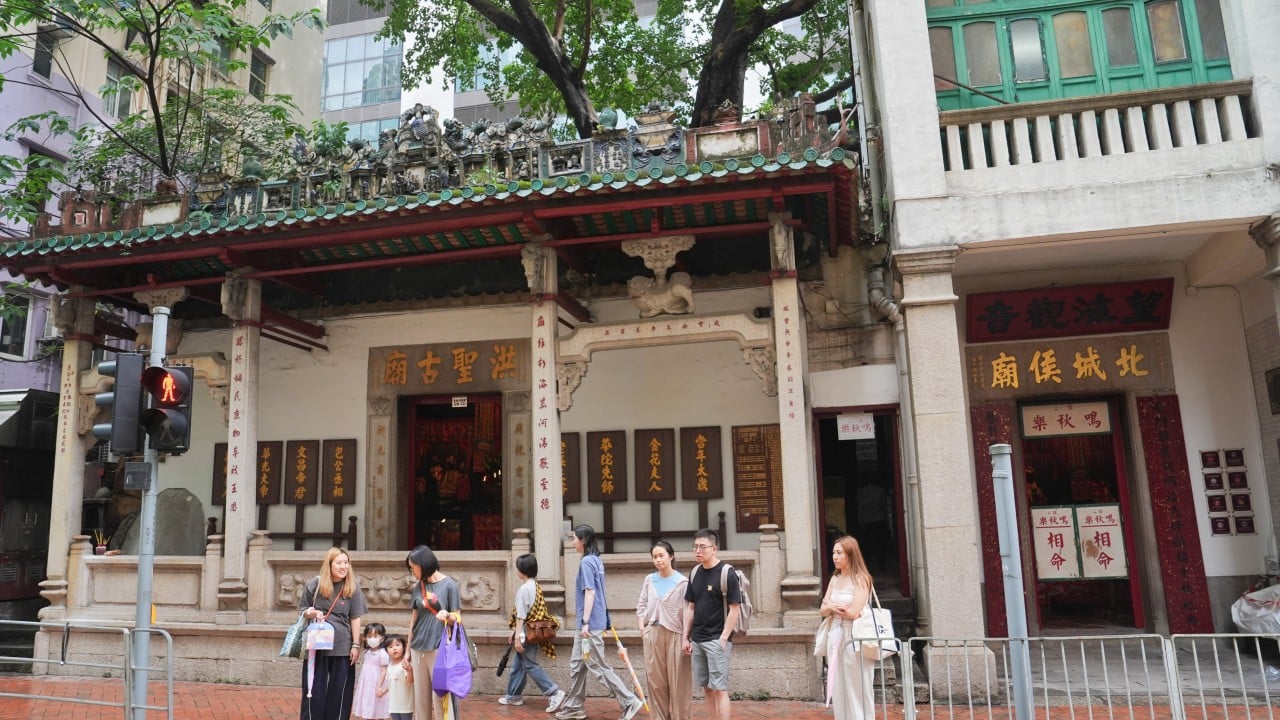
The elevation of a cultural asset to Grade 1 status under the Hong Kong Antiquities Advisory Board framework is frequently misconstrued as a purely sentimental or historical gesture. In practice, it represents a structural intervention in urban real estate, municipal budget allocation, and institutional risk management. The recent transition of the Yuk Hui Temple in Wan Chai and the Stanley Mosque to the highest tier of heritage protection offers a clear case study in how municipal governance balances capital development pressure against structural preservation.
To evaluate the impact of these designations, one must look past the architectural aesthetics and analyze the operational, legal, and financial mechanisms triggered by Grade 1 status. Heritage preservation in a hyper-dense urban environment operates under severe constraints. Land values, structural decay accelerated by sub-tropical climates, and shifting demographic usage create an ongoing maintenance deficit. The designation of these two distinct sites—one Taoist, one Islamic—illustrates the dual vectors of Hong Kong's heritage strategy: managing highly active urban community hubs and preserving isolated historical enclaves. Also making waves in related news: The Anatomy of Sovereign Leverage: Decoupling Hungary's Capital Allocation from EU Migration Constraints.
The Dual-Vector Classification Framework
The Antiquities Advisory Board evaluates sites based on a matrix of historical value, architectural merit, authenticity, rarity, social value, and local interest. When applied to the Wan Chai temple and the Stanley Mosque, these criteria reveal two distinct operational profiles that require different management strategies.
                  [Heritage Asset Matrix]
                             │
       ┌─────────────────────┴─────────────────────┐
       ▼                                           ▼
[Urban Density Vector]                    [Enclave Isolation Vector]
(e.g., Wan Chai Temple)                   (e.g., Stanley Mosque)
   ├── High structural wear                  ├── Low daily usage
   ├── Severe spatial constraints            ├── Restricted access geometry
   └── Immediate commercial pressure         └── High localized environmental risk
The Urban Density Vector: Yuk Hui Temple
Located in the dense urban fabric of Wan Chai, the Yuk Hui Temple (Pak Tai Temple) represents a heritage asset embedded in a high-velocity commercial and residential zone. Further insights into this topic are covered by The New York Times.
- Spatial Constraints: The asset is physically hemmed in by modern infrastructure, limiting physical expansion or structural reinforcement options.
- Usage Wear: High daily foot traffic creates continuous mechanical wear on internal materials, specifically timber columns and ceramic roof tiles.
- Environmental Degradation: Accumulation of particulate matter from urban pollution and indoor incense combustion accelerates chemical weathering of historical surfaces.
The Enclave Isolation Vector: Stanley Mosque
Situated within the restricted grounds of Stanley Prison, the Stanley Mosque represents an institutional enclave asset.
- Access Limitations: Security protocols drastically limit public foot traffic, reducing mechanical wear but creating a high barrier for tourism-based economic self-sustainability.
- Structural Geometry: Built to serve Muslim penal staff in the 1930s, its architecture integrates sandy-colored granite, arched windows, and a distinct minaret. The materials face high coastal humidity and salt-spray weathering.
- Demographic Shift: The user base has transitioned from a specific historical cohort of South Asian prison guards to a broader, yet geographically restricted, local Muslim population.
The Operational Implications of Grade 1 Status
Achieving Grade 1 status modifies the statutory and financial reality of an asset. While it does not automatically grant absolute legal protection against demolition—a power reserved for declared Monuments under the Antiquities and Monuments Ordinance (Cap. 53)—it shifts the asset into a high-scrutiny regulatory tier.
The Compliance and Review Bottleneck
Any structural modification, restoration work, or spatial adaptation of a Grade 1 building requires direct consultation with the Antiquities and Monuments Office (AMO). This introduces a rigorous bureaucratic layer designed to prevent irreversible alterations.
The approval process demands that repairs adhere to the principle of minimal intervention. Sourcing historically accurate materials, such as specific regional timber or historic roof tiles, creates a procurement bottleneck. The labor market for specialized conservation artisans in Hong Kong is highly constrained, driving up project timelines and labor costs.
The Financial Subsidy Mechanism
The primary operational benefit of Grade 1 status is access to the Financial Assistance for Maintenance Scheme on Built Heritage. This funding mechanism allows private owners or non-profit custodians of graded historic buildings to apply for government grants to execute maintenance works.
The ceiling per application sits at HK$6 million. For a minor urban asset, this injection can cover immediate roof stabilization or structural drying. For complex historical fabrics, HK$6 million functions merely as an operational band-aid rather than a long-term capital solution. The cost of scaffolding, structural engineering assessments, and heritage impact assessments frequently consumes a significant portion of the grant before physical restoration even begins.
The Conservation Cost Function and Risk Profile
To understand the long-term viability of these sites, we must analyze the conservation cost function, which determines the capital required to maintain structural equilibrium against environmental and human depreciation.
The total cost of conservation over a specific time horizon is dictated by four major variables:
- The Structural Baseline Cost: The fixed expenditure required to halt natural decay, independent of usage.
- The Environmental Variable: Costs associated with climate-induced wear, including typhoons, high humidity, and biological growth (molds, termites).
- The Anthropogenic Variable: Costs directly proportional to foot traffic, including floor abrasion, structural vibration, and accidental damage.
- The Regulatory Premium: The inflation of material and labor costs caused by mandatory compliance with historical preservation standards.
[Fixed Structural Base] + [Environmental Factors] + [Usage Wear] + [Regulatory Premium]
                                       │
                                       ▼
                       [Total Conservation Expenditure]
The interaction of these variables explains why the Wan Chai temple and the Stanley Mosque face opposing risk profiles. The Wan Chai temple suffers from an elevated Anthropogenic Variable and Regulatory Premium. The intense usage means interior surfaces degrade rapidly, while its urban location makes logistics and scaffolding execution complex and costly.
The Stanley Mosque faces an elevated Environmental Variable. Its proximity to the coast subjects the granite masonry and mortar joints to salt crystallization (haloclasty). Moisture penetrates the porous stone, and as the salt crystallizes, it exerts internal pressure, causing the surface to spall. Because the building is within a secure facility, executing specialized maintenance requires navigating security clearance protocols, which further inflates the Regulatory Premium.
Strategic Allocation of Capital for Heritage Assets
The elevation of these sites to Grade 1 necessitates a shift from reactive repair to predictive asset management. Relying on sporadic grant applications creates a cycle of decay and crisis management. A sustainable model requires a structured, three-tiered approach to resource allocation.
1. Digital Twin Deployment and Structural Health Monitoring
The deployment of continuous monitoring systems provides real-time data on structural movement, moisture levels, and environmental degradation.
- Terrestrial Laser Scanning: Generating high-density 3D point clouds of both the Wan Chai temple and Stanley Mosque establishes a precise digital baseline. Any structural shifting, tilting of timber columns, or masonry displacement can be detected at the millimeter level.
- Environmental Sensor Networks: Installing non-invasive IoT sensors to monitor relative humidity, ambient temperature, and indoor air quality allows custodians to optimize ventilation. In the Wan Chai temple, this data can drive smoke-extraction strategies to mitigate incense soot deposition on historical gilding.
2. Specialized Vendor Network Cultivation
The scarcity of heritage preservation expertise represents a systemic vulnerability. The institutions managing these assets must build long-term agreements with certified conservation firms rather than relying on open-tendering processes that prioritize lowest-bidder metrics over quality.
- Cross-Border Training Initiatives: Collaborating with conservation institutes in mainland China and international heritage bodies ensures a steady pipeline of master artisans skilled in Southern Chinese vernacular architecture (for the Wan Chai temple) and classical masonry restoration (for the Stanley Mosque).
- Material Banking: Establishing a centralized repository of historically accurate building materials—such as aged Chinese fir, traditional lime mortars, and specific terracotta tiles—reduces procurement delays when urgent repairs are required.
3. Integrated Spatial Management
Heritage assets must maintain functional relevance to justify their spatial footprint in a high-density economy.
- Controlled Access Optimization: For the Stanley Mosque, developing structured, secure educational itineraries in coordination with the Correctional Services Department can balance national security requirements with cultural tourism mandates. This increases the social value metric without compromising operational security.
- Dynamic Capacity Capping: For the Wan Chai temple, utilizing real-time crowd-counting systems during major festivals prevents the physical crowding that accelerates material degradation. Capping concurrent visitors protects the internal microclimate from rapid spikes in humidity caused by human respiration.
The long-term survival of Hong Kong's architectural history depends on converting cultural recognition into structured operational workflows. Grade 1 status is not a shield; it is a mandate for rigorous, data-driven stewardship. Failing to match this bureaucratic designation with predictive engineering and specialized funding models will result in the slow, uncoupling of these assets from the living city they help define. Implementing continuous digital monitoring, establishing strategic material reserves, and tightly regulating environmental and human usage variables represent the only viable path forward for the region's urban heritage infrastructure.