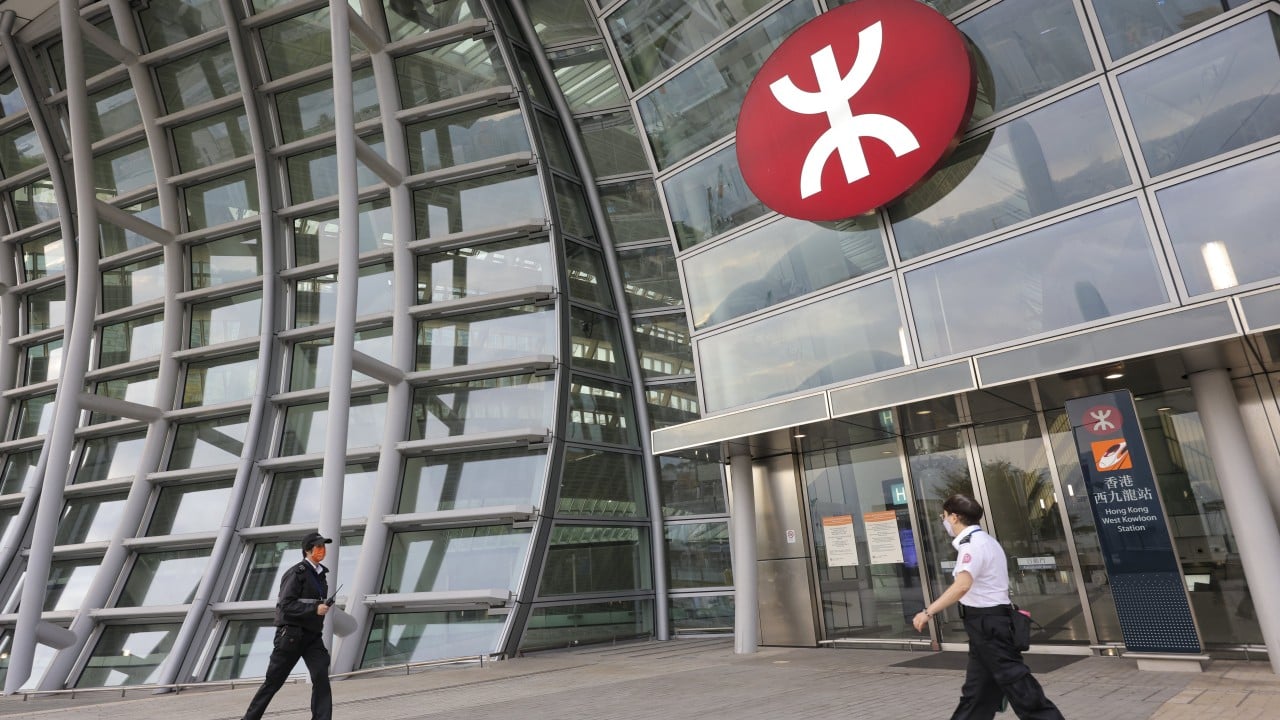
Large-scale infrastructure delivery operates under an illusion of predictability. When major transport assets miss completion targets, the financial remediation typically follows a protracted path of legal dispute, political negotiation, and eventual balance sheet adjustments. The settlement finalized between the Hong Kong government and the MTR Corporation, requiring the transit operator to pay HK$2.25 billion regarding construction delays on the High Speed Rail Hong Kong Section and the Shatin to Central Link, offers a clear case study in megaproject accountability. Deconstructing the mechanics of this agreement reveals how institutional risk allocation shapes modern urban rail development.
The root cause of megaproject overruns lies in the divergence between initial cost-benefit projections and actual execution variables. Infrastructure initiatives of this scale involve complex subterranean engineering, dense urban logistics, and shifting regulatory frameworks. In the case of the High Speed Rail project, original estimates ballooned years prior, culminating in massive financial restructurings. When timelines slip, direct costs multiply through extended labor overhead, equipment leasing, and delayed revenue generation.
Public-private transport models establish specific burden-sharing boundaries between the state and the operating entity. MTR operates under a unique hybrid model where it acts as both a commercial property and rail enterprise and an agent for government-funded projects. This dual identity complicates liability. When delays occur, the question of whether the shortfall stems from contractor performance, unforeseen geological anomalies, or bureaucratic interference becomes a point of contention. The HK$2.25 billion payout represents a negotiated resolution designed to close legacy disputes without entering years of adversarial litigation.
At the heart of the matter is the cost function of delay. Every month a rail link remains uncompleted, capital tied up in the asset produces zero yield while incurring maintenance and financing charges. For an operator listed on public exchanges, prolonged uncertainty damages market confidence and distorts valuation models. By accepting a definitive financial penalty, MTR trades an open-ended legal liability for balance sheet closure.
At the same time, the resolution of the Shatin to Central Link claims—where both parties agreed to mutually drop further delay-related cross-claims without additional payments—indicates a pragmatic realization. Litigation costs scale linearly with time; past a certain threshold, the legal expenditure required to fight marginal claims outweighs the recovery potential.
Future infrastructure delivery depends heavily on how these historical lessons alter procurement frameworks. The regulatory response to past overruns has involved tightening oversight mechanisms for ongoing and upcoming lines, such as the Northern Link and related station expansions. These updated frameworks shift a greater degree of execution and cost risk directly onto the project manager and contractor ecosystem.
Under these revised governance structures, the margin for error narrows. Transport operators can no longer rely on implicit expectations of public bailouts for schedule slippages. Risk pricing must now account for strict contractual enforcement, altering how bids are structured and how contingencies are calculated from day one.
To safeguard future capital allocation, transport authorities and operators must implement dynamic risk-sharing models that adjust for geological and supply chain shocks in real time, tying executive incentives directly to milestone delivery rather than mere completion.