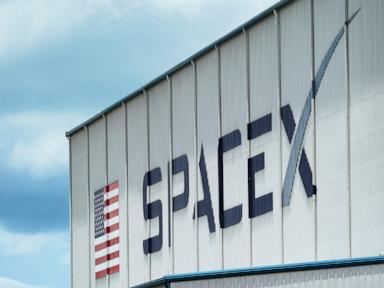
Industrial conglomerates entering the aerospace sector face a punishing cost-to-entry ratio governed by fixed launch constraints and high capital intensity. The recent contract execution between VinSpace—a subsidiary of Vietnam's Vingroup ecosystem—and SpaceX for a 2027 rideshare launch provides a case study in how new market entrants attempt to bypass traditional rocketry bottlenecks. By securing slot allocations on a SpaceX Transporter mission, VinSpace is attempting to compress its timeline from corporate inception to on-orbit validation. Deconstructing this agreement requires analyzing the underlying economic levers, supply chain dependencies, and regional industrial policy shifts shaping Southeast Asia's entry into the orbital economy.
The Structural Mechanics of Rideshare Economics
Traditional commercial satellite deployment historically suffered from severe pricing friction. Entities requiring low-Earth orbit access had to finance dedicated booster configurations, absorbing the total marginal cost of the rocket regardless of payload mass utilization. The evolution of rideshare frameworks fundamentally alters this unit economic model.
Dedicated Launch Cost Structure = 100% Booster Financing / Single Payload
Rideshare Cost Structure         = Total Booster Cost / N Distributed Payloads
By utilizing SpaceX Transporter architecture, VinSpace avoids the capital expenditure trap of dedicated rocket contracting. The economic mechanics rely on high-frequency, multi-customer payload integration where launch costs scale linearly or sub-linearly with mass fraction.
- Mass Allocation Pricing: Small satellite developers purchase specific kilogram slots, reducing upfront balance sheet exposure.
- Schedule Predictability: Standardized deployment windows substitute custom mission integration timelines with repeatable flight cadences.
- Orbital Targeting Trade-offs: Rideshare missions dictate fixed sun-synchronous or inclination orbits, forcing satellite bus designers to optimize propulsion and power systems for preset injection vectors rather than customized trajectories.
For an entity founded with initial capital allocations scaled for early-stage prototyping, minimizing per-kilogram launch overhead is a prerequisite for financial survival. Without rideshare options, the capital burn rate required to achieve flight heritage would exhaust balance sheet reserves before downstream data products could be monetized.
Vertical Integration Versus CapEx Velocity
VinSpace has stated an ambition to manage research, development, manufacturing, assembly, integration, testing, and post-launch operations entirely in-house. This vertical integration strategy mirrors the playbook used by its parent organization, Vingroup, during its automotive manufacturing expansion. However, applying automotive manufacturing logic to aerospace engineering introduces distinct operational friction points.
Automotive production relies on high-volume economies of scale to amortize retooling and supply chain investments. Conversely, early-stage satellite manufacturing is characterized by low-volume, high-complexity engineering where individual units undergo rigorous environmental testing to survive acoustic, thermal, and vacuum stresses unique to launch and orbit.
- The AIT Bottleneck: Assembly, Integration, and Testing facilities require millions in specialized capital equipment, including thermal vacuum chambers and vibration tables. In-housing these capabilities too early creates fixed asset bloat.
- Component Sourcing Vulnerabilities: Sourcing radiation-hardened microprocessors, star trackers, and reaction wheels exposes regional manufacturers to international supply chain dependencies and export control regimes.
- Iterative Failure Cycles: Software-first industrial models permit rapid patching in the field. Orbital hardware operates in a zero-maintenance environment; hardware iteration requires physical replacement via subsequent launches, compounding launch schedule risks.
The decision to outsource the transport vector to SpaceX indicates a pragmatic allocation of internal engineering bandwidth. By relying on an external launch provider for orbital insertion, VinSpace preserves capital for payload sensor development and onboard processing architecture.
Macroeconomic Drivers Within Regional Industrial Policy
The timing of this contract is directly linked to broader national economic planning within Vietnam. State directives target mid-level space power status in Southeast Asia by the end of the decade. State-backed initiatives, such as the space science infrastructure established at Hanoi's Hoa Lac High-Tech Park, supply the academic and testing groundwork, but commercial entities must drive operational execution.
Concurrently, regulatory adjustments—including permissions granted for satellite internet providers like Starlink to operate domestically—signal an official pivot toward integrating foreign commercial infrastructure with local capability building. This dual-track approach serves two distinct functions:
- Downstream Market Priming: Introducing high-speed satellite connectivity accustoms enterprise and consumer sectors to space-derived data feeds, establishing a domestic customer base for future local operators.
- Industrial Technology Transfer: Engaging with global market leaders creates secondary contracting opportunities and establishes regulatory precedents for cross-border technology sharing.
Strategic Execution Roadmap
To transition from a contract announcement in 2026 to successful on-orbit operations in 2027, VinSpace must navigate critical technical milestones without schedule slippage.
The immediate operational priority involves finalizing the structural and thermal design parameters of the spacecraft to meet SpaceX Interface Control Documents. Payload mass and volume allocations must be locked down to secure the designated Transporter slot.
Simultaneously, ground segment infrastructure must be engineered to handle telemetry, tracking, and command operations upon separation from the upper stage. Ground station network availability dictates command link margins during early orbit phases, a window where attitude determination and control system failures can result in total mission loss.
Future valuation of the enterprise will not hinge on launch contract announcements, but on the successful transmission and commercialization of downstream data products. Capital markets will evaluate whether the company can transition from a technology demonstrator into a repeatable provider of earth observation or communications telemetry. The 2027 launch window serves as the empirical test of whether localized capital and ambitious industrial policy can successfully insert a new player into the global commercial space value chain.