The vacuum of space is supposed to forget.
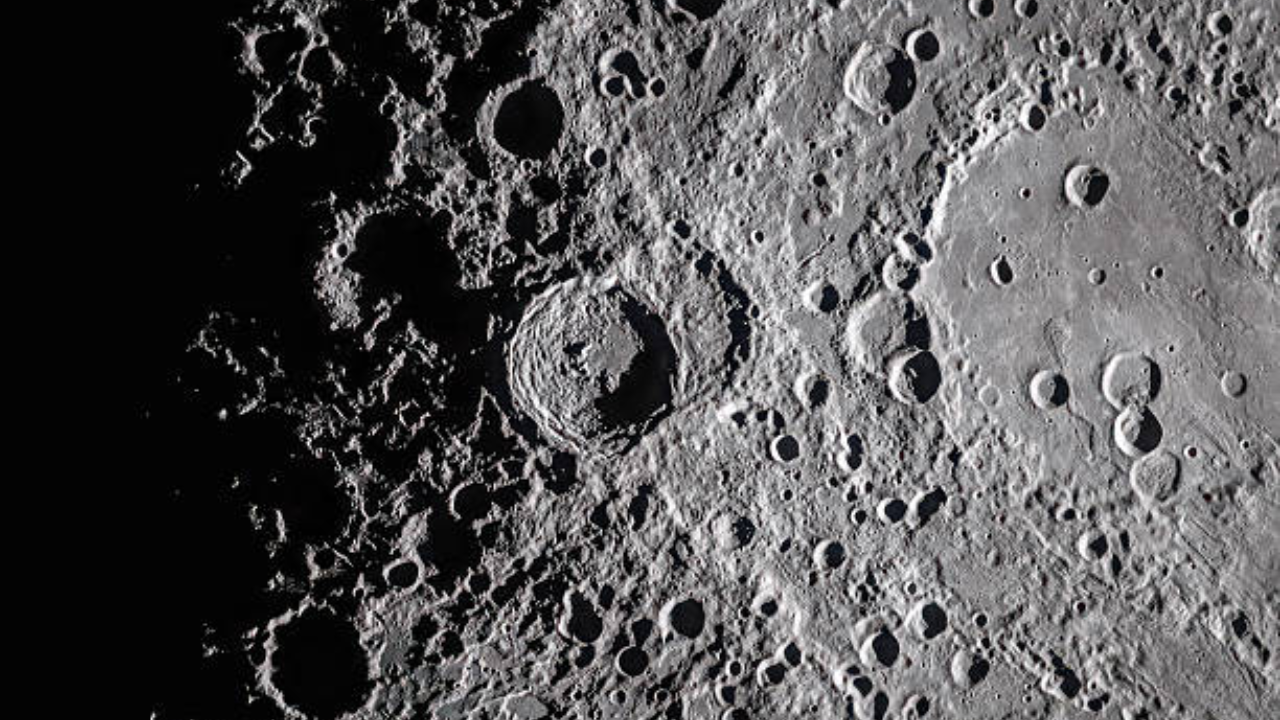
It is an endless, freezing expanse where things are bleached by solar wind, battered by micrometeorites, and buried under a thick, monotonous blanket of gray ash known as regolith. For billions of years, the Moon has sat there—silent, scarred, and seemingly dead—absorbing the fury of the cosmos without a whimper. We looked up at it through telescopes and saw a monochromatic desert. We walked across its surface and kicked up dust that tasted like spent gunpowder. We thought we understood its story. For a different look, check out: this related article.
We were wrong.
Deep inside microscopic fragments of glass brought back from the lunar far side by China’s Chang’e-6 mission, something extraordinary was hiding. It did not want to be found. It was locked away in a prison of hardened silica, smaller than the width of a human hair, waiting for a team of planetary scientists to peer through the right lens at the right angle. Similar analysis regarding this has been shared by MIT Technology Review.
What they discovered changes how we look at the night sky. It is a brand-new magnetic mineral.
Let us step back for a moment. To understand why a microscopic speck of iron-bearing crystal matters to anyone sitting on Earth with a cup of morning coffee, we have to talk about memory. Not human memory, which fades and alters with time, but the memory of stone.
Imagine holding a tiny fragment of volcanic glass collected from a crater on the Moon's far side—a region that remains stubbornly mysterious, shielded from our direct line of sight for all of human history. Picture the violent birth of that glass particle. Millions, perhaps billions of years ago, a high-speed asteroid slammed into the lunar crust. The impact unleashed unimaginable kinetic energy. Rock melted instantly into glowing, superheated liquid, flying through the vacuum before cooling rapidly into a droplet of glass.
In that violent flashbulb moment of fire and pressure, the surrounding magnetic field of the Moon—whatever it looked like in that ancient epoch—was frozen into the newly forming mineral structures like a compass needle locked permanently in place.
For decades, scientists debated whether the Moon ever possessed a strong, global magnetic field like Earth’s. Earth has a churning liquid iron core that acts as a colossal dynamo, generating a protective shield that keeps our atmosphere from being stripped away by the solar wind. Did the Moon have that once? Or were its magnetic quirks just local anomalies, tiny magnetic hiccups caused by local impacts?
The answer was trapped in the glass.
When researchers analyzed the Chang’e-6 samples using advanced electron microscopy and high-resolution chemical mapping, they did not just find familiar iron-nickel alloys or standard magnetite. They found a distinct, previously unknown magnetic mineral phase—a mineral born from the extreme conditions of lunar impacts and volcanic whispers.
This is where the cold statistics of mineralogy transform into something poetic.
We are not just looking at a chemical formula. We are looking at a tiny witness to history. That mineral speck carried a magnetic signature that survived the absolute brutality of space weathering. It survived the thermal swings from boiling heat to freezing shadow. It survived for eons, buried inches beneath the gray dust, waiting for a robotic scoop to reach down, pack it into a titanium container, and fire it back toward a blue planet.
Consider the human effort required to read that microscopic record.
Thousands of miles away from those lonely craters, engineers and scientists spent decades designing, testing, and praying over the Chang’e-6 mission. Landing on the far side of the Moon is an exercise in blind navigation. You lose direct line-of-sight communication with Earth. You rely on relay satellites orbiting in the dark void, trusting code written by tired humans who drank too much coffee in clean rooms under harsh fluorescent lights.
When the return capsule touched down in the grasslands of Inner Mongolia carrying two kilograms of lunar soil, the world watched for a moment and then scrolled past to the next headline. But inside laboratories, the real work was just beginning.
Researchers handled samples that had never breathed terrestrial air. They sliced them with ion beams thinner than light waves. They coaxed secrets out of atomic lattices. And when this new mineral revealed itself, it whispered an old secret: the Moon’s magnetic heart beat much stronger, and perhaps much longer, than we dared to imagine.
Why does this matter?
Because the Moon is the Rosetta Stone of our solar system. If we want to understand how rocky planets form, how magnetic fields protect—or fail to protect—atmospheres, and why Earth became a cradle for life while our celestial neighbor became a barren wasteland, we need to read every single page of the lunar ledger.
Every time we think we have the solar system figured out, it throws a new mineral at us. It reminds us that our knowledge is an island in an ocean of the unknown.
The Chang’e-6 samples are currently sitting in laboratories, under bright lights, examined by scientists who are staring into the deep past. They are decoding the magnetism of a dead world to understand the future of our own.
Look up at the Moon tonight. It looks peaceful, almost indifferent to our existence. But it is keeping a diary written in iron and glass, waiting for us to turn the page.