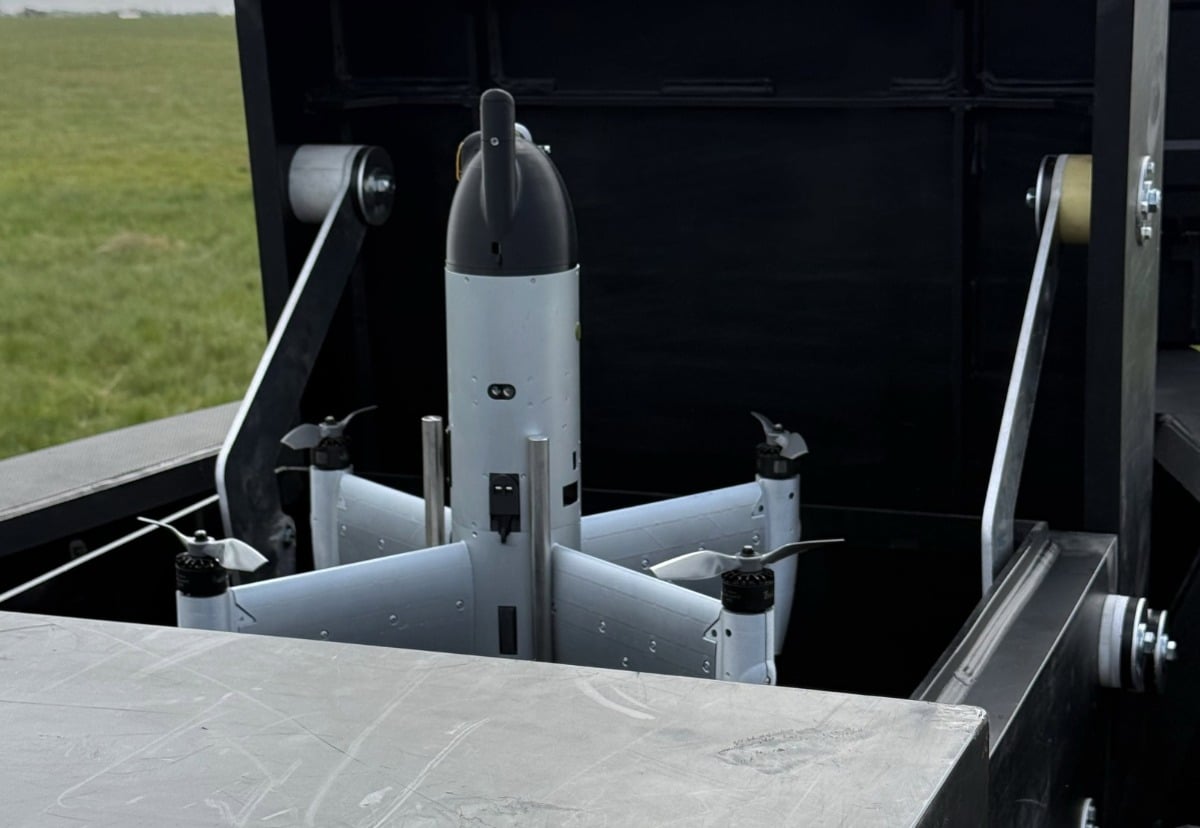
The defense establishment is currently swooning over the wrong metrics. When industry leaders applaud the "extraordinary" speed and adaptation of drone interceptor development in modern conflict zones, they are looking at a tactical victory through a magnifying glass and calling it a strategic triumph.
Praising the rapid deployment of bespoke, automated quadcopter-hunters misses the brutal economic reality of attrition warfare. We are celebrating the fact that we can build sophisticated, software-directed flyswatters while the enemy is manufacturing flies by the millions.
It is a fundamental misunderstanding of defense economics. The current praise centered on rapid prototyping and agile software integration in small-scale interceptors obscures a dark truth. We are losing the cost-per-kill equation. Until we fix that, speed of innovation is just an expensive way to go bankrupt.
The Cost Curve Miscalculation
Here is the lazy consensus: if a tech startup can build an autonomous interceptor drone in weeks and deploy it to knock out an enemy reconnaissance unit, the system works.
It doesn't.
I have spent years analyzing procurement cycles and hardware deployment structures. The math of drone interception is fundamentally broken. When defense commentators point to the successful integration of AI-driven targeting software on consumer-grade frames, they ignore the underlying asymmetry.
Consider the baseline unit economics. An adversary builds or buys a first-person view (FPV) strike drone for roughly $500. It uses off-the-shelf components, basic analog signals, and a rudimentary payload. To counter this, Western defense doctrine relies on guided interceptors packed with thermal cameras, specialized radio frequency components, and proprietary guidance software. Even the scaled-down, "affordable" variants cost thousands of dollars per unit to manufacture when accounting for secure supply chains and specialized sensors.
Adversary Cost:  $500 [Strike Drone]
Defense Cost:     $5,000+ [Guided Interceptor]
Economic Ratio:   1:10 (Advantage: Attrition)
This is not a sustainable model. You cannot win a war of attrition when your defensive expenditure outpaces the enemy's offensive investment by a factor of ten. The assumption that software superiority solves everything is a comforting lie told by technologists who have never had to balance a multi-year ammunition supply budget during a prolonged industrial conflict.
The Software-Defined Trap
The tech sector loves to claim that software will eat the battlefield. They argue that edge computing and machine vision can transform cheap airframes into lethal interceptors overnight.
This argument ignores hardware physics.
A software update cannot change the battery chemistry of a quadcopter. It cannot increase the physical rotor speed beyond the mechanical limits of the brushless motors. It cannot force a sensor to see through dense fog or active military-grade electronic jamming without high-end, heavy hardware modules.
When companies boast about deploying over-the-air updates to counter new electronic warfare frequencies within hours, they are highlighting a patch, not a cure. The underlying issue is that the physical airframes are still bound by strict limitations of range, speed, and payload capacity.
- Battery Degradation: Flight times for high-speed interceptors are measured in single-digit minutes.
- Kinetic Energy Limits: Small interceptors lack the mass to neutralize larger fixed-wing threats without relying on expensive explosive payloads.
- Sensor Saturation: Cheap optical sensors are easily blinded by basic countermeasures, requiring a constant upward spiral in component costs to remain effective.
We are building incredibly smart tech that is physically incapable of holding a defensive line against sheer mass. The obsession with autonomy and edge computing has blinded us to the reality that numbers matter more than clever code.
Why COTS Hardware Fails in Industrial Warfare
Commercial Off-The-Shelf (COTS) hardware components are the darling of the rapid-response crowd. The narrative says that by using commercial supply chains, defense entities can bypass the slow, bureaucratic procurement systems of legacy defense contractors.
This approach works for the first six months of a localized crisis. It fails completely in an extended industrial clash.
Commercial supply chains are optimized for just-in-time delivery and consumer market trends, not wartime survivability. The moment a critical component—like a specific microcontroller or a specialized GPS module—becomes a bottleneck, the entire production apparatus grinds to a halt. Furthermore, relying on global consumer electronics means your adversary often shares the exact same supply chain. They know your hardware vulnerabilities because they use the same microchips.
True industrial scale requires standardizing primitive, rugged components that can be stamped out by the millions in domestic automotive or appliance factories. It requires moving away from delicate, high-performance electronics toward robust, low-tolerance designs that keep working when covered in mud and subjected to continuous radio interference.
The Flawed Premise of Drone-on-Drone Engagement
Go to any defense exposition and you will see the same demonstration: a clean, high-tech interceptor tracking a target in a clear blue sky, colliding with it perfectly, and receiving applause from onlookers.
This scenario assumes a polite enemy who sends a single drone at a time.
What happens when the attack involves two hundred low-cost drones simultaneously? A defense strategy built on discrete drone-on-drone interception falls apart under the weight of saturation. If you need one interceptor for every incoming threat, you have already lost the production race.
The real solution to drone proliferation does not involve flying quadcopters around trying to play dogfighter. It requires a hard pivot toward directed energy weapons, automated kinetic gun systems with programmable fragmentation ammunition, and wide-area electronic suppression. These solutions have a high fixed cost initially, but their variable cost per engagement drops to near zero.
System Type                Initial CapEx    Cost Per Shot
Guided Interceptor Drone   Medium           $5,000
Directed Energy (Laser)    Very High        $1.00
Programmable Flak Gun      High             $150
Investing heavily in individual interceptor production lines is a short-sighted distraction. It drains engineering talent and capital away from systems capable of true area denial.
Dismantling the "Agile Procurement" Myth
The defense community constantly argues about how to make procurement more agile. They point to small tech firms delivering batches of hundreds of interceptors as proof that the system is changing.
Let's look at the actual numbers. Producing hundreds of units is an engineering prototype run. Industrial warfare requires hundreds of thousands of units per month.
Legacy defense firms are frequently criticized for being slow, and much of that criticism is entirely justified. However, those traditional entities understand a concept that tech startups regularly ignore: industrial scalability and lifecycle sustainability. A weapon system is useless if you cannot produce it reliably during a raw material shortage, train an eighteen-year-old conscript to use it in ten minutes, and store it in a damp warehouse for three years without the battery dying.
The current wave of celebrated interceptors fails almost all of these criteria. They require specialized operators, constant software calibration, and pristine storage conditions. They are boutique weapons built for a mass-production conflict.
Shifting the Paradigm from Interception to Elimination
Instead of perfecting the art of hitting a moving drone with another moving drone, the strategic focus must shift to neutralizing the factory, the operator, and the logistical node.
An interceptor is an admission of failure. It means the threat has already launched, penetrated your airspace, and forced you to react on its terms. True operational dominance means deploying long-range, autonomous strike assets that target the production facilities and launch sectors before the cheap mass can ever take flight.
This approach is less palatable to tech evangelists because it requires heavy, long-range kinetic capabilities rather than neat AI targeting algorithms on small quadcopters. But warfare is not a software design competition. It is the uncompromising application of physical force at scale.
Stop celebrating the rapid production of high-tech band-aids. Stop pretending that an "extraordinary" output of defensive interceptors is winning the war. It is merely delaying a structural defeat. Turn off the software simulators, abandon the delicate commercial components, and start building the heavy, industrial-scale infrastructure required to defeat mass with volume.