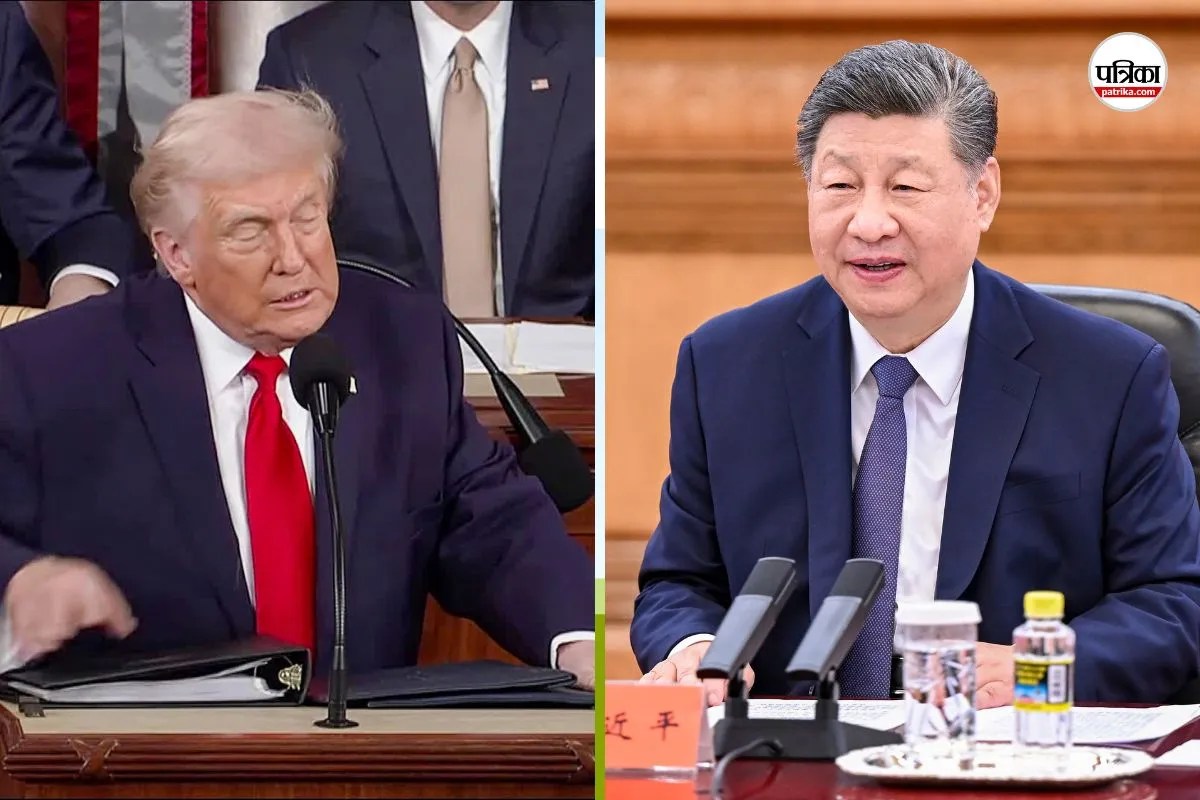
The headlines are breathless. Donald Trump reportedly warned Beijing that any Chinese support for Iranian military capabilities would carry a heavy cost. The mainstream media outlets are treating this as a high-stakes geopolitical chess move, a clear signal of a tough-on-China doctrine being recalibrated for the Middle East.
They are missing the plot. It is not a chess move; it is a scripted performance designed for an audience that still believes power projection works like it did in 1995.
The Myth of the Red Line
The conventional wisdom insists that a stern warning from a former president, or an aspiring one, shifts the calculus in Zhongnanhai. This assumes Beijing operates on fear of American reprisal. It does not. Beijing operates on the cold, arithmetic reality of resource security and long-term positioning.
When politicians bark about "consequences" regarding Iran, they ignore the structural reality of the China-Iran relationship. This is not about ideology. It is about a permanent lifeline. China buys Iranian oil because it has to diversify away from the dollar-denominated, US-patrolled maritime chokepoints of the Malacca Strait. To expect Beijing to throttle its own energy security because of a rhetorical threat from Washington is to fundamentally misunderstand why the Chinese state exists: to survive, not to please its detractors.
Why Your Anxiety About This Is Misplaced
The standard take is that if China provides weapons components, it triggers a chain reaction of instability that ruins the global order. Let’s cut through the noise. The global order is already fragmented.
Imagine a scenario where China stops sending whatever dual-use components the analysts are worried about. Does Iran suddenly stop its trajectory? No. Iran’s military-industrial complex is remarkably robust, born from decades of isolation and forced innovation. They have learned to build everything from drones to missiles from scratch. If Beijing pulls back, Tehran just looks elsewhere or accelerates domestic production.
The threat of "bad things happening" is an empty vessel. We saw this with the trade war. We saw this with the various sanctions regimes. The global economy is a sieve. Money, technology, and parts flow through the holes that sanctions leave behind.
The Real Game is Asymmetric
Those shouting about Trump’s warning are ignoring the asymmetry of the situation. Washington wants to contain Iran; Beijing wants to keep the Middle East from collapsing into total, unmanaged chaos that would destroy the energy flows China requires. These are two different missions.
I have spent years watching policy shops and think tanks blow millions on "deterrence strategy" reports. They operate under the delusion that if you just phrase the threat correctly, the adversary will bow. In reality, the adversary simply adjusts the transaction cost. China does not fear a threat; it fears a blockade. Unless Washington is willing to physically intercept tankers—which is a recipe for a kinetic war that nobody in the Pentagon actually wants—the flow will continue.
The Strategic Miscalculation
The error here is believing this is a bilateral issue between Washington and Beijing. It is not. It is an issue of the Iranian regime's internal necessity. If you are an Iranian decision-maker, your priority is regime survival. That means having the largest possible stick to wave at neighbors. China is just the merchant.
Stop worrying about the merchant. Start worrying about the fact that American foreign policy has shifted from "engagement" to "empty threats" as a substitute for actual regional strategy. When you threaten an actor that is more invested in a region than you are, you aren't showing strength. You are advertising your own impotence.
The Price of Admission
Let’s be honest about the downsides of this contrarian take: yes, a total abandonment of red lines carries risk. It signals to smaller powers that the rules-based order is optional. But that ship sailed years ago. We are living in a multipolar reality where the "rules" are whatever the local hegemon can enforce.
The obsession with Chinese arms shipments to Iran is a distraction from the larger trend: the erosion of American influence in the Persian Gulf. You can scream at the clouds until your voice gives out, but if you do not have the boots, the ships, or the local buy-in to stop the trade, the trade continues.
Trump knows this. His supporters know this. But the political theater requires a villain and a hero. The media provides the script, the politicians perform their lines, and the public consumes the drama, convinced that something is actually changing.
Nothing is changing. The supply chains are just getting more complicated. The threats are just getting louder. The reality remains the same. If you want to stop the flow of influence, you need to offer a better deal than the one China is offering. Threats aren't currency, and in the Middle East, they don't even buy you silence. Stop looking for a pivot point and start looking at the ledger. That is where the world is actually being run.