Two miles.
In the suburbs of Central Texas, two miles looks like nothing on a glowing smartphone screen—just a thin blue line curving past a strip mall, a water tower, and a row of newly planted live oaks. On a Tuesday morning in November, however, when the humidity already clings to your shirt by seven o'clock and your shift at the warehouse starts at eight, two miles without a car, without a sidewalk, and without a bus route might as well be an ocean. Don't forget to check out our recent article on this related article.
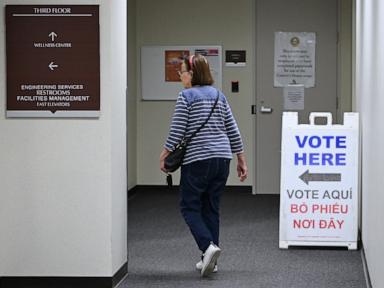
I remember the first time I watched a neighborhood lose its polling place. It wasn't accompanied by sirens, or armed guards, or a dramatic speech on the courthouse steps. It happened on a Tuesday afternoon in a fluorescent-lit county commissioners' room while most of the people affected were picking their kids up from school or clocking into a second job. A sheet of paper was taped to the glass door of a local elementary school gymnasium a few weeks later. Location Closed. An arrow pointed toward a municipal building across a six-lane highway. People walked up to the glass, squinted at the tape, checked their watches, and walked back to their cars. Some of them drove across the highway. Many of them simply drove home.
That quiet erasure is happening right now across a rapidly changing Texas swing county, where dozens of familiar polling sites have vanished from the map just as the region's political gravity begins to shift. On paper, it reads like an administrative reshuffling—an exercise in consolidation, budget management, and logistical streamlining. On the ground, in the living rooms and church basements where community organizers are currently taping hand-drawn maps to dry-erase boards, it feels like something else entirely. It feels like a test of endurance. To read more about the context of this, Associated Press provides an in-depth breakdown.
The Architecture of Friction
To understand why closing dozens of polling sites in a competitive county matters so much, you have to stop thinking about voting as a single, heroic act and start thinking about it like running water.
When water flows easily from a tap, nobody thinks about the pipes. You turn the handle, you fill your glass, and you move on with your day. Democracy is supposed to work with that exact kind of unremarkable reliability. Now, imagine the city doesn't shut off your water—that would cause an immediate riot. Instead, they remove the faucet in your kitchen and tell you that you can still have all the water you want, provided you carry a bucket four blocks down the road between the hours of seven and seven, while balancing your groceries and your toddler on your hip. Technically, your access hasn't been revoked. Practically, you're going to go thirsty a whole lot more often.
Economists and behavioral scientists have a name for this: friction. In the private sector, companies spend billions of dollars eliminating friction because they know a brutal truth about human behavior—even a tiny obstacle, like an extra click at checkout or a slow-loading webpage, causes a massive percentage of people to abandon what they were doing. When that same friction is introduced into civic life, the result isn't accidental. It is entirely predictable.
Consider a hypothetical voter—let's call her Elena—living in one of the fast-growing suburban corridors between Austin and San Antonio, the exact kind of county that has transformed from a reliable conservative stronghold into a razor-thin battleground over the last decade. Elena works as a home health aide. Her schedule isn't a neat nine-to-five block; it is a fragile jigsaw puzzle of client appointments, traffic bottlenecks, and school pickup windows. For the last three election cycles, she voted at the community center three blocks from her apartment. She knew the poll workers. She knew where to park. She could slip in at 7:15 a.m., cast her ballot in twelve minutes, and make her eight o'clock client with time to spare.
This year, that community center isn't on the list. Neither is the elementary school down the road, nor the church fellowship hall near the grocery store. Instead, Elena is directed to a consolidated voting super-center four miles away—a site now absorbing the foot traffic of four shuttered precincts. When she arrives at 7:15 a.m., the line wraps twice around the parking lot. She looks at the clock on her dashboard. She looks at the line. She does the math that millions of working people do every November, and she puts the car in reverse.
Elena isn't apathetic. She didn't suddenly stop caring about property taxes, public school funding, or the healthcare policies that govern her paycheck. She was simply outmaneuvered by geography and time.
A Decade of Shrinking Maps
If this felt like an isolated hiccup in one Texas county, it would be easy to shrug off as local bureaucratic clumsiness. It isn't. It is part of a documented, decade-long pattern that accelerated sharply after the U.S. Supreme Court's 2013 Shelby County v. Holder decision gutted the preclearance requirements of the Voting Rights Act. Before that ruling, states and counties with a history of discriminatory practices had to prove to the federal government that changes to polling locations wouldn't disproportionately burden minority voters before those changes could take effect.
Once that guardrail vanished, the closures began in earnest.
Across the American South, and most dramatically in Texas, counties began shuttering neighborhood precincts at an astonishing pace. Reports tracking polling place changes in the years following the ruling revealed that Texas closed more polling sites than any other state in the country—hundreds upon hundreds of doors locked, disproportionately in counties experiencing the fastest growth among Black and Hispanic residents.
Officials often point to a well-intentioned reform as the justification: the shift toward countywide voting centers. Under this system, instead of being assigned to a single neighborhood precinct, any registered voter in the county can cast a ballot at any open voting center. In theory, it sounds liberating. If you work across town, you don't have to race back to your home neighborhood before the polls close; you can vote near your office during lunch.
In practice, however, the transition to countywide voting centers has frequently served as a Trojan horse for massive reductions in total locations. State law allows counties adopting the vote-center model to reduce their total number of polling sites by up to fifty percent after the first election. When a county slashes dozens of neighborhood sites simultaneously, the promised convenience evaporates, replaced by longer travel distances, overcrowded parking lots, and hours-long bottlenecks at the remaining hubs.
It is hard not to feel a knot of frustration—and honestly, a bit of dread—when you look at the gap between how these decisions are explained in public meetings and how they land on the pavement. County officials talk about equipment shortages, difficulty recruiting election judges, and the cost of leasing private buildings. Those are real logistical headaches. Anyone who has ever volunteered at a local precinct knows that running an election is a grueling, underfunded marathon held together by retirees, folding tables, and extension cords.
Yet when you overlay the map of closed polling sites onto a demographic and partisan map of a Texas swing county, a troubling symmetry emerges. The closures rarely fall evenly across the landscape. They cluster in the exact neighborhoods where young renters, hourly workers, and families of color have moved in over the past five years—the very voters who turned a once-predictable county into a toss-up.
Inside the Counter-Offensive
Walk into a rented storefront or a union hall in that same county on a Saturday morning right now, and you won't find people wallowing in cynicism. You'll find a different kind of energy—stubborn, caffeinated, and intensely practical.
Advocates and grassroots organizers aren't waiting for a court injunction or a sudden change of heart from county commissioners. They are treating the closure of dozens of polling sites like an oncoming hurricane: you can't argue with the wind, so you board up the windows, map the high ground, and make sure nobody gets left behind.
The strategy unfolding across these swing precincts is a masterclass in hyper-local problem solving. When the traditional infrastructure of democracy gets dismantled, organizers build a parallel one from scratch.
First comes the information triage. The single deadliest weapon of a polling place closure isn't the extra mileage—it's the surprise. When a voter shows up at their habitual precinct on Election Day only to find locked doors, the odds that they will successfully navigate to a secondary location drop precipitously. To defeat that ambush, volunteer teams have spent months cross-referencing county voter rolls against the list of shuttered sites. They aren't just sending generic postcards that end up in the recycling bin; they are knocking on doors with printed, individualized route cards showing a voter's old polling place crossed out in red and their nearest open voting center circled in bright yellow, complete with bus routes and operating hours.
Second comes the shift toward early voting. Election Day itself is a bottleneck by design—a twelve-hour window where a single flat tire, a sick kid, or an unexpected double shift can erase a citizen's voice for two years. Organizers are hammering a simple message into every conversation at barbershops, church parking lots, and apartment complexes: Tuesday is too late. By pushing voters to cast their ballots during Texas's two-week early voting period—including weekend hours—advocates are flattening the curve before the Election Day surge can overwhelm the remaining sites.
Third, and perhaps most vital, is the literal bridging of the distance. Across the county, networks of volunteer drivers, church vans, and rideshare partnerships are being organized into a dispatch grid. If a senior citizen in a rural pocket of the county suddenly faces a seven-mile trek because their local firehouse is no longer hosting voting machines, a neighbor with a minivan is scheduled to be in their driveway at ten o'clock on a Wednesday morning.
Watching this happen up close changes how you think about civic power. It strips away the glossy abstraction of cable news punditry—all those colorful maps and horse-race percentages—and reduces democracy down to its most elemental unit: one person helping another person get through a door.
What Is Really at Stake in a Swing County
It is easy, especially from the outside, to view a battle over polling locations in a single Texas county as a local turf war. That would be a dangerous miscalculation.
Swing counties are the hinges on which national and state politics turn. In Texas, where statewide margins have narrowed steadily over the past decade, the outcome of high-stakes Senate races, congressional battles, and state legislative majorities increasingly depends on a handful of fast-growing suburban and exurban counties. When an election is decided by two or three percentage points—sometimes by a few thousand votes out of hundreds of thousands cast—you don't need to lock every door to change the outcome. You only need to make the journey slightly harder for a small fraction of the electorate.
That is the invisible math of modern voter suppression. Rarely does anyone stand in a doorway and tell a citizen they are forbidden to enter. Instead, the system relies on cumulative exhaustion. Close thirty sites here. Reduce early voting hours there. Require a separate stamp or a specific form of identification. None of these hurdles looks insurmountable on its own, which makes them remarkably easy to defend in a press release. Together, however, they act like a fine-mesh sieve, quietly filtering out the voices of people who have the least margin for error in their daily lives.
And there is a deeper cost that never shows up in the Secretary of State's turnout spreadsheets. Every time a community watches its neighborhood polling place close, a subtle message settles into the concrete: This process wasn't built for you. Cynicism is contagious. When a twenty-two-year-old first-time voter walks a mile to an elementary school only to find a taped piece of paper redirecting them across town, they don't just lose their chance to vote that day—they learn a lesson about whether their participation is actually wanted.
The Walk to the Door
A few weeks ago, I stood outside an early voting site in a converted retail storefront tucked between a dollar store and a laundromat. It wasn't a grand civic monument. There were no marble columns, no bronze plaques, no soaring rhetoric carved into stone. Just a folding table, a stack of clipboards, and a steady trickle of people stepping out of the October heat into the cool air inside.
Near the curb, a young organizer in a faded t-shirt was leaning against the hood of a Honda Civic, checking names off a paper roster. Every twenty minutes or so, another car would pull up, drop off two or three passengers—a grandmother leaning on a cane, a young man still wearing his fast-food uniform, a mother juggling a diaper bag—and pull back out onto the frontage road to make another loop.
Nobody was giving a speech. Nobody was filming a viral video. They were just moving people, a few miles at a time, across an obstacle course that someone else had drawn on a map.
Inside the storefront, behind a flimsy privacy screen, a hand reached out and tapped a glowing touchscreen. Somewhere in the back of the room, a thermal printer whirred, spitting out a narrow strip of paper that dropped cleanly into a locked ballot box. It made almost no sound at all—just a soft, mechanical click, followed by the heavy thud of the glass door swinging shut as the next person in line stepped forward to take their place.