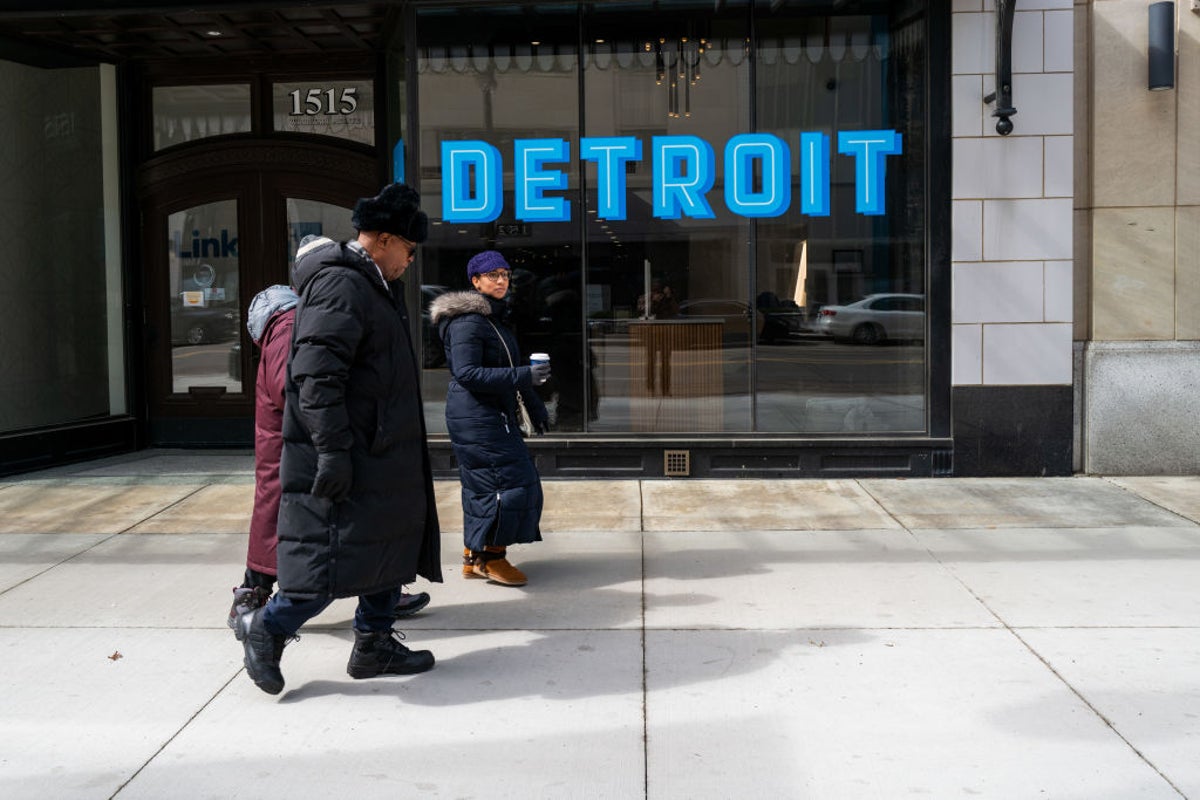
Every few months, the civic commentariat dusts off the same tired lament. Target is not downtown. Whole Foods is missing a footprint. The suburban migration blueprint is treated like gospel, as if urban economic vitality requires a suburban strip mall dropped squarely between Woodward and Grand River. The lazy consensus states that Detroit is failing because national big-box chains refuse to anchor its commercial corridors.
This diagnosis is fundamentally backwards.
I have spent the better part of two decades watching municipal economic development strategies fail because they try to force twenty-first-century consumer behavior into twentieth-century suburban boxes. Consultants fly in, look at empty ground-floor retail spaces, and declare a crisis of supply. They point to median household incomes, run stale gravity models, and hand city councils a binder telling them to lure a national department store with tax abatements.
It is a ghost dance of urban planning. And it is keeping Detroit stuck in the past.
The Big Box Fallacy
Let us look at the math behind the traditional retail attraction model. A major national retailer does not open an urban location because they want to support your neighborhood revival. They open when their strict demographic formulas align: parking ratios of four spaces per thousand square feet, predictable suburban-style foot traffic curves, and predictable logistics hubs that favor sprawling single-story footprints with massive loading docks.
When a city bends over backward to accommodate these demands, the cost is staggering. You get subsidized parking garages, destroyed historic street grids, and low-margin retail pads that bleed tax revenue rather than generating it.
Even worse, you import a suburban model into an urban core that has already evolved past it.
Detroit’s commercial renaissance is not waiting for a corporate chain to sign a twenty-year lease. It is happening in the cracks, corners, and incubator spaces built by entrepreneurs who understand local density. The obsession with national retailers misses the entire structural shift in how cities generate wealth.
The Anatomy of Real Density
Traditional retail metrics rely on resident income within a one-mile radius. By those metrics, Detroit has historically looked unviable to spreadsheet jockeys sitting in suburban corporate offices. But those metrics ignore the actual mechanics of urban density.
Cities do not thrive because people sleep there. They thrive because people move through them.
Detroit's daytime population, tourist influx, and regional commuter base create a massive latent demand that traditional residential income models completely fail to capture. When you look at successful urban commercial corridors across the country, they are rarely anchored by a single massive department store anymore. They are anchored by density, walkability, and agglomeration economies.
Agglomeration is a simple concept that corporate planners constantly misunderstand. It means that businesses do better when they are clustered near complementary businesses, not isolated in a fortress of low-density parking. A visitor does not drive downtown to visit one Target. They go downtown because there is a dense cluster of independent restaurants, specialty shops, galleries, and cultural venues that create an entire evening or weekend experience.
When a city trades its historic fabric for a suburban footprint just to land a corporate logo on a marquee, it destroys the very agglomeration value that makes cities resilient in the first place.
What the Data Actually Tells Us
Let us examine the retail leakage argument. Urban planners love to talk about retail leakage—the idea that city residents are spending their money in the suburbs because they lack options at home.
The prescription is always the same: build more big-box retail to capture those dollars locally.
I have seen companies blow millions on retail recruitment studies that treat leakage like a plumbing leak that needs a patch. But consumer spending is not water. A dollar spent at a suburban big-box store by a city resident is often an optimized choice for bulk goods, not a symptom of urban failure. More importantly, trying to out-compete suburban big-box retailers on their own turf—cheap land, massive parking, and centralized distribution—is a losing game for a dense urban core.
Detroit cannot win a strip-mall fight against Troy or Novi. Space constraints alone make it impossible. More crucially, why would you want to?
When you look at the most dynamic commercial districts in Detroit right now—areas like Midtown, Corktown, and parts of the Avenue of Fashion—they are not powered by national department stores. They are powered by high-density mixed-use developments, adaptive reuse of historic architecture, and independent retail clusters that have a much higher multiplier effect on the local economy.
Every dollar spent at an independent local establishment stays in the local ecosystem longer than a dollar funneled through a corporate register in Bentonville or Minneapolis. The multiplier effect of local retail is not a sentimental talking point; it is hard macroeconomic reality.
The Developer Tax Trap
Cities desperate for retail anchors often fall into the incentive trap. They hand out millions in tax increment financing and property tax abatements to national chains, convincing themselves that any rooftop is a good rooftop.
This is a structural subsidy for low-wage, high-turnover jobs that do little to build generational wealth or community resilience.
Imagine a scenario where a city redirects those exact same subsidies toward small-scale commercial real estate acquisition funds, helping local entrepreneurs buy their own storefronts instead of renting them from absentee landlords.
When small business owners own their real estate, they stop being tenants at the mercy of shifting corporate headquarters strategies. They become permanent stakeholders in the neighborhood. They invest in the sidewalks, sponsor the little league teams, and weather economic downturns without threatening to pull out if quarterly earnings dip by two percent.
Cities that chase national brands are playing a game rigged by the brands themselves. The moment a market shifts or margins compress, the national chain closes its doors, leaving the municipality with a hulking, single-use building that is structurally obsolete for anything else.
Ask yourself what happens to a sprawling single-story big-box footprint when e-commerce margins tighten further. It becomes a blighted wasteland with a vast asphalt moat. We have seen this movie before across the American Rust Belt. Building more of them in urban cores is not progress; it is nostalgia for a retail era that is dead and buried.
The Real Question
The question is never whether Detroit can attract major retailers. The question is why anyone still measures urban health by the presence of a corporate logo that you can find at any highway interchange in America.
Detroit does not need big-box retail to save it. It needs to stop trying to look like a suburb and lean entirely into the gritty, high-density, independent economic engine that only a major city can provide. Let the suburbs have the parking lots. Build the city for the people who actually want to walk through it.