The United States House of Representatives just kicked the can down the road, and the road is running out of pavement. By extending the Section 702 surveillance powers of the Foreign Intelligence Surveillance Act (FISA) until April 30, 2026, lawmakers didn’t just avoid a midnight expiration; they signaled a profound collapse in the ability of the Republican majority to govern its own security hawks. This short-term patch is a band-aid on a gunshot wound. It follows a chaotic sequence of events where a late-night rebellion from the hard-right wing of the GOP effectively torched a broader reform package, leaving the intelligence community and privacy advocates in a tense, temporary limbo.
Section 702 is the crown jewel of the American surveillance apparatus. It allows agencies like the NSA to collect digital communications of non-citizens located outside the U.S. without a warrant. The friction arises because those "foreign" targets often talk to Americans. This creates a massive "backdoor" database of domestic communications that the FBI can—and does—search without a traditional probable cause warrant. The extension buys five months of breathing room, but it fails to address the fundamental question haunting the Capitol: Can the Fourth Amendment survive the digital age? For another view, consider: this related article.
The Anatomy of a Legislative Meltdown
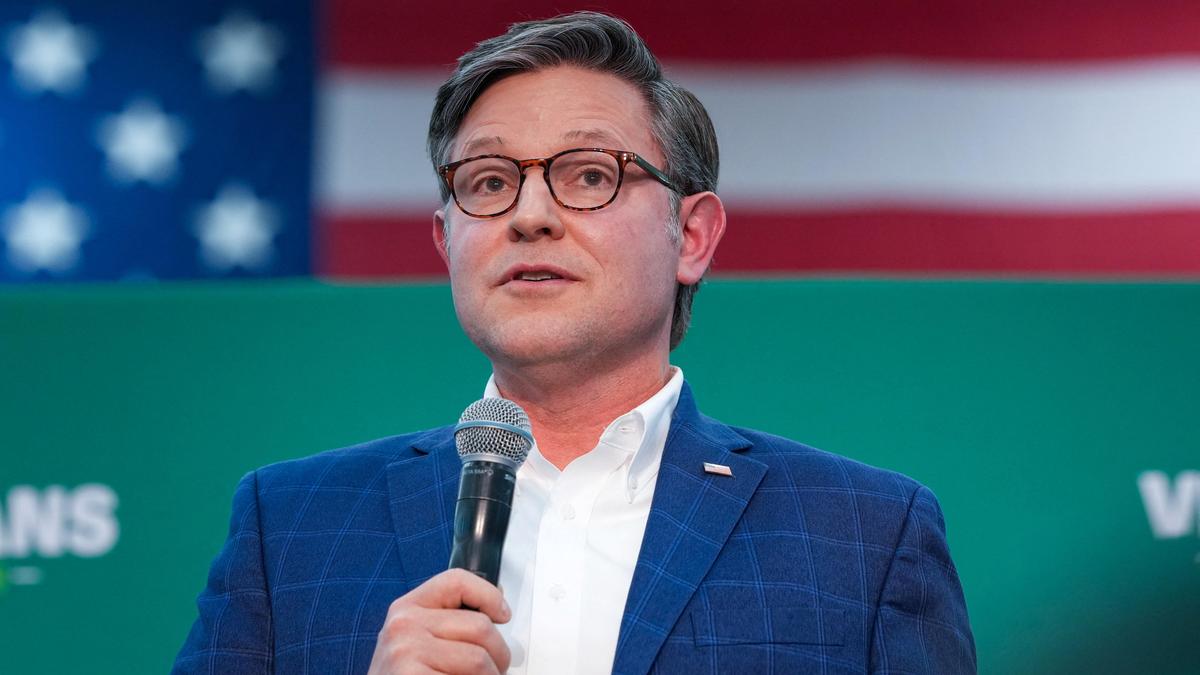
The path to this extension was paved with internal betrayal. Speaker Mike Johnson faced a reality where his own party members were willing to shut down the floor to prevent a vote on the Reforming Intelligence and Securing America Act (RISA). The holdouts weren’t just the usual suspects from the Freedom Caucus; they were a coalition of civil libertarians and those still stinging from the 2016 campaign surveillance scandals.
The core of the dispute rests on a proposed warrant requirement. Privacy-minded lawmakers wanted a mandate requiring the FBI to obtain a warrant before searching the Section 702 database for information on U.S. persons. The intelligence community fought this with everything in its arsenal. They argued that a warrant requirement would "blind" the agency to fast-moving threats like cyberattacks and fentanyl trafficking. Further reporting on this trend has been shared by USA Today.
When the GOP leadership tried to push a compromise that tilted toward the hawks, the floor collapsed. The April 30 deadline isn't a strategy. It is a surrender to the calendar. By pushing the expiration into the heat of a presidential election year, Congress has ensured that surveillance policy will become a political football rather than a serious debate on national security.
Why the FBI Can’t Quit Your Data
To understand why the "Section 702" fight is so bitter, you have to look at the sheer volume of information at stake. We are talking about billions of emails, texts, and direct messages flowing through American servers. The FBI views this database as its primary diagnostic tool.
The Query Loophole
When the FBI investigates a potential threat, they often run "queries" using an American's name or email address against the 702 data collected by the NSA. In 2022 alone, the FBI conducted over 200,000 such "backdoor" searches. While that number is a significant drop from previous years due to internal policy changes, the lack of judicial oversight remains the sticking point.
The Bureau argues that these searches are not "surveillance" because the data is already in their possession. Critics argue this is a distinction without a difference. If a cop needs a warrant to search your physical filing cabinet, why should they get a free pass to search your digital one just because it’s stored on a cloud server that also happens to host foreign data?
Misuse as a Habit
The skepticism toward the FBI isn't rooted in theory. It’s rooted in a track record of documented abuse. Declassified reports from the Foreign Intelligence Surveillance Court (FISC) have revealed that the FBI improperly used Section 702 to search for information on:
- 19,000 donors to a single congressional campaign.
- Individuals arrested during the 2020 racial justice protests.
- People suspected of participating in the January 6 Capitol riot.
These weren't foreign terrorists. They were Americans exercising their rights. The intelligence community insists that new compliance measures have fixed these "errors." The skeptics in Congress, however, are no longer taking the Bureau's word for it. They want the requirement of a judge's signature, and they want it backed by law.
The Hidden Influence of the Defense Lobby
The debate over FISA is rarely just about the law. It is about the massive infrastructure of the "Big Tech-Intel" complex. Companies that provide the backbone of the internet are often compelled to cooperate under 702, and the legal teams of these corporations prefer a clear, standardized framework—even if that framework is invasive.
The quietest players in this drama are the defense contractors who build the tools used to sift through this data. For these firms, a lapse in 702 authority isn't just a security risk; it’s a threat to long-term contracts. The April 30 extension serves as a vital signal to the markets that the surveillance spigot will not be turned off. It keeps the revenue flowing while the politicians argue over the optics of privacy.
The Dangerous Game of "Clean" Extensions
By opting for a short-term extension without reforms, the House has effectively weakened its own leverage. Historically, the executive branch uses the fear of a "gap" in coverage to force Congress into passing "clean" renewals. This is the ultimate play for the status quo.
The strategy is simple:
- Wait until the deadline is days away.
- Issue dire warnings of an imminent, undetectable terrorist attack.
- Label any lawmaker demanding a warrant requirement as "soft on crime" or "pro-terror."
- Force a vote on an un-amended extension.
This cycle has repeated since the law's inception in 2008. The difference in 2026 is the emergence of a bipartisan "Privacy Caucus" that spans from the furthest reaches of the Left to the deepest corners of the Right. This group has realized that the only way to break the cycle is to let the law expire, forcing the intelligence community to the negotiating table in a position of weakness for the first time in two decades.
The Technological Reality of 2026
The world has changed since 702 was last renewed. Encryption is now the default for many messaging apps, making the "upstream" collection—where the government taps into the physical cables of the internet—less effective for reading actual content. However, metadata remains king.
Even if the government can't read every message, knowing who you talked to, for how long, and from where is often enough to build a devastatingly accurate profile of your life. The current FISA framework was designed for an era of unencrypted emails and landlines. It is woefully unequipped to handle the nuances of modern data privacy.
| Feature | Original 702 Intent | 2026 Reality |
|---|---|---|
| Targeting | Targeted foreign spies | Bulk data ingestion |
| Speed | Deliberate collection | Near-instantaneous querying |
| U.S. Data | Incidental and minimal | Centrally searched by FBI |
| Oversight | Secret court (FISC) | Internal "compliance" checks |
The extension doesn't fix this mismatch. It ignores it. Every day that passes without a modern update to FISA is a day where the legal framework for American liberty grows more brittle.
The Political Stakes for the Speaker
Mike Johnson is walking a razor's edge. To his right, he has members who view FISA as a tool used by a "weaponized" DOJ to target conservatives. To his left, he has civil libertarians who have been fighting the Patriot Act since its inception. In front of him, he has the White House and the intelligence establishment demanding no changes.
The decision to punt to April 30 was a move of survival, not leadership. It allowed the House to clear the deck for other spending bills, but it has left a simmering resentment among the rank-and-file. If Johnson cannot produce a reform bill that satisfies the warrant-requirement crowd by the spring, he risks another floor revolt that could be even more damaging than the last.
The Cost of the Deadlock
There is a tangible cost to this indecision. The intelligence community is currently operating under a cloud of uncertainty. Analysts don't know if the tools they use today will be legal six months from now. This creates a "chilling effect" within the agencies themselves, where risk-aversion can lead to the very intelligence gaps the laws were meant to prevent.
Conversely, the American public remains in a state of perpetual surveillance. The "incidental" collection of domestic data continues unabated. Every time a reform effort is killed or delayed, the precedent for warrantless searches of American citizens becomes more deeply embedded in the bureaucracy.
The April 30 deadline is not just a date on a calendar. It is a countdown. If Congress fails to act, they are essentially admitting that the surveillance state is now too large to be governed by the people's representatives. They are admitting that the Fourth Amendment is a luxury the government can no longer afford.
The intelligence community claims that Section 702 is essential for stopping "the next 9/11." Privacy advocates claim that the current use of 702 is a "digital general warrant" that would make the Founding Fathers weep. Both sides can't be entirely right, but they are currently trapped in a zero-sum game where the only winner is the status quo.
The House has bought itself a few more months of silence, but the noise is only going to get louder as the deadline approaches. There is no middle ground left. Either the FBI gets its warrant-free access, or the American people get their privacy back. Pick one.