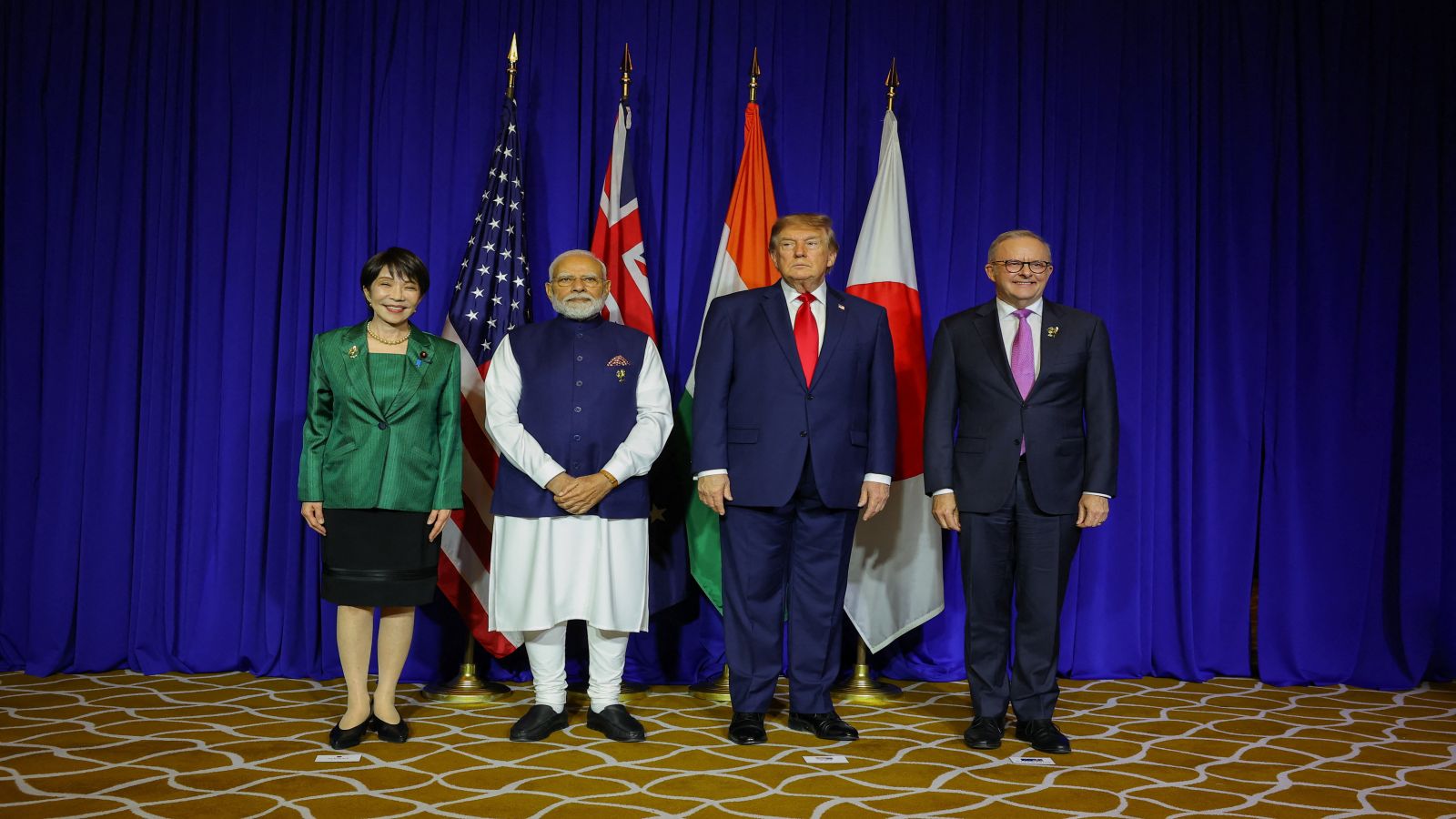
Diplomatic signaling in the Indo-Pacific rarely operates on face value, yet standard political commentary routinely mistakes tactical transactionalism for strategic retreat. When former Indian Ambassador to the United States Meera Shankar noted that Donald Trump’s messaging around the ASEAN Summit indicated a continued commitment to the Quadrilateral Security Dialogue, surface-level observers treated the observation as a reassuring soundbite. In reality, that signal reveals a structural convergence of geopolitical incentives that overrides individual executive style. Understanding why the Quad—comprising the United States, India, Japan, and Australia—persists requires stripping away diplomatic rhetoric and examining the underlying deterrence mechanics, supply chain dependencies, and institutional lock-in governing the region.
The Architecture of Diplomatic Signaling
In international relations, public statements surrounding multilateral forums like the Association of Southeast Asian Nations (ASEAN) Summit function as low-cost, high-visibility calibration tools. When a former senior diplomat like Meera Shankar isolates a specific signal—continued U.S. backing for the Quad—she is pointing to the distinction between bilateral friction and minilateral necessity.
Standard media coverage treats alliance politics as binary: an administration is either committed to multilateralism or retreating into isolationism. This framework fails to capture how modern great-power competition actually operates. The United States does not maintain the Quad out of institutional nostalgia; it maintains the grouping because the bilateral hub-and-spoke alliance system built after World War II is insufficient to manage distributed maritime and technological competition across the Indian and Pacific Oceans.
To evaluate the durability of this commitment, analysts must separate three distinct layers of statecraft:
- Rhetorical Variance: The day-to-day fluctuation in executive messaging, often tailored for domestic audiences or immediate trade negotiations.
- Operational Continuity: Joint naval exercises, intelligence-sharing protocols, and coast guard interoperability that run on multi-year defense planning cycles.
- Structural Alignment: The shared threat perception regarding maritime coercion, supply chain monopolization, and critical infrastructure control.
Trump’s political brand emphasizes bilateral trade balances and burden-sharing, frequently generating friction with traditional treaty allies. However, his first administration was the very entity that resurrected the Quad in 2017 after a decade of dormancy, elevating it to the ministerial level in 2019. Signaling continuity around the ASEAN Summit confirms that while the U.S. executive branch may demand greater transactional reciprocity on tariffs or defense spending, the foundational architecture of Indo-Pacific containment remains intact.
Why Minilateralism Outperforms ASEAN Centrality
A recurring blind spot in regional analysis is the relationship between the Quad and ASEAN. Diplomatic communiqués invariably affirm "ASEAN centrality," a polite fiction designed to reassure Southeast Asian states that larger powers will not sideline them. In practice, the Quad exists precisely because ASEAN’s consensus-based decision-making model creates a structural bottleneck when confronting assertive maritime behavior.
ASEAN operates on non-interference and unanimity. When ten member states hold disparate economic dependencies on Beijing—ranging from Cambodia and Laos, which are deeply integrated into Chinese infrastructure financing, to the Philippines and Vietnam, which face direct maritime pressure in the South China Sea—the bloc cannot produce unified security responses. Every collective statement is diluted to the lowest common denominator acceptable to all ten capitals.
The Quad bypasses this paralysis through minilateralism—a targeted coalition of the capable and the willing. By restricting membership to four major maritime democracies with aligned threat perceptions and complementary capabilities, the Quad achieves three operational advantages that larger regional bodies cannot match:
- Decision Velocity: Four capitals can coordinate maritime domain awareness initiatives or vaccine distribution networks in weeks rather than years.
- Capability Aggregation: The grouping combines U.S. global power projection, Japanese capital and high-tech manufacturing, Australian geographic positioning and intelligence reach, and Indian demographic scale and Indian Ocean naval dominance.
- Asymmetric Cost Imposition: Rather than confronting a rival directly through a formal mutual defense treaty—which would trigger immediate escalation—the Quad competes across non-kinetic domains such as undersea cable security, semiconductor supply chains, and green energy standards.
Meera Shankar’s reading of the ASEAN Summit dynamics highlights this exact division of labor. Washington engages ASEAN to maintain diplomatic legitimacy and prevent Southeast Asian states from drifting entirely into a rival sphere of influence, while relying on the Quad as the actual engine of strategic balancing.
The Four Pillars of Quad Institutional Lock-In
To understand why a change in U.S. leadership style does not dismantle the Quad, one must examine how the grouping has evolved from an informal dialogue into an embedded operational framework. Between 2021 and 2026, the four nations systematically shifted the Quad’s center of gravity away from purely military signaling toward public goods delivery and technological standard-setting. This diversification creates institutional lock-in; dismantling the mechanism would now impose direct economic and security costs on Washington itself.
1. Maritime Domain Awareness (MDA)
The Indo-Pacific Partnership for Maritime Domain Awareness (IPMDA) links commercial satellite data with regional fusion centers in the Indian Ocean, Southeast Asia, and the Pacific Islands. By tracking "dark shipping"—vessels that turn off their Automatic Identification System transponders to conduct illegal fishing or illicit transfers—the Quad provides actionable intelligence to smaller littoral states without requiring them to host foreign military bases. For Washington, funding and maintaining this network is vastly cheaper than deploying additional carrier strike groups to patrol every contested littoral zone.
2. Critical and Emerging Technologies
Technological decoupling from single-source supply chains is a bipartisan priority in Washington. The Quad’s Critical and Emerging Technology Working Group coordinates semiconductor supply chain resilience, 5G supplier diversification (specifically Open RAN architectures), and artificial intelligence governance. Because Japan controls critical upstream semiconductor chemicals and equipment, Australia supplies essential rare earth minerals, India provides software engineering talent and market scale, and the U.S. dominates chip design, none of the four nations can secure their technological base independently.
3. Infrastructure Financing and Debt Alternatives
Through the Quad Infrastructure Coordination Group, the four countries pool development finance institutions to offer transparent alternatives to opaque sovereign lending. While the Quad cannot match the sheer volume of state-directed capital deployed by competing infrastructure initiatives, it targets high-leverage chokepoints: port modernization, digital connectivity, and clean energy grids. This directly aligns with a transactional U.S. foreign policy that seeks to counter rival economic influence using allied capital rather than relying solely on U.S. taxpayer funds.
4. Distributed Logistics and Interoperability
While the Quad is formally not a military alliance, the bilateral and trilateral defense agreements connecting its members form a de facto security web. Exercises like Malabar—which brings together the navies of all four Quad nations—standardize anti-submarine warfare tactics, refueling protocols, and encrypted communications. Furthermore, reciprocal logistics agreements (such as LEMOA between the U.S. and India) allow naval vessels to access allied ports for repair and replenishment, drastically extending operational reach across the Indo-Pacific without the political cost of building new permanent bases.
The India Variable in Washington's Calculation
Meera Shankar’s perspective carries specific analytical weight because New Delhi represents the most complex node in the Quad network. Unlike Japan and Australia, which are formal U.S. treaty allies bound by mutual defense obligations, India maintains a doctrine of strategic autonomy. New Delhi refuses to join formal military alliances, continues to procure legacy defense hardware and discounted energy from Russia, and engages in multilateral forums like BRICS and the Shanghai Cooperation Organisation alongside U.S. adversaries.
A purely ideological U.S. administration often struggles with India’s non-alignment, viewing New Delhi’s hedging as a lack of commitment. Conversely, a transactional, realist administration views India through the lens of raw geopolitical utility. The structural logic binding Washington and New Delhi rests on three hard realities:
- Geography: India sits astride the primary sea lines of communication connecting the Middle East to East Asia. Roughly 80 percent of East Asia’s energy imports transit the Indian Ocean. India’s geographic position makes it the natural maritime balancer in the region.
- The Himalayan Front: Following the 2020 border clashes in the Galwan Valley, India’s threat perception regarding its northern border hardened permanently. New Delhi’s long-term strategic competition with Beijing is structural, not cyclical, ensuring that India will remain aligned with Washington’s broader balancing objectives regardless of who occupies the White House.
- Market and Manufacturing Scale: As global corporations execute "China Plus One" supply chain diversification strategies, India represents the only market with the demographic scale to absorb large-scale manufacturing relocation over a multi-decade horizon.
For Trump, India’s refusal to lecture Washington on domestic governance or climate targets makes New Delhi an attractive partner, provided bilateral trade friction—specifically tariffs on steel, aluminum, and agricultural goods—can be managed. Signaling continued commitment to the Quad reassures New Delhi that broader strategic cooperation will remain insulated from routine trade disputes.
Friction Points and Structural Limitations
Rigorous analysis requires identifying where the Quad model breaks down. Treating the grouping as an unstoppable juggernaut ignores severe internal asymmetries and operational constraints that limit its effectiveness.
First, the capability gap remains vast. While the Quad aggregates significant economic and naval power, the geographic reality of the Western Pacific favors continental powers operating near their own coastlines. Integrating four distinct military doctrines, procurement systems, and intelligence classification regimes takes decades. India’s reliance on Russian-origin air defense and naval platforms still restricts the level of high-end encrypted data sharing Washington can safely authorize with New Delhi.
Second, bilateral trade protectionism threatens strategic cohesion. An administration focused on reducing bilateral trade deficits will inevitably target export-oriented allies. Japan, India, and Australia all maintain trade surpluses with the United States in specific sectors. If Washington imposes blanket tariffs without carving out exemptions for Quad partners, it undermines the economic trust required to sustain joint supply chain initiatives. You cannot build a unified semiconductor or critical minerals ecosystem while simultaneously erecting trade barriers against the partners supplying the raw materials and manufacturing components.
Third, Southeast Asian hedging constrains operational reach. Despite diplomatic outreach at the ASEAN Summit, most Southeast Asian states remain reluctant to openly endorse Quad security initiatives. Countries like Indonesia and Malaysia fear that aligning too closely with a U.S.-led minilateral grouping will provoke economic retaliation from Beijing or force them to choose sides in a conflict they cannot afford. Consequently, the Quad’s operational footprint in Southeast Asia must remain largely confined to non-military public goods—disaster relief, maritime surveillance, and digital infrastructure—limiting its utility in an acute military crisis in the South China Sea.
Fourth, domestic political cycles create synchronization drag. With four democracies operating on staggered election calendars, maintaining simultaneous executive focus is difficult. While bureaucratic momentum sustains working-level programs, major new strategic initiatives require synchronized political capital from Washington, Tokyo, New Delhi, and Canberra—a rare alignment that occurs only briefly between election cycles.
The Strategic Playbook for Regional Stakeholders
The durability of U.S. commitment to the Quad, as highlighted by Ambassador Shankar’s assessment, establishes a predictable baseline for corporate strategists, defense planners, and regional policymakers. Rather than reacting to daily diplomatic headlines, stakeholders operating in the Indo-Pacific must align their long-term positioning with the structural realities of minilateral competition.
- For Multinational Supply Chain Executives: Treat the Quad’s Critical and Emerging Technology frameworks as permanent industrial policy. Capital allocation for semiconductor assembly, battery manufacturing, and pharmaceutical active ingredients should prioritize the U.S.-Japan-India-Australia corridor. Do not rely on temporary tariff waivers; assume that geopolitical risk premiums on single-country concentration will ratchet upward regardless of party control in Washington.
- For Regional Policymakers in Southeast Asia: Abandon the expectation that ASEAN consensus will resolve maritime or economic coercion. Leverage the Quad’s public goods mechanisms—specifically the Indo-Pacific Partnership for Maritime Domain Awareness and Quad infrastructure financing—on a bilateral basis to build sovereign capacity while maintaining formal diplomatic neutrality within ASEAN forums.
- For Defense and Technology Contractors: Focus business development on dual-use interoperability solutions. The highest-growth procurement budgets across the four Quad nations are concentrated in uncrewed maritime surveillance, commercial satellite data integration, Open RAN telecommunications infrastructure, and cross-border logistics software rather than traditional heavy hardware platforms.
The Quad survives executive transitions because it solves a mathematical problem in geopolitics: no single nation, including the United States, possesses the unilateral bandwidth to balance a peer competitor across every domain of the Indo-Pacific simultaneously. Washington’s continued backing is not an act of diplomatic generosity; it is a cold calculation of burden-sharing efficiency.